President Trump's recent surge in new project announcements closely mirrors the pattern observed before the 2018 midterm elections, according to Yahoo Finance. This strategic timing suggests a deliberate effort to bolster support ahead of the upcoming November vote, leveraging visible policy initiatives to influence voter sentiment.
A super PAC linked to a GOP vendor is sending mailers supporting a socialist candidate in Ohio's Senate race. The socialist's campaign calls the effort deceptive and considers legal action, while the broader race remains a tight, high-spend contest between incumbent Jon Husted and former Sen. Sherrod Brown.
Pete Buttigieg has chosen to forgo a run for governor or the U.S. Senate in Michigan to focus on building a national network for a potential 2028 presidential bid. By declining office, he aims to leverage his high profile as a surrogate for Democratic candidates in the 2026 midterms while testing his viability for the White House. This strategy challenges the traditional political ladder, relying on his 2020 presidential campaign experience and executive branch background rather than elected office. He has traveled to 37 states since leaving the Biden administration, focusing on Black voters in the South and swing districts. Supporters argue his unique combination of youth, communication skills, and executive experience positions him as a forward-looking candidate. Critics note his resume remains thin without elected office, but he believes the post-Trump era has changed the requirements for presidential success. He plans to campaign in Michigan and Virginia, states with early 2028 primary contests, in the final weeks before the November 3 election.
President Trump has explicitly connected the distribution of federal disaster assistance to the outcome of the upcoming midterm elections, framing relief efforts as a tool for political messaging. This move aligns with a broader pattern of linking government actions to electoral success, including previous promises of financial bonuses for Republican victories. The strategy intensifies tensions between disaster response and political campaigning, drawing scrutiny from critics who view it as an erosion of democratic norms. While the administration defends such actions as necessary for public engagement, opponents argue that tying essential aid to electoral outcomes compromises the integrity of federal assistance and democratic processes.
Former Transportation Secretary Pete Buttigieg is intensifying his campaign efforts in the final weeks before the 2026 midterms, targeting at least six key states to support Democratic candidates. While boosting his party's chances, he is simultaneously refining his political brand and message for potential future ambitions, including the 2028 presidential cycle. His strategy links immediate cost-of-living issues with broader calls for political reform.
The Trump administration began mailing $500 refund checks to over 950,000 Americans in 30 states, claiming the Biden administration overcharged them for HealthCare.gov operations. The payments, funded by a surplus of ACA user fees, target middle-income households without subsidies and arrive five weeks before the midterm elections. Critics argue the move is a political tactic to offset rising healthcare costs, while the White House frames it as a return of hard-earned money.
James Carville argues that President Donald Trump’s recent construction and renovation projects in Washington, D.C., stem from a deep-seated hatred for the city’s modest, constitutional identity. This critique coincides with reports that administration officials are considering attaching Trump’s name to Ford’s Theatre, the site of Abraham Lincoln’s assassination, as part of a broader effort to imprint the president’s legacy on federal properties.
President Donald Trump used the Republican National Committee’s two-day midterm convention in Dallas to issue a personal pledge to voters, urging them to vote regardless of registration status and promising a $5,000 'dividend' if Republicans retain congressional majorities. While polls and betting markets suggest the GOP faces significant risks in the November 3 elections, Trump’s actions appear designed to centralize his influence over the party’s outcome, even if he is not on the ballot.
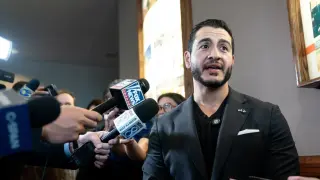
Michigan Senate hopeful Abdul El-Sayed apologizes for past remarks about a synagogue attack but refuses to condemn left-wing streamer Hasan Piker, signaling a shift to appeal to Jewish Democrats and moderate voters while focusing on issues like affordability and health care ahead of the general election against Mike Rogers.
The article argues that Graham Platner’s nomination embodies a broader, recalibrated Democratic strategy to win back power in the post-Trump era, highlighting efforts to build a broad coalition and appeal to swing voters while balancing competing wings as the party navigates upcoming elections.
Trump’s long-running push against Federal Reserve Chair Jerome Powell backfires as Powell opts to stay on the Fed’s Board of Governors after his chair term ends, depriving Trump of a favorable board majority and preserving central-bank independence. Despite continued public pressure and a DOJ probe that has wound down, Powell’s decision signals resilience to political pressure and prolongs the clash between Trump and the Fed.
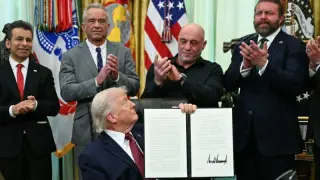
Trump publicly attacks allies who criticize his Iran-war approach, yet he treats Joe Rogan with unusual sweetness, praising him and inviting him to the Oval Office, signaling a calculated effort to lean on Rogan’s broad, apolitical audience as the political dynamic with critics intensifies.
Using Hungary’s move toward a competitive autocracy as a cautionary tale, the piece argues that defeating Trumpism in the U.S. will require addressing fundamental structural weaknesses in democracy—not just messaging or issues—and pursuing bold reforms to strengthen institutions, even if they seem uncomfortable to liberals, in what the author calls a late-republican moment.
A late-breaking challenge from Councilmember Nithya Raman against incumbent Mayor Karen Bass upends Los Angeles’s previously sluggish mayoral contest. Bass’s camp emphasizes her proven record on homelessness and public safety, while Raman touts urgent change and addresses long‑running city issues with a fresh, activist profile. The race features high‑profile endorsements dynamics, a mix of supporters from the left and center, and questions about Raman’s ability to scale a citywide campaign in three months, all set against LA’s ongoing wildfire memories, local crises, and a polarized national political backdrop. The outcome could hinge on whether voters prefer stability with caution or urgency for new leadership ahead of the June primary.
Most prospective 2028 Democratic contenders dodged public stances on transgender issues, signaling a balancing act between defending LGBTQ rights and appealing to a broader electorate as Republicans prep anti-trans ads; only Josh Shapiro, Rahm Emanuel, and Pete Buttigieg offered clear responses, while others declined.