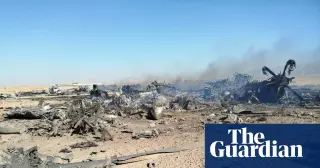
A US airman codenamed Bravo describes a 50-hour ordeal after his F-15 was shot down in Iran, including a 7,000ft ridge climb with injuries and a daring rescue by Delta Force, SEAL Team Six, and CIA efforts; the CBS 60 Minutes segment detailing the operation has sparked controversy with critics accusing it of propaganda to bolster Trump’s war.
A Guardian-reported investigation reveals a non-existent Hanover Institute for Public Policy funded by the Israeli government and routed through Piro Inc., Havas Media and Israel’s LaPam to publish hundreds of thousands of words in nine days. The material, designed to look like neutral research, is intended to influence AI chatbots by optimizing content for citations, raising concerns about training-data poisoning and the potential for bots to repeat biased narratives. The Hanover Institute appears to have no verifiable existence, and its disclosures point to foreign-agent registrations under FARA. While Israel disputes conducting influence operations, analysts warn such campaigns could shape AI outputs and public diplomacy in ways that are hard to fact-check, especially as US opinion shifts on Israel’s actions in Gaza.
Ukraine’s Center for Countering Disinformation chief Andrii Kovalenko says the popular cartoon 'Masha and the Bear' is a Russian propaganda project designed to influence children globally, and Kyiv, with international partners, has sanctioned the show's creators and distributors as part of broader action against Russia.
Ukraine imposed sanctions on five Russian individuals and four entities connected to the Masha and the Bear cartoon, accusing the show of spreading pro-Kremlin narratives disguised as children’s content. The measures include asset freezes and restrictions on distribution within Ukraine, potentially restricting access on platforms like YouTube. Kyiv wants international partners to mirror the actions.
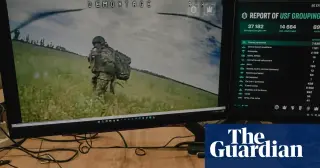
Ukrainian forces, via the Magyar’s Birds unit led by Robert ‘Magyar’ Brovdi, publish first-person drone clips known as yoblyks that chase Russian soldiers to their deaths and mock them, a tactic to demoralize Moscow’s troops and showcase the costs of the war. The videos, archived at thousands of clips, emphasize humiliation and fear, with the last frame often a close-up of a soldier’s face; supporters say they reveal the cruel reality of mobilization and boost Ukrainian morale, while critics see them as dehumanising war propaganda.
Iran released a rare video of Supreme Leader Mojtaba Khamenei looking in apparent good health, but with no date or location given, the clip does little to dispel persistent health rumors tied to injuries from the February airstrike; Tehran insists he's well and says more footage will be released to demonstrate active leadership, while previous AI-generated images had circulated.
A Kremlin-backed audio clip of Putin discussing battlefield progress intended to boost morale appears to have backfired after it emerged the commander it highlighted reportedly died, underscoring risks in Moscow’s public war messaging.
A July 2026 analysis finds both Al-Qaida and ISIS networks use AI for propaganda, recruitment, security and planning, but their approaches reflect their organizational cultures and war-time time horizons: ISIS emphasizes rapid, visible impact and media production to sustain its caliphate, while Al-Qaida favors a deliberate, long-term strategy designed for endurance in a generational conflict. The piece argues that the difference isn’t whether AI changes war, but how each group uses it to fit its strategic tempo.
Prominent MAGA influencer Laura Loomer, long aligned with pro-Russia rhetoric and close to Trump, visited Kyiv, admitted she’d been propagandized, and publicly expressed sympathy for Ukraine, a shift that mirrors a broader wobble in MAGA attitudes and could influence ongoing U.S. policy toward Kyiv and Russia.
Manila condemned a China Daily AI-generated video that depicts a Filipino as a monkey being shoved by US- and Japan-flagged forces amid the South China Sea dispute, calling it dehumanising propaganda and demanding its removal; the incident underscores ongoing tensions in the Spratly Islands and Scarborough Shoal and comes as Beijing maintains its stance on the arbitration ruling while China Daily continues to post mocking imagery.
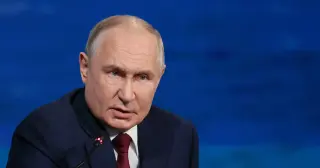
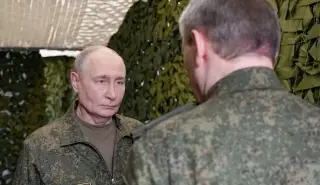
Putin and Russia’s top military official framed the war in Ukraine as a fight with NATO, urging analysis of Western involvement to justify future decisions, while independent data show Moscow’s gains are far smaller than claimed and Ukraine continues counteroffensives amid domestic strain and talk of mobilization after elections.
Three U.S. families who relocated to Russia seeking a conservative utopia found life far from idyllic: the Hares faced housing trouble, shifting family dynamics, and a failed business, with Leo staying in Russia while his wife left and two older children returned to the U.S.; the Huffmans’ son Derek enlisted and became a propaganda figure for the Kremlin as his wife begged for help; Canadian farmers the Feenstras struggled with language, sanctions freezing funds, and mounting disappointment before moving back to Canada; the piece notes Russia’s program has drawn few Western emigrants (about 99 Americans by mid-2025) and serves more as propaganda than a viable settlement, highlighting how self-reliance collapses when basic needs aren’t met.
AV Club argues that Run Hide Fight: Infidels, a Daily Wire-produced film starring Jonathan Majors, is clearly propagandistic and aimed at provoking outrage. Its logline centers on radical Islamic terrorists hijacking a liberal college encampment to impose Sharia law while students, a security guard, and a veteran fight back; the piece notes Majors’ public support, on-set labor tensions, and a teaser with provocative 9/11/ISIS imagery as evidence of the film’s controversial aims.
After strikes hit Moscow and its oil refinery, Russia’s pro-war online sphere erupts with calls for nuclear revenge against Kyiv, while battlefield chatter centers on Rai-Oleksandrivka and Lyman amid heavy fighting near Sloviansk. The piece contrasts sensational propaganda with on-ground reality, including Ukrainian drone activity over Moscow, and reports Oryx-based losses: roughly 23.6k Russian equipment losses versus about 11.4k for Ukraine, underscoring the information fog surrounding the war.
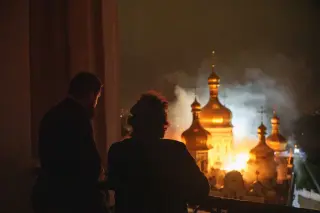
An op-ed argues that Russia’s use of Orthodoxy as a political tool is laid bare by the June 2026 strike on Kyiv’s Kyiv Pechersk Lavra, showing that the Kremlin’s narrative of defending faith clashes with its destruction of churches and persecution of Ukrainian clergy; it criticizes Western romanticism of a uniquely spiritual Russia and contends that true civilization does not erase other cultures, urging readers to see through Moscow’s religious propaganda as evidence of imperial violence.