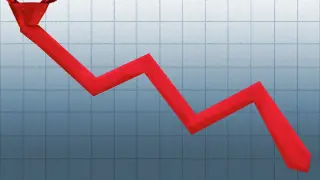
A Reuters/Ipsos poll shows Donald Trump at a career-low 32% overall approval, with only 17% approving of his handling of the cost of living, as Republicans grow uneasy over inflation and the Iran conflict that has driven up energy prices ahead of the 2026 midterms.
A NBC News poll released Sept. 20, 2026 shows Donald Trump’s approval at 41% among registered voters, with 55% saying his policies have hurt the economy. Voters point to rising living costs tied to the Iran conflict, and Democrats hold a slim edge in congressional races, though the advantage has narrowed since 2018 as midterm dynamics loom.
House Republicans remain divided on whether to attend the GOP’s midterm convention in Dallas, with some lawmakers in competitive races choosing to go (including Rep. Derrick Van Orden) and others opting out as President Trump’s approval ratings slide.
A Reuters/Ipsos poll shows President Donald Trump at 33% approval, tying a low for his presidency and signaling rising disapproval (64%) ahead of the 2026 midterms. The piece notes broader economic strains—gas prices up from under $3 to over $4 per gallon and inflation around 3.4%—as the Iran war shapes public perception and political debate.
A Reuters/Ipsos poll of 1,166 adults conducted Friday–Monday finds 33% approve of President Trump's job performance and 64% disapprove (±3 points), the lowest Reuters/Ipsos reading of his second term and tying the lowest level of his presidency from December 2017—the poll notes the Iran confrontation and rising energy costs as backdrop and shows ongoing partisan dynamics ahead of the 2026 midterms.
Trump's approval falls to 33% in a Reuters/Ipsos poll—the lowest of his presidency—while a large majority expect the U.S.–Iran war to last longer, with fuel prices rising and broad public concern about the conflict and leadership.
Recent polls show rising dissatisfaction with Trump among Republicans ahead of the midterms: Economist/YouGov puts GOP approval at a second-term low (79%), with only 48% strongly approving, while non-MAGA Republicans are less supportive; FT and Michigan data confirm a decline tied to the Iran war, high gas prices, and inflation. Analysts warn that up to one in five base GOP voters could stay home, and Democrats hold a turnout edge, raising the risk for the GOP in November.
Trump touted “great” polling numbers on Truth Social even as major surveys show his national approval sliding into the 30s with disapproval around 60%, and CNN/NYT/AP data tracing a downward trend and comparisons to past presidents.
Trump boasted on Truth Social about 'great poll numbers' without naming the poll, while NYT polling shows his approval around 38% and disapproval near 59%, marking a new second-term low in net approval per Nate Silver; analysts say the economy and the Iran war have contributed to the decline.
Trump argues voters are angry with Republicans, not him, as the 2026 midterms near, citing inflation and the Iran conflict as GOP liabilities while Democrats push to flip the House and possibly the Senate; he plans to use his MAGA Inc. fundraising to back Republicans but says he isn’t campaigning.
Trump ranted on Truth Social that his “REAL Polling Numbers” are the best and blasted the media as pushing “Fake News,” but provided no data or evidence. Independent polls around the same period put his national approval near one-third (AP/NORC ~32%, Quinnipiac ~32%, Fox News ~39%), with Republicans showing declines as the Iran war and high gas prices weigh on support. The piece notes a pattern: he denounces polls when negative and later embraces them when favorable.
A CNN/SSRS poll shows about 75% of Americans feel Trump isn’t paying enough attention to the country’s top problems, and roughly two-thirds think he puts himself above the nation’s needs, with his approval at 34%. Voters cite concerns over the Iran conflict, rising gas prices (74% affected), and immigration policy, with 71% saying he hasn’t gone far enough to lower prices and 54% saying he’s gone too far on deportations; only 38% view him as an effective world leader and 73% say he’s not in touch with everyday problems.
A CNN/SSRS poll shows Donald Trump with 34% overall approval and 66% disapproval, including a record 50% strongly disapproving and only 15% strongly approving. Republican support has slipped (78% approve, 19% enthusiastic). A majority (73%) say he hasn’t focused on the most important issues, and 71% believe he hasn’t done enough to curb prices. Majorities blame his policies for worsening the economy (65%) and his Iran decisions for harming the U.S. (67%). Gas prices and inflation are top concerns, with 74% reporting hardship from rising costs, and fewer than a quarter trusting he has a plan. His strongest ratings are on voting rights/election integrity (41%), with weaker marks on immigration (39%) and federal government management (35%).
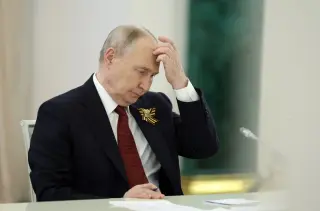
Russian President Vladimir Putin's weekly approval rating fell by 5 percentage points—the sharpest drop since late 2022—amid Russia's growing fuel shortages and waning consumer confidence, with state-linked polls (FOM) and VTsiom showing declines; trust in Putin and the government also declined, signaling rising public concern over the war and economic strains.
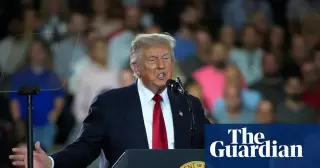
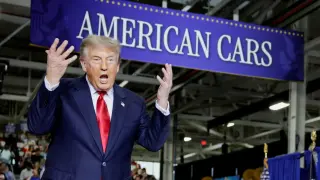
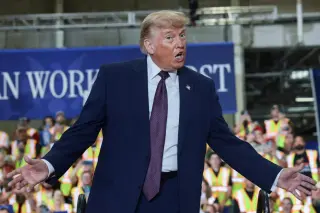
At a campaign-style rally in Pennsylvania, Trump attacked Democrats and “globalist” politicians, defended manufacturing jobs and tariffs, teased another run, and blasted immigrants and Iran, all while facing sagging approval ratings amid a reflecting-pool crisis and a volatile political environment. Analysts say the speech underscored his insecurity and effort to shore up a working-class base.