HHS Secretary Robert F. Kennedy Jr. has shifted the Make America Healthy Again (MAHA) agenda toward artificial intelligence and massive health data aggregation. Kennedy argues AI will liberate Americans from 'medical tyranny' by bypassing expert consensus, while also pushing to unlock federal and state health records for research into chronic diseases and vaccine safety. This pivot has drawn sharp criticism from MAHA allies who view the new corporate sponsorships as a betrayal of the movement's anti-industry stance.
Democratic Senate candidate Abdul El-Sayed is courting supporters of the Make America Healthy Again movement in Michigan by proposing a health-focused agenda that includes limiting pesticides, updating drinking water standards, and expanding access to healthy food. While he supports vaccines, distinguishing him from some MAHA advocates, this strategy aims to capture voters in a closely watched race where Democrats seek to flip the Senate.
Vice President JD Vance and Health Secretary Robert F. Kennedy Jr. will headline the Make America Healthy Again (MAHA) Summit on September 29, 2026, in Washington. The event features a fireside chat on regulatory reforms and priorities, alongside panels with Agriculture Secretary Brooke Rollins, EPA Administrator Lee Zeldin, and former heavyweight champion Mike Tyson. While the summit aims to showcase MAHA progress, it faces criticism over corporate sponsorship fees, internal divisions between grassroots and corporate interests, and ethical concerns regarding government officials attending events funded by companies with business before the Health and Human Services Department.
The Department of Health and Human Services (HHS) is preparing to fundamentally alter how childhood vaccines are categorized and recommended, a move that has triggered urgent warnings from public health experts, legal advocates, and state governors. The changes stem from an August 2026 executive order by President Donald Trump, which mandated a reevaluation of the childhood vaccine schedule and the revival of a defunct vaccine task force. HHS recently concluded a public comment period on a Request for Information (RFI) that questions the current three-tier recommendation system: routine/universal, risk-based, and shared clinical decision-making (SCDM). While HHS frames the review around 'individual autonomy' and 'religious freedom,' critics argue the proposed new categories lack scientific basis and will cause widespread confusion. This debate unfolds against a backdrop of a severe measles resurgence, with the U.S. experiencing its worst year since 1991, including 792 cases and four deaths in Pennsylvania alone. State officials and legal groups are urging HHS to maintain a stable, evidence-based framework to prevent a collapse in vaccination rates and a return of preventable diseases.
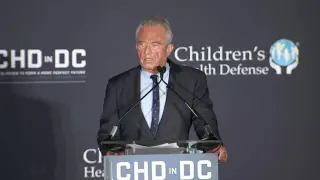
RFK Jr. delivered a keynote at the anti-vaccine Children’s Health Defense conference, revisiting vaccine-skeptical claims, citing VAERS data and a small hepatitis B trial to argue vaccines may be linked to chronic illnesses, and signaling White House support as midterm politics loom, with the event ending as Andrew Wakefield was set to speak.
Pennsylvania has formally asked the CDC for emergency Epi-Aid assistance to manage a measles outbreak that has grown to more than 700 cases across 37 counties and four measles-associated deaths. The move comes amid a dispute with Health Secretary RFK Jr. over whether those deaths should be counted in a national tally, with officials signaling the request could be rescinded if the CDC cannot transparently report the fatalities. Governor Shapiro and state health officials accuse RFK Jr. of politicizing the outbreak, while the CDC says federal outbreak support is separate from how fatalities are tabulated. Vaccination efforts appear to be slowing, with MMR doses dropping from about 3,500 in August to roughly 1,100 in early September.
Louisiana Sen. Bill Cassidy harshly criticizes RFK Jr. and his Make America Healthy Again backers for vaccine-skeptic messaging tied to measles outbreaks, while dodging questions about whether he regrets voting to confirm Kennedy as health secretary. Cassidy also cautions against impeachment and notes ongoing debates over vaccine policy as measles cases rise; the administration maintains that MMR vaccination is the best defense, and health officials stress vaccination to curb outbreaks.
RFK Jr, described in the article as the HHS secretary, headlined a CHD anti-vaccine conference and told attendees they have a ‘friend at the White House,’ promising incremental changes. With a deadly measles outbreak, the piece notes CHD’s agenda to roll back school vaccination requirements and broaden vaccine-safety skepticism, highlighting remarks from fellow anti-vaccine figures and politicians who praise the movement’s growing visibility in national policy.
Rolling Stone outlines RFK Jr.’s strategy to reshape vaccine policy through indirect means—pressuring changes to the vaccine schedule, steering committee charters and membership toward anti-vaccine perspectives, and expanding the Vaccine Injury Compensation Program’s scope—while facing court rulings and scientific pushback. Critics warn these moves could undermine public health, drive up litigation and costs, and threaten vaccine access.
Pennsylvania reports two more measles-related deaths, bringing the state’s toll to four and reigniting a political feud between Health Secretary RFK Jr. and Gov. Josh Shapiro over how the outbreak is counted and reported. The state says the deaths are measles-associated, but the CDC has not listed them in its official tally, prompting Shapiro to accuse Kennedy of covering up the deaths while Kennedy accuses Shapiro of blocking CDC help as the outbreak grows to about 700 cases across 38 counties.
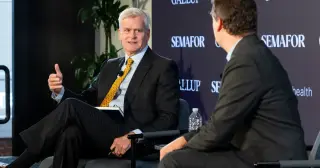
Sen. Bill Cassidy criticized the Trump administration’s vaccine handling at Semafor’s Future of Health Forum, saying the messaging undermines immunization and risks measles outbreaks, which could cost Republicans at the polls if preventable diseases return. He also said Health and Human Services Secretary RFK Jr. broke vaccine commitments, expressing anger and warning voters will hold the administration accountable in elections.
Grayson Logue argues that HHS leadership, including RFK Jr., dodges straight discussion of measles and vaccine science, framing public health as a political debate about lifestyle while neglecting the traditional pillars of public health—sanitation, vaccination, and medical best practices.
A Pennsylvania coroner confirmed two infant deaths tied to measles last month: one infant died from a measles infection, and a six-week-old with Amish lethal microcephaly died after measles exposure; the findings occur amid political debate over vaccines and public-health data as U.S. measles cases reach a 30-year high.
A Pennsylvania infant’s death attributed to measles was acknowledged by Health Secretary RFK Jr., following reports that he pressed the CDC to remove two Pennsylvania measles deaths from the national tally. The Lancaster County coroner ruled measles caused the death, though the CDC has not yet updated its nationwide count while reviewing records, in the midst of the United States’ worst measles outbreak in more than three decades.
Health experts warn that while nicotine can aid smoking cessation in some forms, RFK Jr.'s claim that nicotine is broadly safe or beneficial is misguided. Different nicotine products (patches, gum vs. pouches, vapes) deliver nicotine at different doses and can be highly addictive; long-term risks, especially for young people, remain uncertain and the supposed cognitive or relaxation benefits are not robust or well-supported. People should not start nicotine for health boosts and should use it only under medical guidance to quit smoking.