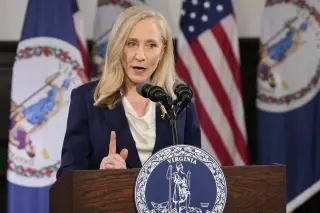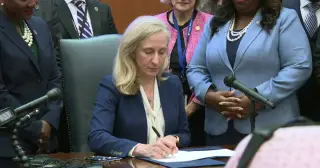
Virginia Gov. Abigail Spanberger was booed during a visit to the Old Fiddlers’ Convention in Galax, with GOP critics accusing her of pandering to rural voters and drawing a Clinton-like parallel over her redistricting effort; the incident highlights ongoing rural-urban tensions and opposition to her agenda in southwest Virginia.
Virginia Gov. Abigail Spanberger was met with boos during a brief appearance at the Galax Old Fiddlers’ Convention, a moment Republicans used to argue her mid-decade redistricting push has damaged her standing outside Northern Virginia. The scene comes as a July poll showed 44% approval and 47% disapproval for her, and after the Virginia Supreme Court blocked the proposed redistricting, leaving the current map in place and underscoring political headwinds for the new governor.
Virginia Gov. Abigail Spanberger will formally seek intervenor status in the State Corporation Commission’s review of Dominion Energy’s $67 billion sale to NextEra Energy, an unprecedented step that lets the administration question the deal and push for lower electric bills, Virginia jobs, and continued support for local energy projects like offshore wind. The SCC retains final decision authority. If approved, the merger would create the largest U.S. electric utility, serving about 10 million customers across four states. Regulators in other states and federal agencies will also need to sign off.
Virginia Gov. Abigail Spanberger will formally intervene in the $67 billion Dominion Energy–NextEra merger before the State Corporation Commission, an unprecedented move to ensure Virginians benefit from potential cost savings, job protections, and continued investment in energy infrastructure; the SCC will review the deal with federal and multi-state regulators weighing in, and Spanberger emphasizes giving Virginians a voice in the process.
Virginia Gov. Abigail Spanberger restored voting rights for 66,085 people with past felony convictions, a sharp reversal from the prior administration and in line with earlier governors’ broad restoration efforts since 2013. The move follows a federal court ruling striking down Virginia’s felony disenfranchisement and precedes November’s ballot referendum on automatically restoring rights after incarceration.
Gov. Abigail Spanberger announced that in about six months she has restored voting rights to 66,085 Virginians who lost them for felony convictions, criticizing her predecessor's case-by-case approach and saying the state should automatically restore rights after sentence completion. Her administration says the restoration process has been reshaped, removing a requirement to prove payment of fines and proactively identifying eligible former felons, and she urged a constitutional amendment to take the power out of the governor's hands. The issue stems from Virginia's disenfranchisement rules and a federal ruling narrowing the pool of eligible offenses; Virginians whose rights are restored must still register to vote, with the Aug. 4 primaries having passed registration (though same-day registration with provisional ballots remains available).
Virginia Gov. Abigail Spanberger restored voting rights to about 66,000 people with past felony convictions, reversing the lifetime ban and advancing a November constitutional amendment that would guarantee voting rights after release from prison; the move follows a federal ruling finding Virginia illegally disenfranchised residents for 156 years and highlights ongoing debates over who should be eligible to vote in the commonwealth.
Virginia Gov. Abigail Spanberger and lawmakers unveiled a negotiated budget plan to legalize adult‑use cannabis sales, setting a July 1, 2027 launch, a 2‑ounce purchase limit, and a broad regulatory framework overseen by the Virginia Cannabis Control Authority. The package includes a 6% excise tax plus 5.3% state/local sales taxes (with local option up to 3.5%), rising the excise tax to 8% by 2029, and a civil penalty for public consumption of $250 (effective July 1, 2027). It would permit up to about 350 stores, end local opt‑outs for cannabis operations, and direct revenue to the Cannabis Equity Reinvestment Fund and public health initiatives, with provisions on licensing, hemp oversight, and potential on‑site consumption ideas under study. Advocates say the deal moves Virginia toward a regulated market, though some penalties drew concerns.
Virginia Gov. Abigail Spanberger faces a tense budget standoff and intra‑party divisions as a June 30 deadline approaches, vetoing or reshaping Democratic priorities, debating data-center tax incentives, and focusing on long-term affordability and implementation.
Virginia Gov. Abigail Spanberger, a Democrat, has vetoed 31 bills passed by the Democratic-controlled General Assembly, blocking high-profile priorities like public employee collective bargaining and a cannabis sales framework. The move has sparked public frustration from labor groups and progressive lawmakers and exposed tensions within Virginia’s Democratic Party between a centrist governing style and more progressive aims. Spanberger defends the vetoes as part of governance and implementation, while critics warn of dysfunction and late-stage decisionmaking. A looming budget fight adds to the pressure as lawmakers seek a new biennial plan.
Gov. Abigail Spanberger removed Virginia Tech’s rector John Rocovich for conduct violating board-appointment rules and a Virginia code clause allowing removal for malfeasance, incompetence, or gross neglect of duty. Ed Baine, a Dominion Energy executive and VT Board member, will complete Rocovich’s term through June 30 of next year, and Sharon Brickhouse Martin will join the board immediately. Spanberger praised the appointees’ service, while Virginia Tech did not comment further; the exact misconduct was not disclosed and the case is developing.
Gov. Abigail Spanberger fired John Rocovich, rector of the Virginia Tech Board of Visitors, citing ethics violations; Dominion Energy president Edward Baine will complete Rocovich’s term through June 30, 2027. Spanberger had recently named four new appointees ahead of a presidential search, with Sharon Brickhouse Martin taking Rocovich’s remaining term immediately before starting a full term. The move is part of a broader effort to reshape the largely Youngkin-appointed board, drawing praise from Democrats and calls for explanations from Republicans as the board prepares to meet.
Virginia Gov. Abigail Spanberger announced a broad slate of vetoes after the 2026 reconvene session, saying she supports the intent of many bills but must prevent unintended consequences and ensure laws can be implemented effectively. The vetoes touch on issues from the SWaM program and voter-roll maintenance to prescription-drug pricing, private election funding, cannabis regulation, menopause protections, child-welfare interview recording, higher-education governance, courthouse security, and inmate placement, with amendments she would have preferred but the General Assembly rejected. She pledged to work with bill patrons and leaders to address these issues in the future.
Virginia Gov. Abigail Spanberger vetoed the Democratic-backed bill to create a regulated recreational cannabis market, delaying any legal sales to 2027 and prompting criticism from lawmakers who say the veto keeps Virginia’s cannabis economy in limbo and preserves an illegal market; Spanberger’s substitute would have started later and imposed stricter penalties, while supporters argue legalization could generate hundreds of millions in tax revenue over five years. The legislature will need to try again in 2027.
Virginia Gov. Abigail Spanberger vetoed the bill that would have created a regulated cannabis marketplace, saying it lacked a workable timeline, structure and resources for proper oversight. She sent the legislation back with dozens of changes and pushed for a retail launch later (July 1, 2027) to ensure enforcement, testing and compliance are funded and effective. Lawmakers defended the plan as the result of extensive deliberation and may revisit it in the next General Assembly session.