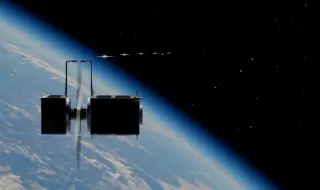
The U.S. Space Force is investing $50 million in Space Kinetic to develop the Whirlwind system, which would dispatch small satellites from a larger spacecraft in orbit, signaling a potential shift in how satellite constellations are assembled and deployed.
A Chicago startup pitches a privately funded, ultra-fast rail link from O’Hare to the Loop, claiming 15-minute travel times. The plan promises transformative congestion relief but hinges on massive funding, regulatory approvals, and a favorable public-private partnership, with experts cautious on feasibility and timeline.
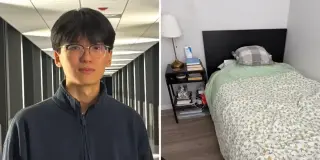
Business Insider tracked four days of sleep for three AI startup founders—Lance Yan of Traverse, Kavitta Ghai of Nectir, and Boris Skurikhin of Docket—revealing a spectrum from late-night grind to strict routines: Yan averages 5–6 hours with late work and doomscrolling; Ghai enforces 7–8 hours with magnesium, a sleep mask, precise temps, and a 3-minute fall asleep; Skurikhin typically sleeps 7–8 hours, bed around midnight while watching videos, and rejects the 'grindmaxxer' stereotype; the piece frames two Silicon Valley sleep cultures—biohackers who optimize rest versus hustlers who push through—and notes there's no universal answer for founder productivity.
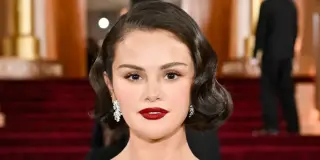
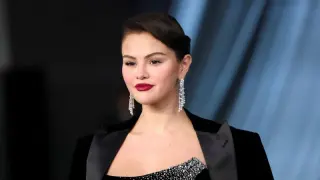
A federal lawsuit accuses Selena Gomez’s Wondermind and its cofounders of defrauding nearly $1.2 million by misrepresenting the company’s infrastructure, leadership, and revenue plans, including implying Gomez would lead marketing and that JPMorgan and Fidelity partnerships existed; the app allegedly never got built and key initiatives never materialized, prompting investors to seek the return of their funds or damages as Gomez and the cofounders deny wrongdoing.
An AI startup Joi AI conducted a month-long pilot using 150,000 applicants and 10 hired “masturbation consultants” to test an AI-guided self-pleasure routine, logging 134 sessions with an AI ‘wellness sherpa.’ Self-reported results claimed stress dropped 25%, focus rose 17%, and mental restlessness fell 19%, with 45% of consultants reporting creative inspiration. Joi says the AI-guided sessions produced satisfaction on par with other methods, though comparisons favored toys, porn, and fantasies. Critics warn the setup is potentially manipulative and monetizes vulnerability via in-app currency for explicit content, highlighting concerns about exploitation despite the wellness framing and an About page touting “AI-lationships.”
Khartis Therapeutics, led by former XinThera executives after Gilead’s acquisition, emerged with a $50M Series B (total funding now $95M) to push an oral IGF-1R inhibitor for thyroid eye disease into clinical trials in Q1 2027, aiming to replace IV therapies like Tepezza and Lumvoa; the company also has other internal programs and strong investor backing.
New York investors in Selena Gomez’s Wondermind are suing Gomez, her mother Mandy Teefey, and Daniella Pierson for securities fraud, common-law fraud, breach of contract and other claims, saying they invested about $1.2 million in 2022 expecting Gomez’s involvement and partnerships that never materialized, the app was never built, and Wondermind quietly collapsed; Pierson left the company in 2023 as the suit seeks to recover their investment and damages.
WIRED reports on the second version of Avi Schiffmann’s Friend AI Pendant, which now speaks responses aloud via a back speaker, runs newer OpenAI models, and assigns a random, unchangeable voice and personality to each unit. Priced at $249 with an optional $10/month memory, the EU may be skipped due to GDPR costs. The launch continues Schiffmann’s provocative marketing and controversial public image while he pursues scaling to 50,000 units amid ongoing debates over AI companionship and privacy.
Anthropic is taking steps toward a fall initial public offering, signaling the AI lab’s aim to join the next wave of big tech IPOs as the AI sector intensifies its race to go public.
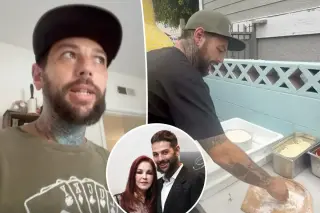
Navarone Garibaldi Garcia, Priscilla Presley’s son, defended a GoFundMe to seed an affordable organic pizza business from his driveway, seeking $5,500 with about $3,000 of his own money; he’s offering free pizzas to donors and says the funds will cover a conventional oven, while noting he has a budget and isn’t asking his mother for money; as of Sunday, roughly $2,880 had been raised amid mixed reactions from fans.
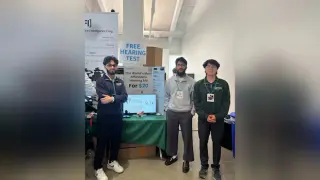
Three McMaster University students launched Amano to democratize hearing care with a battery-free, over-the-counter device that could cost about $20 per pair. The purely mechanical design amplifies sound without batteries or electronics and is shaped like an earbud to reduce stigma. After testing on about 50 ears, they’re seeking formal study approval and awaiting regulatory input as Ontario reviews OTC hearing aids; British Columbia has already approved OTC sales. With roughly 1.5 billion people affected by hearing loss today and up to 2.5 billion by 2050, affordable solutions are increasingly urgent, though experts caution OTC devices should include proper assessments to distinguish mild loss from other treatable issues.
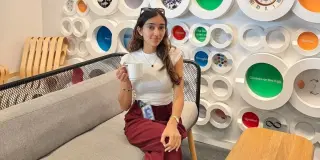
Aashna Doshi, 23, left Google to pursue an AI startup called Bounty after launching the side project podcast “0 to 1,” which helped her network with senior leaders and validate a creative, distribution-focused business idea. The move is pre-revenue, with a founder salary as she builds the company.
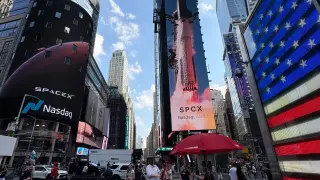
SpaceX announced it will acquire Cursor, the AI coding startup behind a popular code-generation tool, for $60 billion in SpaceX stock, a move aimed at strengthening its AI toolbox amid competition from Anthropic and OpenAI; the deal is expected to close in Q3 after regulatory approvals, with Thrive Capital and other investors involved, and potential contingencies if the deal falls through.
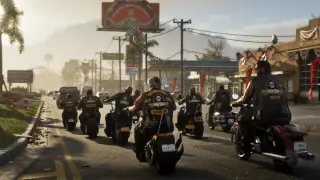
A startup founder is attempting to vibe-code his own GTA 6-inspired game using Claude Max 20x, sharing progress on GitHub in hopes of beating the real GTA 6 to launch. Early results show a roughly human figure and Miami-like visuals forming, but key GTA elements (vehicles, weapons, soundtrack) are missing. The effort serves as a showcase of AI-assisted game development and is unlikely to threaten Rockstar's franchise, though it highlights AI’s potential in indie game creation.
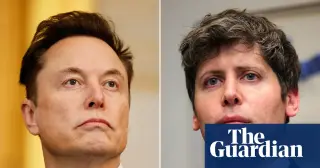
A federal jury in Oakland found Sam Altman, OpenAI and president Greg Brockman not liable in Elon Musk’s 2024 lawsuit, ruling that Musk’s breach of charitable trust and unjust enrichment claims were unproven and time-barred. The verdict removes liability and suggests OpenAI can continue with its for-profit restructuring and a potential IPO around a $1 trillion valuation, with the judge signaling agreement with the jury and the remedies portion of the case being dropped.