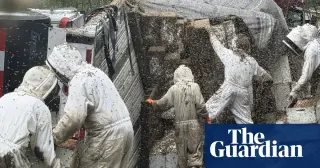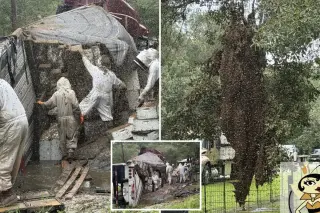
Two million bees escaped when an 18-wheeler carrying beehives overturned near Mauriceville, Texas, prompting residents to stay indoors. Emergency crews transferred the swarms to transport trucks while local beekeepers assisted, and the hives were headed to a nearby honey farm.
An 18-wheeler carrying beehives overturned in Mauriceville, Texas, releasing about 2 million bees. Beekeepers were called to help recapture the swarms as crews moved the hives to other transport; residents were told to stay indoors for safety, and a photographer was stung, but no injuries were reported overall.
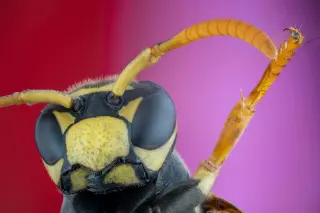
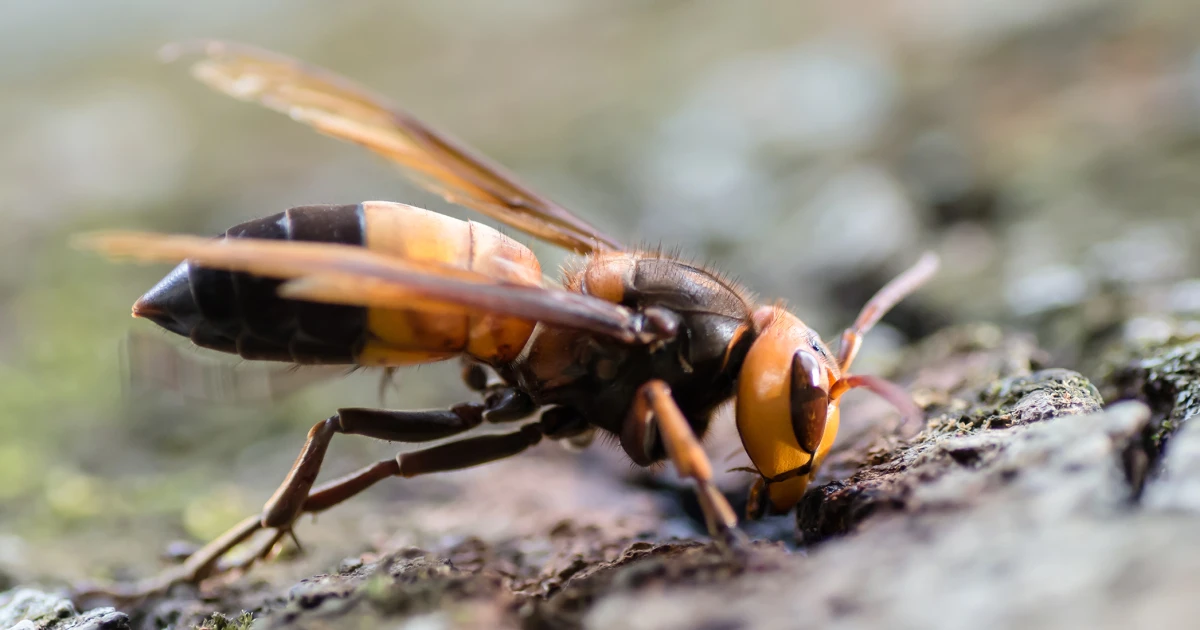
An invasive Asian giant hornet (Vespa mandarinia) reached Washington State in 2019, where nests have numbered up to 1,500 and the hornet’s venom can kill, sometimes in severe stings; a single hunting raid can decapitate 30,000 honeybees to feed larvae, in a three‑phase attack that alarms beekeepers. Washington ran an aggressive eradication program through 2021 and 2024, and officials say the hornet is eradicated in the U.S., though introductions via shipping remain possible. In its native Asia, native honeybees have defenses while some predators, like certain frogs, can eat hornets; the broader risk to beekeeping and ecosystems persists.
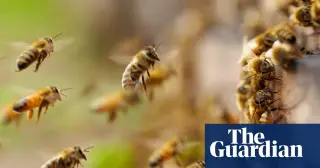
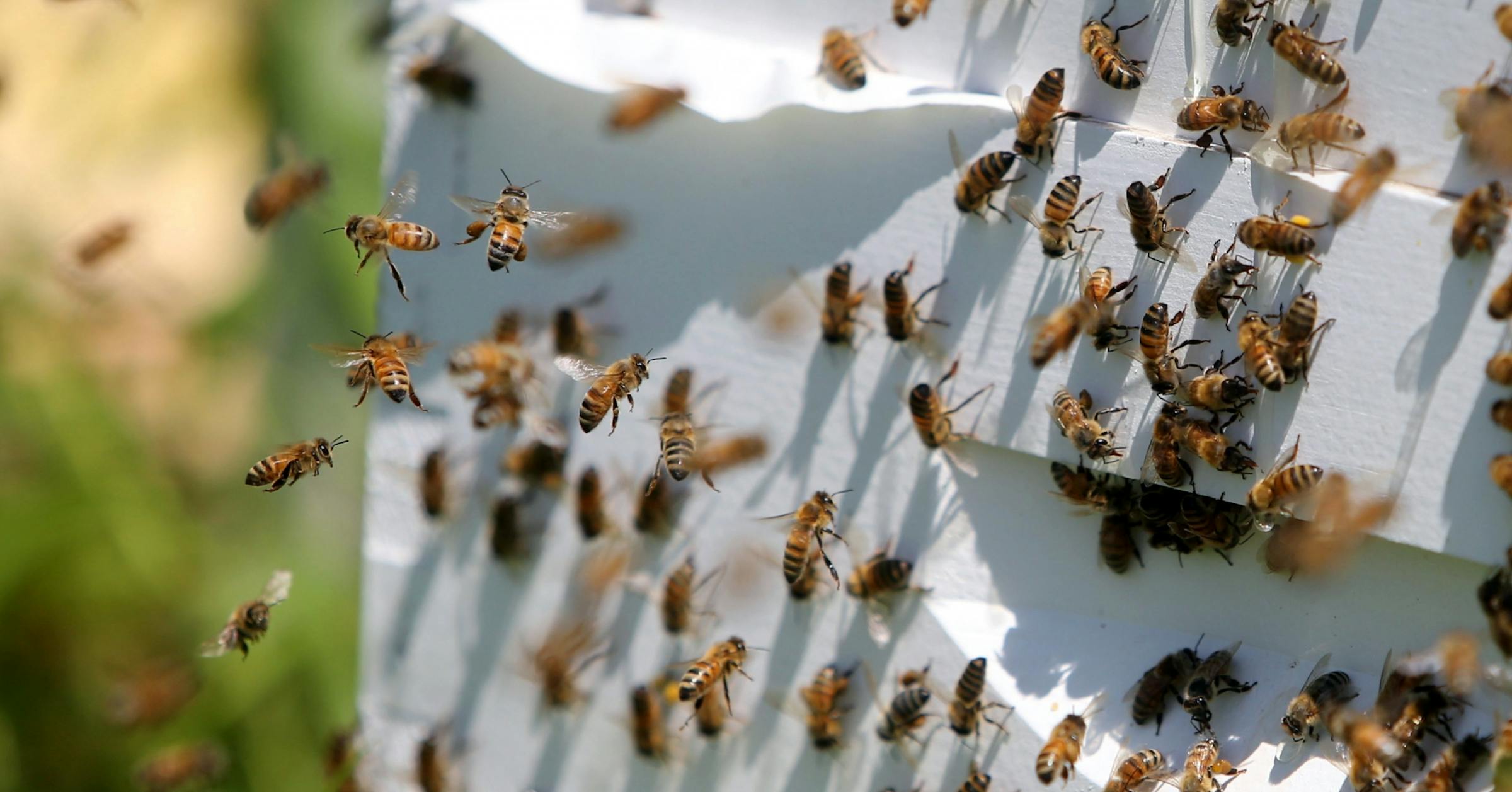
North America’s 2026 bee swarm season began about 17 days earlier than last year, a shift linked to unusually warm winters and climate-driven changes in flowering that are accelerating bee activity; this follows years of record colony losses and, compounded by resilient varroa mites and competition with wild bees, raises concerns for pollination-dependent agriculture valued at roughly $15 billion and is prompting beekeepers to rethink seasonal management.
A Canadian expat in Germany loses her job in January 2025, triggering an identity crisis and the challenge of securing unemployment benefits on a work visa. She rebuilds with a strict daily routine, collaborates with former colleagues to launch a data-science startup, and expands a beekeeping business with her husband. Despite financial strain, she pursues personal goals (yoga teacher training, running) and the value of community, ultimately finding more purpose and stability a year later.
During a surprise Bermondsey outing, the Princess of Wales said she has cut back on alcohol since her cancer diagnosis and chemotherapy in 2024, declining beer and cider in favor of a soft drink, and noting she must be more conscious of her drinking now while continuing her public engagements.
BBC Wildlife explains how Japanese honeybees defend against the largest hornet by luring it into the hive and rapidly heating the surrounding air to about 46°C, roasting the intruder in a cooperative defense honed over millions of years on Honshu.
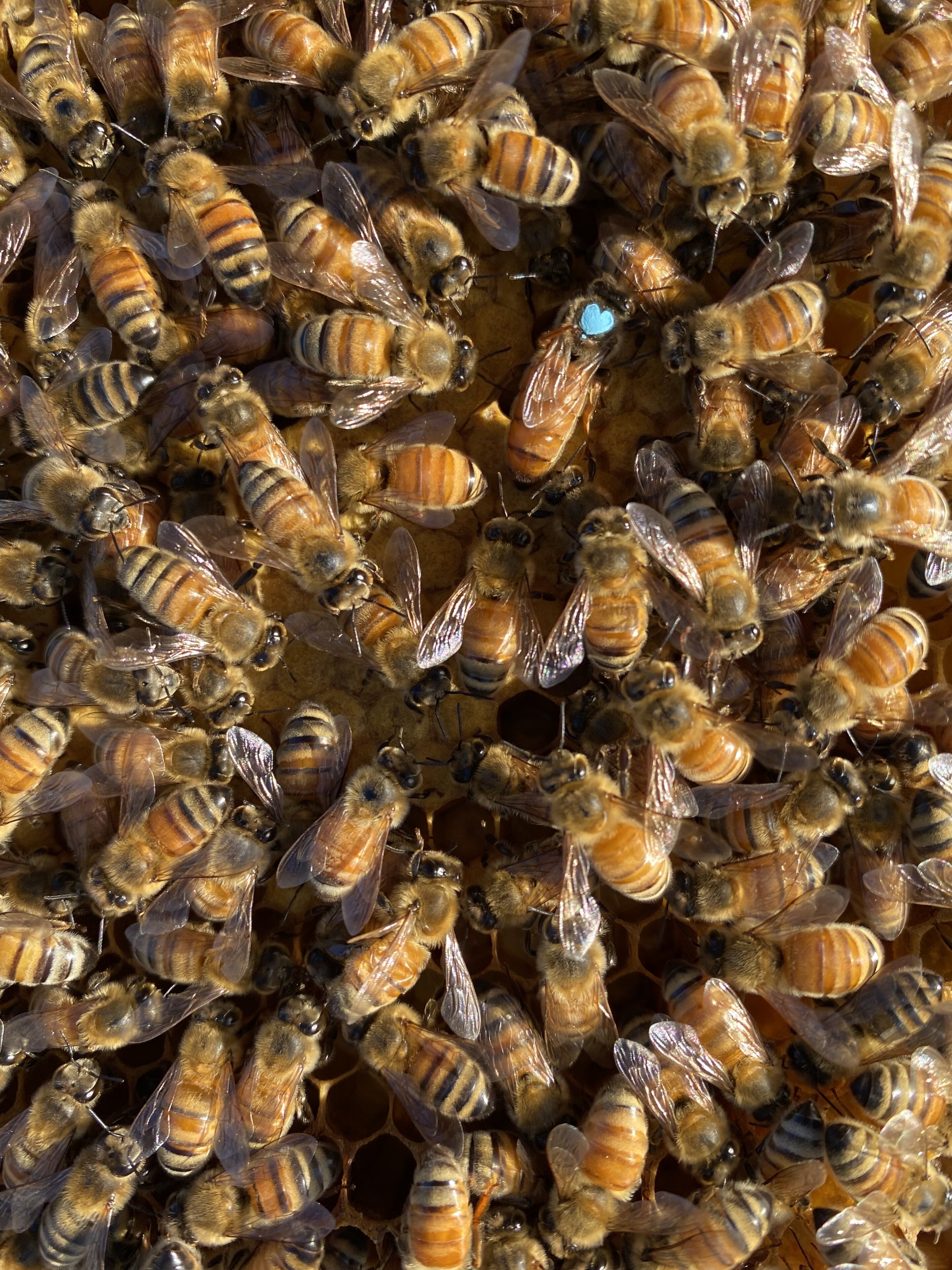
Research shows that viral infections weaken honey bee queens by reducing egg production and pheromone levels, prompting worker bees to replace them. This process, known as supersedure, can disrupt hive stability and productivity, but supplementing colonies with synthetic pheromones like methyl oleate may help manage and prevent premature queen replacement, offering new strategies for beekeepers to maintain healthy colonies.
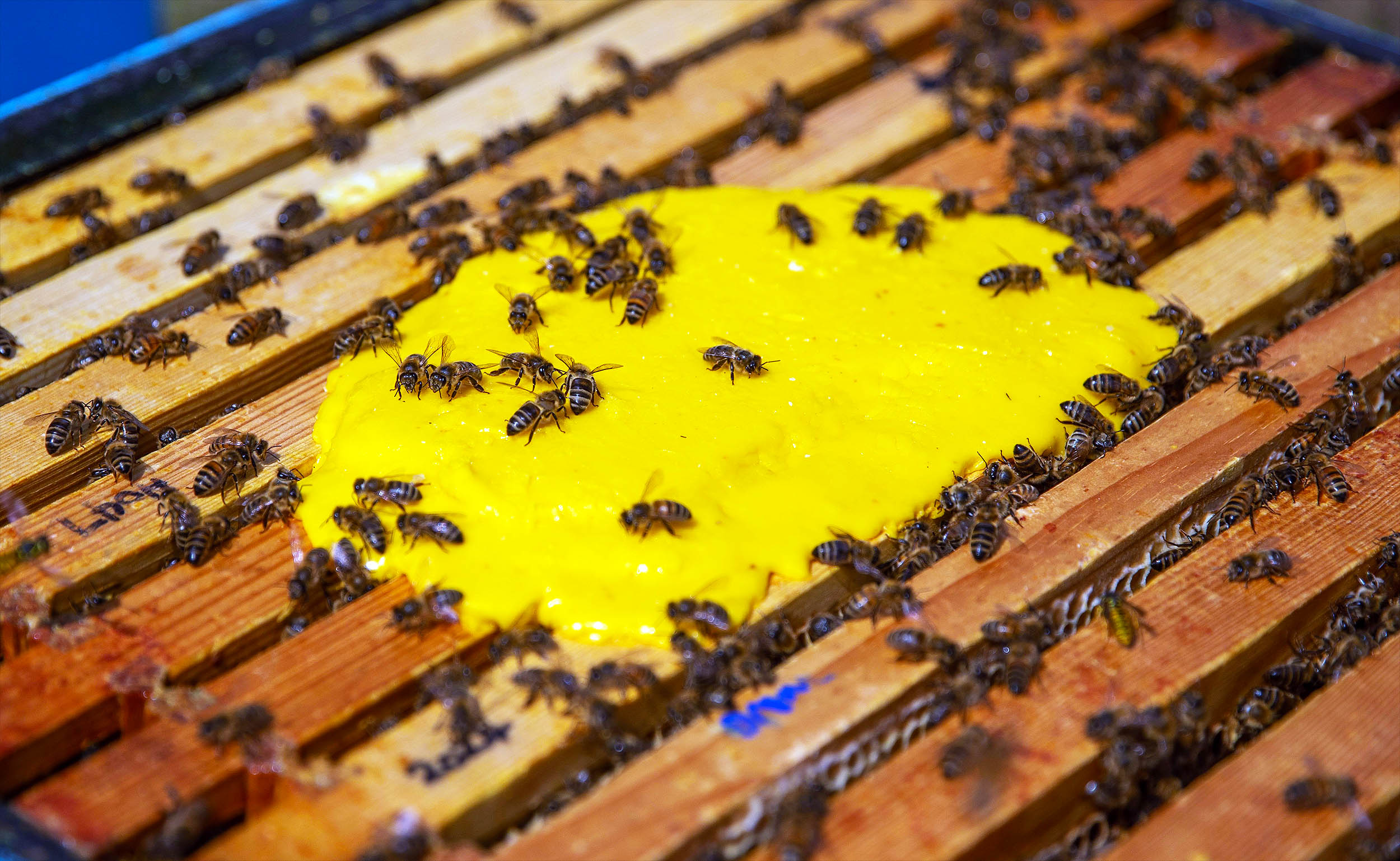
A new study highlights the importance of specific sterols in honeybee diets, particularly 24-methylenecholesterol, which is crucial for brood development. Researchers used genetic engineering to produce these sterols in yeast, creating a potential supplement to support bee colonies during pollen shortages, thereby improving colony resilience and sustainability.
A truck carrying 250 million honeybees overturned near the US-Canada border in Washington, causing the bees to escape and swarm, leading to a rescue effort by local authorities and beekeepers to recover and secure the bees, highlighting the importance and fragility of bee populations.
Southern giant hornets, also known as "murder hornets," have been discovered in Europe for the first time, with sightings in northern Spain since 2022. Researchers are urgently searching for the hornets' nest to prevent ecological disruption, as these hornets are known to decimate beehives and could impact local ecosystems. The hornets likely arrived via cargo ships, and their presence raises concerns about the need for enhanced biosecurity measures at ports to prevent further invasions.
Minnesota beekeepers are experiencing sudden disappearances of honeybee colonies, likely due to varroa mite infestations exacerbated by an unusually warm fall. The mites, which spread viruses among bees, have been a persistent issue, and the extended egg-laying season has allowed them to proliferate. This situation differs from "colony collapse disorder," as the entire hive, including the queen, vanishes. Despite these challenges, beekeepers like Kirk Nelson remain committed to their operations, planning to start new hives in the spring.
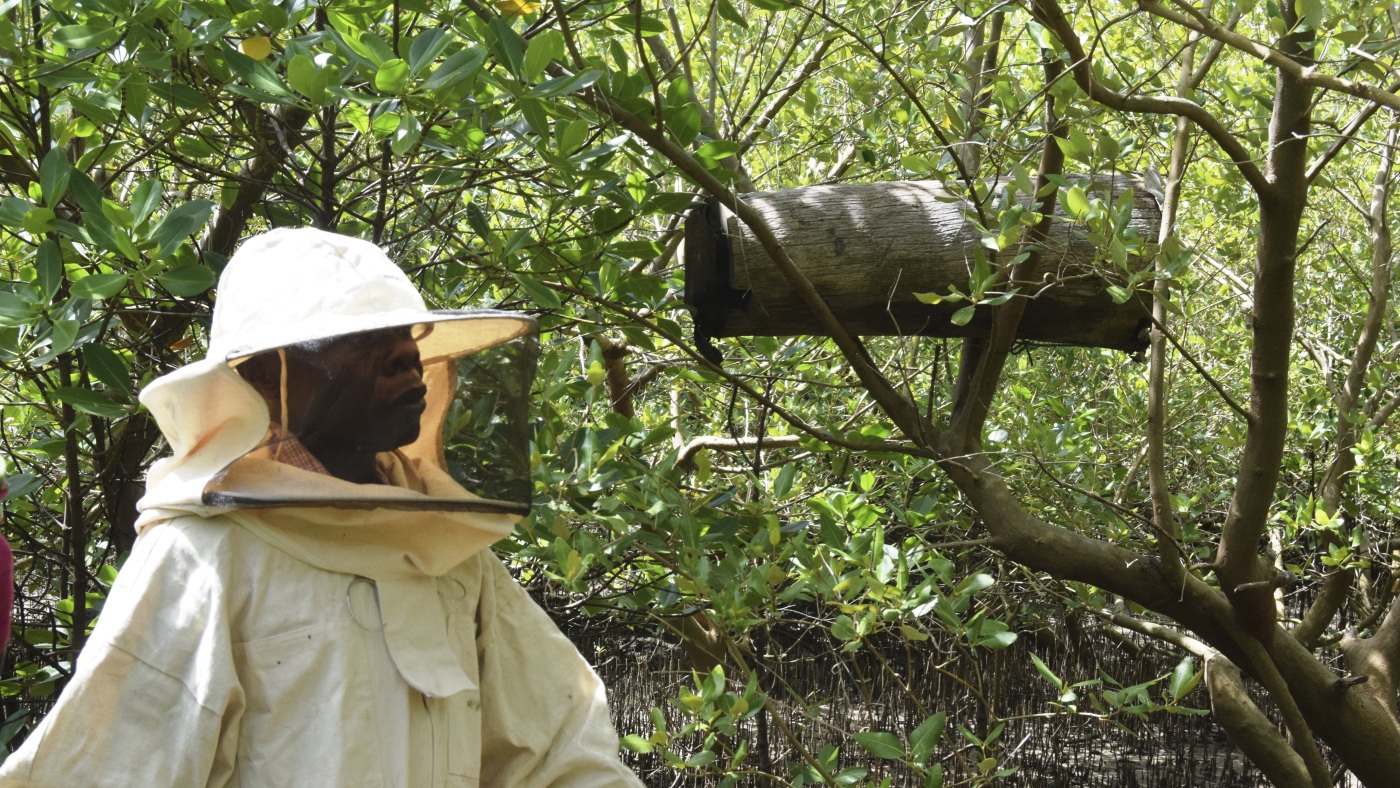
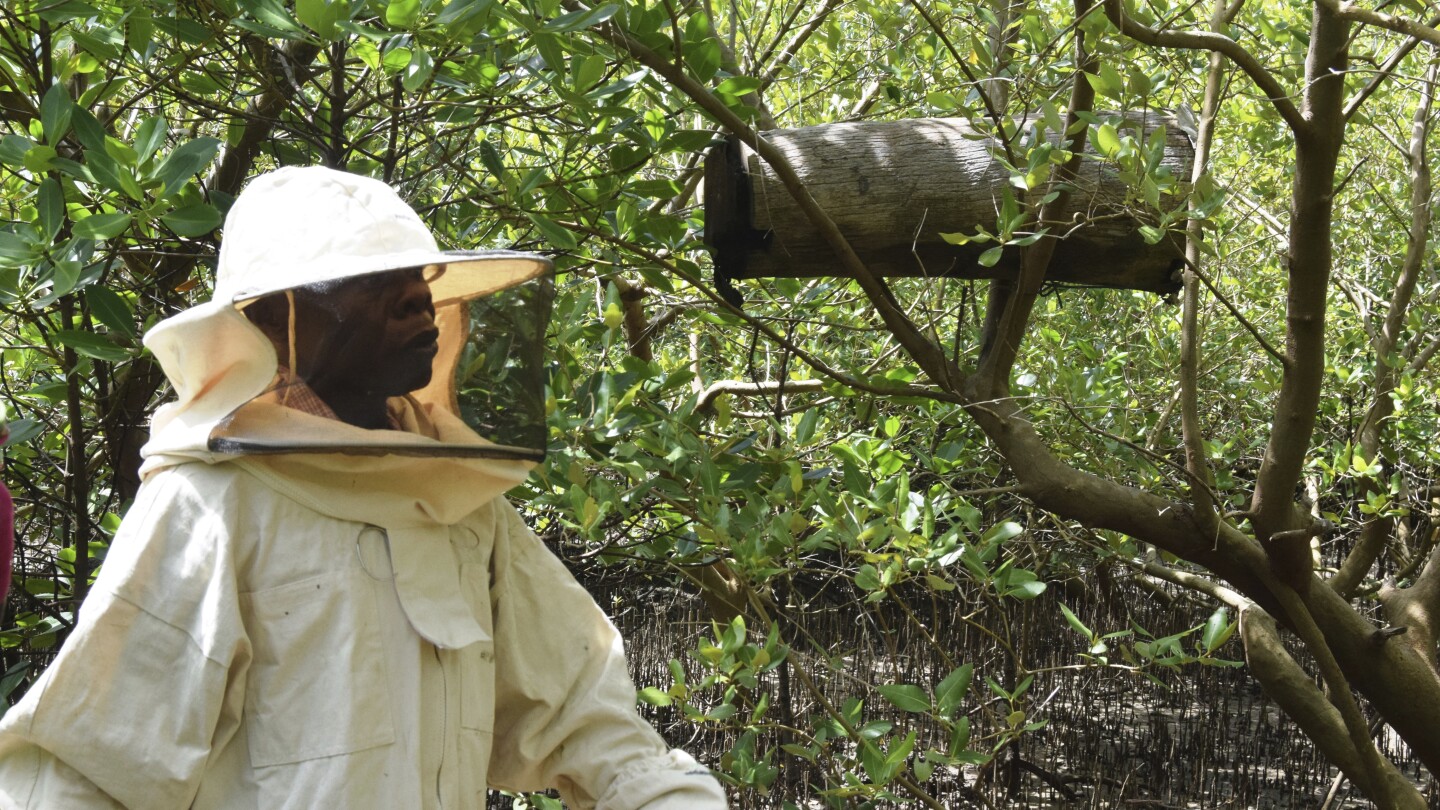
In Mombasa, Kenya, Peter Nyongesa and the Tulinde Mikoko group are using hidden beehives to protect mangroves from illegal logging. The bees act as natural deterrents, attacking loggers who attempt to cut the trees. This initiative not only helps conserve the mangroves, which are crucial for preventing erosion and mitigating severe weather impacts, but also provides income through the sale of high-quality mangrove honey. Despite challenges in measuring the tactic's effectiveness, the integration of beekeeping with conservation efforts shows promise in safeguarding these vital ecosystems.
In Mombasa, Kenya, local conservationists are using hidden beehives to deter illegal logging of mangroves, which are crucial for preventing erosion and mitigating severe weather impacts. The initiative, part of a broader community effort, also generates income through the sale of high-quality mangrove honey. Despite challenges in measuring its effectiveness, the project integrates livelihood support with environmental conservation.
David Beckham recently met with King Charles at Highgrove to discuss the work of The King's Foundation and exchanged beekeeping tips. Beckham has been appointed as an ambassador for the foundation, focusing on education and access to nature for young people. The meeting also highlighted Beckham's interest in rural skills and his ongoing passion for beekeeping, as seen in a recent Netflix documentary.