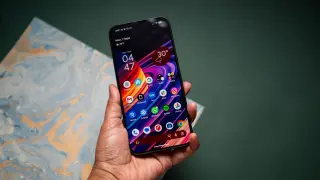
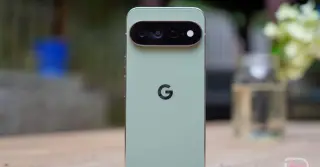
Apple and Google launched their largest flagships at the same $1,299 price point with 256GB storage. The iPhone 18 Pro Max offers superior performance and battery life, while the Pixel 11 Pro XL provides better zoom range and faster charging.
After a month of daily use, the Pixel 11 Pro XL offers excellent durability, efficient battery life, and strong software features, though its cameras and cellular connectivity trail behind Chinese rivals and some competitors.
The Pixel 11 is a clear upgrade over the Pixel 9, packing a faster Tensor G6, a triple-camera setup (48MP main, 13MP ultrawide, 5x tele) with new AI tools (Magic Capture, Rambler, Gemini Intelligence), a bigger 4,985mAh battery with 30W wired/25W wireless charging, and 256GB base storage. It also adds Pixelsnap (magnetic Qi2) and Wi‑Fi 6E, but misses HiLight and costs $899 vs. Pixel 9’s much lower price and solid yet older hardware. While the Pixel 11 is the stronger overall device and a smarter long-term buy, the Pixel 9 remains appealing for budget buyers or those waiting for a sale on newer Pro/10 Pro models.
After expecting little, the Pixel 11 Pro impresses with a new modem, faster camera, and steadier battery, delivering reliable calls and better performance; but charging speeds and wireless charging remain behind rivals, keeping it from being a clear value at its price.
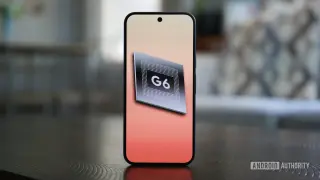
Geekerwan’s early efficiency tests of Google’s Tensor G6 (G6) and Tensor G5 (G5) on a 3nm process show both chips trail Qualcomm’s Snapdragon 8 Elite and Apple’s A-series in performance-per-watt for CPU and GPU workloads, with Kirin 9030 Pro nearly matching them despite an older process. In Geekbench 6 CPU tests, the G6 peaks around 8,000 points at ~11W; the Steel Nomad Light GPU test shows ~1,200 points at ~6W. Overall, Tensor G6/G5 sit behind current flagship silicon in efficiency, though Kirin 9030 Pro remains a close competitor on power.
The Pixel 11 Pro Fold trims weight and thickness but sacrifices battery capacity and charging speed, delivering only modest upgrades over last year. With a smaller 4,750mAh battery, 30W charging, and Tensor G6 concerns, it struggles to justify its $1,899 price against Samsung’s Galaxy Z Fold 8 Ultra and Motorola Razr Fold. The review questions Google’s continued foldable strategy and suggests a more ambitious redesign or a temporary skip of a generation might be necessary to compete.
The Pixel 11 Pro XL’s Tensor G6 brings roughly 20% higher single- and multi-core CPU performance vs the G5, but Google’s chip still lags behind Qualcomm’s Snapdragon 8 Gen 5 and Apple’s A-series in raw speed, especially for gaming where the Galaxy S26 Ultra and iPhone 17 Pro Max pull ahead by about 2.5x at launch and maintain a sizable lead after throttling. Benchmarks show only modest gains in AI/ML and GPU performance, with Tensor’s 3nm process not delivering the kind of power efficiency or speed parity hoped. Storage tests note the Pixel is slightly faster than its predecessor but slower than the Galaxy, and battery life results are still pending. Overall, Tensor G6 improves efficiency but does not close the performance gap against its main rivals, though Google may gain if the efficiency benefits translate to real-world longevity.
Android Authority finds the Tensor G6 delivers CPU/TPU gains but still trails flagship rivals in raw CPU/GPU power and sustained gaming, with the Pixel 11’s RAM downgrade hurting long-term performance; no ray tracing keeps gaming behind rivals, so buy the Pixel for Google’s features rather than top-end performance.
Google’s Pixel 11 Pro debuts with the Tensor G6, a 6.3-inch LTPO OLED at 120Hz, and upgraded main (50MP), tele (48MP), and ultra-wide (48MP) cameras plus 8K video and a 42MP front camera. It packs a 4850mAh battery with 30W wired and 25W wireless charging, IP68 protection, and Android 17 with up to seven OS updates. The base 128GB/12GB RAM model carries a $100 price hike and faces cutbacks like a smaller battery, removal of the thermometer sensor, and a USB 2.0 data cable in the box. Overall, a meaningful flagship upgrade for Google fans, trading some concessions for stronger cameras, display, and software.
The Pixel 11 Pro ships with Android 17 and Google’s pledge of seven years of updates. The software remains a mixed bag: clever ecosystem integrations via Gemini feel innovative, but the experience can seem barebones or privacy-concerning, and the HiLight LED feature is oddly limited. On the performance side, the Tensor G6 brings meaningful CPU improvements (roughly 17% single-core and 21% multi-core in Geekbench 6) while GPU stays similar to the G5; real-world use is smoother, and thermals are better than before thanks to a larger cooling setup, though throttling still kicks in due to the phone’s compact size. Overall, real-world performance is solid, but the software experience still lags behind some rivals and can feel uneven.
Google’s Pixel 11 lineup uses smaller batteries but higher efficiency (Tensor G6 and a new MediaTek modem) to deliver 30+ hours of use, narrowing the gap with last year’s models. The Pixel 11 has a 4985mAh battery with 25W wireless charging and ~55% charge in 30 minutes; Pro and XL sizes are 4850mAh and 5115mAh, with Pro XL charging up to ~75% in 30 minutes. Real-world testing shows around 3–4 hours of screen-on time on the Pro and about 3 hours on the XL, with a typical day ending at 10–20% on the regular Pixel 11; Extreme Charging mode accelerates top-ups below 50%. Battery life varies with usage (e.g., wireless Android Auto can drain more). Full reviews are coming next week.
Early Geekbench results for the Pixel 11 Pro XL show a roughly 14% single‑core and 20% multi‑core uplift over the Pixel 10 Pro XL, thanks to the new Tensor G6 and Titan M3, but the Pixel still trails the Samsung Galaxy S26 Ultra (about 3,082/10,381 in scores). The Pixel 11 line, including the non‑XL, shares core specs, and Google is targeting an August 20 launch with pre‑order promos like a $200 gift card for Pro models; as with all early benchmarks, take the numbers with caution until official reviews arrive.
A leaked 3DMark Wild Life Extreme result for the Pixel 11 Pro with the Tensor G6 shows 2,653 points (about 15.89 fps), about 21% behind the Tensor G5 and roughly 2.7× slower than the Snapdragon 8 Elite Gen 5; the test ran on a display unit, so it’s unverified and could be affected by ambient temperature, and Geekbench Compute data suggest a different picture across workloads, so the gap may vary by task.
GSMArena outlines Google’s Pixel 11 lineup — vanilla Pixel 11, Pro, Pro XL, and Pro Fold — with changes like no 12/128GB option, 12GB RAM on 256GB Pro variants, Tensor G6, and 25W PixelSnap charging, while pre-orders start soon and readers are invited to vote in a weekly poll on their preferred model, with regional price tables included.
Rumors that the Tensor G6 would ship on a 2nm process are challenged by a Google VP interview stating the chip uses a 3nm node, meaning the Pixel 11 won't bring a 2nm Google Tensor at launch—and a 2nm Tensor may not arrive until the Pixel 12.