Tag

Universe Age

All articles tagged with #universe age

JWST discovers surprisingly mature galaxies early, fueling debate on cosmic age
science11 days ago

JWST discovers surprisingly mature galaxies early, fueling debate on cosmic age

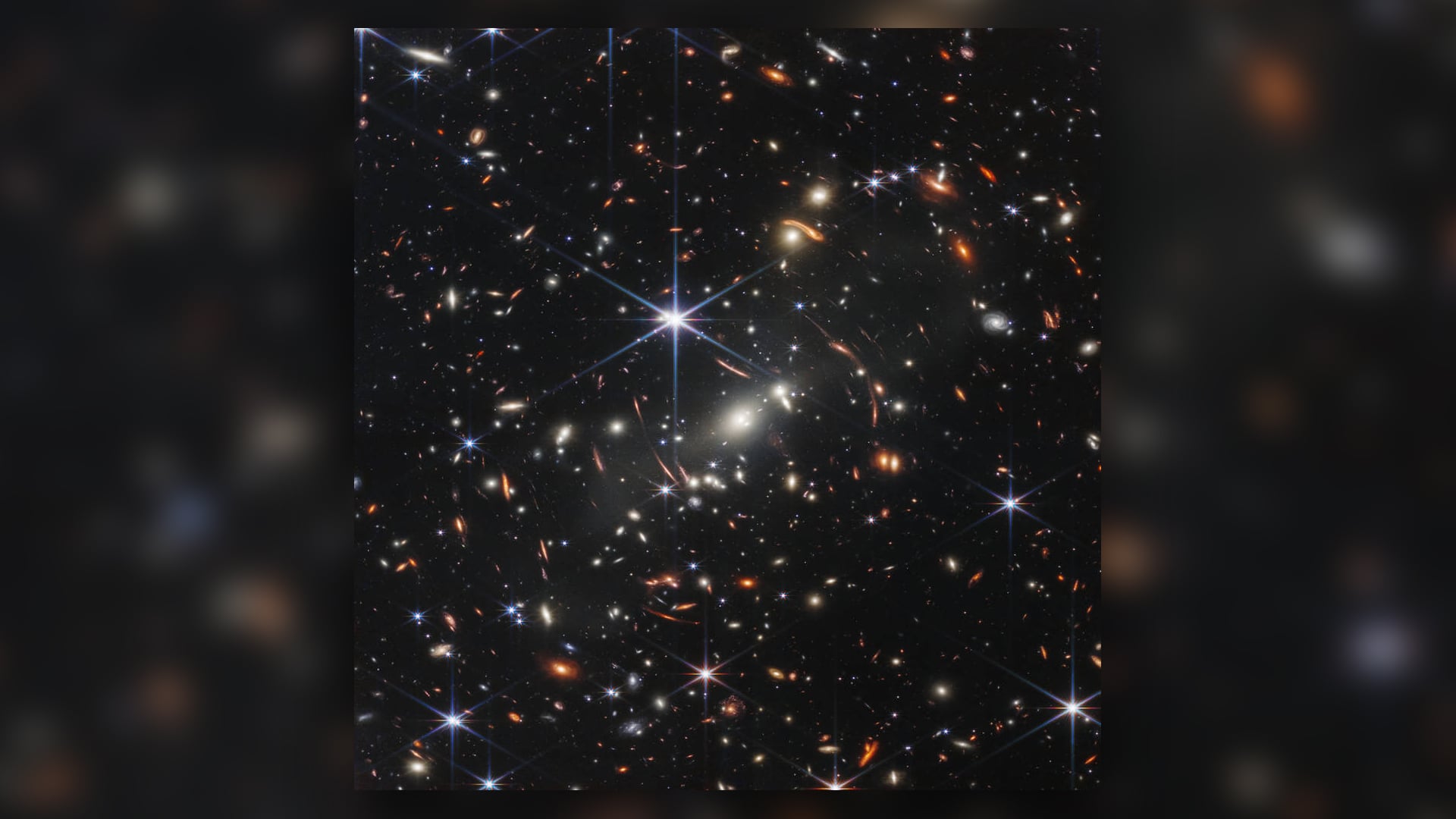
NASA’s James Webb Space Telescope has detected bright, massive galaxies at redshifts around 11–14 (within ~300 million years after the Big Bang) that contain heavy elements like oxygen, challenging standard galaxy-formation timelines. A minority peer‑reviewed paper even suggests a universe age of 26.7 billion years by combining ideas like tired light and time‑varying constants, but the mainstream view remains ~13.8 billion years; the JWST findings continue to test and possibly reshape our cosmological models.

Cosmology shake-up: new model suggests 27-billion-year universe without dark matter
science1 month ago

Cosmology shake-up: new model suggests 27-billion-year universe without dark matter

Earth.com reports on Rajendra Gupta’s CCC+TL cosmology, which argues the universe could be explained without dark matter or dark energy by allowing changing physical constants and photon energy loss over vast distances, and suggests a universe age of about 27 billion years; if borne out, this would upend standard cosmology, but it requires rigorous testing against galaxy rotation, gravitational lensing, the cosmic microwave background, and other observations.

New Discoveries Challenge Dark Matter and Galaxy Formation Theories
science1 year ago

New Discoveries Challenge Dark Matter and Galaxy Formation Theories

A new theory by Gupta, combining covarying coupling constants (CCC) and the 'tired light' (TL) hypothesis, challenges the existence of dark matter and suggests the universe is 26.7 billion years old, nearly double the current estimate. The CCC+TL model proposes that fundamental constants may vary and that redshift is due to light losing energy over distances, not cosmic expansion. This model could redefine our understanding of cosmic phenomena, questioning the need for dark matter and dark energy, and potentially altering the foundations of modern cosmology.

James Webb Telescope Reveals Ancient Galaxies, Redefining Cosmic Age and Theories
science1 year ago

James Webb Telescope Reveals Ancient Galaxies, Redefining Cosmic Age and Theories

The James Webb Space Telescope has made a groundbreaking discovery that challenges the long-held belief about the universe's age. Previously thought to be 13.8 billion years old, new findings suggest it could be 26.7 billion years old. This revelation stems from observations of 'impossible early galaxies' that formed sooner than expected, prompting scientists to reconsider existing cosmological models. The research combines the tired light theory with evolving models, offering a new perspective on the universe's timeline.

"Controversial Study: Universe Has No Dark Matter and Is 27 Billion Years Old"
astronomyphysics2 years ago

"Controversial Study: Universe Has No Dark Matter and Is 27 Billion Years Old"

A new paper by University of Ottawa physics professor Rajendra Gupta challenges the existence of dark matter, suggesting that the universe is twice as old as current models suggest and doesn't require dark matter to exist. Gupta's theory, which builds on his previous work about the universe's age, proposes a revised model based on a "covarying coupling constant" and the tired light hypothesis, arguing that dark matter doesn't have to be part of the equation at all. This controversial claim directly contradicts prevailing theories and is expected to face pushback from Gupta's peers.

"Satellite Galaxies' Motion Indicates a Younger Universe"
astronomy2 years ago

"Satellite Galaxies' Motion Indicates a Younger Universe"

Observations of the motion of satellite galaxies around massive galaxy groups suggest that the universe may be younger than predicted by the standard cosmological model with Planck cosmological parameters. Research using data from the Sloan Digital Sky Survey (SDSS) indicates a notable excess of correlated satellite pairs, implying that massive galaxy groups are younger in the real universe compared to current simulations. These findings challenge the existing cosmological model and may provide insights into the Hubble tension problem.