Tag

Work Life Balance

All articles tagged with #work life balance

Danish expat reveals six-year struggle to adopt European work-life balance
lifestyle7 days ago

Danish expat reveals six-year struggle to adopt European work-life balance

Brooke Black, a US-based entertainment professional who moved to Denmark in 2020, spent six years resisting local work norms before accepting that rest is not a reward for productivity. Despite Denmark’s 37-hour work week and generous leave policies, Black initially worked through lunch and vacations to prove her value. She eventually adopted the Danish concept of 'hygge' and summer house retreats, realizing that prioritizing rest enhances rather than diminishes ambition.

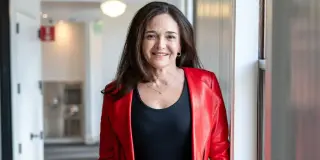
Sandberg: Women are leaving corporate leadership due to lack of support, not lack of ambition
business24 days ago

Sandberg: Women are leaving corporate leadership due to lack of support, not lack of ambition

Sheryl Sandberg argues that the decline in women's interest in corporate promotions stems from systemic barriers rather than a lack of ambition. Citing Lean In's 2025 report, she notes that while women and men share similar career motivation levels, women are less likely to seek promotions due to unequal opportunities, mentorship gaps, and disproportionate household labor. Sandberg emphasizes that women in leadership roles advocate for policies like flexible schedules and fertility coverage, which improve retention and company performance. She urges companies to address cultural and structural issues to retain female talent, while supporting individual choices to step back from corporate life.

Yuka CEO Julie Chapon Runs a Flexible, Family-First Day with Bike Commutes and Long Lunches
business1 month ago

Yuka CEO Julie Chapon Runs a Flexible, Family-First Day with Bike Commutes and Long Lunches

Julie Chapon, founder and CEO of the Yuka app, describes a NYC day that blends family priorities with startup leadership: she routinely says no to about 80% of emails, bikes to a nearby coworking space to spark ideas, keeps afternoons mostly free of meetings, and leaves the office around 5:30 p.m. to be with her kids; she and her US team sometimes enjoy two-hour lunches, fits in a gym session at noon, and unwinds with reading and journaling before bed, all while pursuing personal goals like a Mont Blanc trek and learning to cook as she steers Yuka’s mission to rate foods and cosmetics by ingredients.

A Day with Lauryn Bosstick: discipline, podcasts, and AI-powered thinking
entrepreneurship1 month ago

A Day with Lauryn Bosstick: discipline, podcasts, and AI-powered thinking

Lauryn Bosstick, founder of The Skinny Confidential, describes a structured Austin day: wake around 7 a.m. with her phone on airplane mode until about 11, spend mornings meditating and planning, Carla-style family time, then gym, and a workday filled with back-to-back meetings or podcast recording; she uses AI as a thinking partner to test ideas, avoids heavy screen time at night, reads extensively, and keeps weekends sacred for family, emphasizing consistency, delegation, and mindful technology use to sustain growth.

Resetting at 40: How a Gap Year Rewired My Career and Life
lifestyle1 month ago

Resetting at 40: How a Gap Year Rewired My Career and Life

After more than two decades in corporate America, the author took an unpaid gap year in her 40s to slow down, redefine priorities, and try new experiences each week. The journey fostered curiosity, stronger friendships, and ultimately a shift to travel writing, while she learned to manage finances and let go of rigid independence. In the ensuing months, life brought her husband’s retirement and her youngest child off to college, with the gap-year mindset helping navigate these transitions with presence and purpose.

Sleep Diaries of 3 AI Founders Spotlight the Grind-vs-Rest Clash
technology1 month ago

Sleep Diaries of 3 AI Founders Spotlight the Grind-vs-Rest Clash

Business Insider tracked four days of sleep for three AI startup founders—Lance Yan of Traverse, Kavitta Ghai of Nectir, and Boris Skurikhin of Docket—revealing a spectrum from late-night grind to strict routines: Yan averages 5–6 hours with late work and doomscrolling; Ghai enforces 7–8 hours with magnesium, a sleep mask, precise temps, and a 3-minute fall asleep; Skurikhin typically sleeps 7–8 hours, bed around midnight while watching videos, and rejects the 'grindmaxxer' stereotype; the piece frames two Silicon Valley sleep cultures—biohackers who optimize rest versus hustlers who push through—and notes there's no universal answer for founder productivity.

Presence Over the Pipeline: A Real Estate Exec’s Career Break
business1 month ago

Presence Over the Pipeline: A Real Estate Exec’s Career Break

A Boston-area real estate development and operations professional explains pausing her 20-year career to be present for her college-bound sons, after previously returning 10 days after giving birth with a four-day workweek and a night nanny; she notes paid leave has evolved and she intends a flexible next chapter to stay connected with her kids during a major life transition.

Balancing Acts: US Women in Politics Discuss Motherhood and Power
politics1 month ago

Balancing Acts: US Women in Politics Discuss Motherhood and Power

US female lawmakers Karoline Leavitt, Alexandria Ocasio-Cortez, and Sara Jacobs discuss balancing demanding careers with motherhood, from Leavitt stepping back to spend time with her infant to Jacobs and Ocasio-Cortez undergoing egg freezing to secure future family plans. The piece notes the US lacks mandated paid parental leave compared with most European nations and includes perspectives from academics and lawyers on ongoing work-life balance challenges and the policy changes many say are needed.

Beat Burnout: 10 Leaders’ Real-World Strategies for Staying Sane at Work
business2 months ago

Beat Burnout: 10 Leaders’ Real-World Strategies for Staying Sane at Work

Following Lilian Weng’s burnout-driven resignation, the piece shares burnout-avoidance playbooks from 10 leaders—guardrails and rest from Spiegel and Dell, work-life fusion from Siminoff, rest-as-asset from Huffington and Bezos, and trade-offs or life-first views from Nooyi, Sandberg, Buffett, Munger, and Blankfein—illustrating that sustainable leadership comes from a mix of boundaries, rest, and perspective rather than a one-size-fits-all approach.

This Working Mom Uses Claude AI to Tame Her Busy Week
technology2 months ago

This Working Mom Uses Claude AI to Tame Her Busy Week

A busy mom and founder uses Claude AI to automate weekly planning: a Sunday briefing pulls her calendars, emails, and wellness data to outline the week, flag conflicts, and generate a grocery list linked to a Skylight recipe box. She records multi-minute voice memos to feed Claude (then edits via voice-to-text) to brainstorm tasks, schedule, and even pull in parenting tips, reducing weekend logistics and building a scalable system that takes things off her plate as she manages two kids and a school transition.

Finland's Happiness Edge: Free Basics, Nature, and Trust
world3 months ago

Finland's Happiness Edge: Free Basics, Nature, and Trust

Finland consistently ranks as the world's happiest country in the World Happiness Report due to systemic supports like largely free education, universal healthcare, and short work commutes, plus cultural habits such as access to nature (Everyman’s Right), opportunities to learn new skills, high social trust, and honest emotional expression that together cultivate a steady sense of contentment rather than peak euphoria.

Is a Nine-to-Five PhD Feasible? Readers Share Real-World Experiences
careers3 months ago

Is a Nine-to-Five PhD Feasible? Readers Share Real-World Experiences

Nature’s readers say there is no universal nine-to-five PhD: a poll found about 20% of PhD students logged up to 40 hours a week, while the majority worked longer—some 80 hours or more—depending on topic, supervision, and field. While theoretical or mid-career paths can allow tighter schedules, experimental labs and pressure to publish often make a strict 9-to-5 impractical; overall the viability of a nine-to-five PhD hinges on topic, supervisory support, and institutional culture.