biotechnology2.475 min read
Caribou Biosciences closes after failing to fund pivotal CAR-T trial
2 days ago•Source: STAT

The latest biotechnology stories, each synthesized from multiple sources with added background and context.
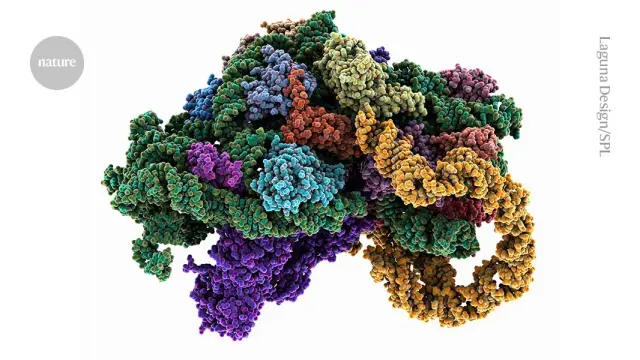
Scientists are increasingly bypassing living cells to synthesize proteins and create biosensors using cell-free transcription and translation systems. By extracting cellular machinery from organisms like E. coli or plants, researchers can accelerate the design-build-test cycle from weeks to hours, enabling the production of toxic compounds and the rapid iteration of sensors for contaminants like lead and copper. While these systems offer high customizability and avoid the risks of releasing genetically modified organisms, they face significant challenges regarding cost, energy depletion, and scalability compared to traditional cell-based methods.
Fierce Biotech•7 days ago
Fierce Biotech•7 days ago

Beam Therapeutics has filed a lawsuit against YolTech Therapeutics and Serapha Bio, alleging that a former scientist stole trade secrets to develop a competing therapy for alpha-1 antitrypsin deficiency. The suit claims the former employee accessed confidential records off-hours while employed by Beam. Serapha Bio has denied the allegations, while YolTech has not responded.
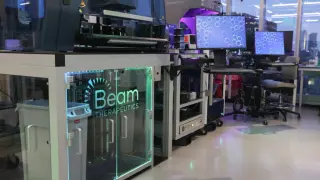
Cambridge-based gene-editing firm Beam Therapeutics has filed a lawsuit alleging that former scientist Zi Jun 'Emma' Wang stole proprietary data to co-found a Shanghai-based company, YolTech Therapeutics. The suit claims Wang accessed electronic lab notebooks during off-hours to build the foundation for a new venture, Serapha Bio, which recently secured funding from venture capital firms RA Capital and RTW. This legal action highlights rising tensions between American biotech firms and Chinese counterparts, as Beam seeks to protect its intellectual property from alleged misappropriation.

uniQure shares dropped 41% after its Huntington’s disease gene therapy, AMT-130, failed to reach statistical significance on its primary endpoint at 48 months. While the composite Unified Huntington’s Disease Rating Scale (cUHDRS) showed only a 44% slowing of progression, the secondary Total Functional Capacity (TFC) endpoint remained strong at 61%. Analysts and executives argue that methodological flaws in the control group and the stability of functional outcomes support the drug’s path to accelerated FDA approval, despite the initial market sell-off.
Endpoints News has released its 2026 Endpoints 11 list, highlighting 11 private biotech startups selected from over 150 nominations. The awards, announced at a Boston gala, recognize companies making significant bets in gene therapy, oncology, and AI, reflecting a biotech sector that is recovering financially but facing new structural uncertainties.
A small Phase 1 trial found that a single infusion of CTX310, a CRISPR-Cas9 therapy targeting ANGPTL3 in the liver, reduced LDL cholesterol by 52.5% and triglycerides by 47.8% at 12 months across doses, with no serious safety events; durability suggests potential year-long lipid control, though larger studies and 15-year safety follow-up are planned.
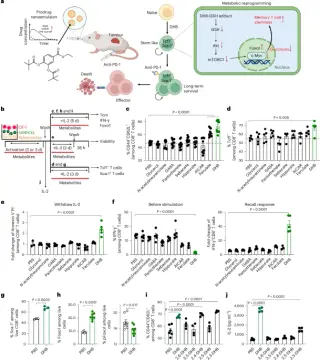
Researchers developed an oral prodrug nano-emulsion of 3,4-dihydroxybenzoic acid (DHB), a gut microbial metabolite, which reprograms CD8+ T cells to a stem-like, memory-prone state by suppressing glycolysis via the Akt-mTORC1-Myc axis and depleting intracellular GSH. The formulation increases DHB bioavailability and half-life, enhances antigen-specific stem-like T cell expansion in mice, and boosts efficacy of anti-PD-1 therapy across multiple tumor models, with evidence of long-term immunity and potential to improve adoptive T cell therapy. This work links gut microbiota metabolites to systemic T cell fitness and presents a translational nano-prodrug strategy for cancer immunotherapy.
Researchers at the University of Cambridge used AI to identify stable features across the sarbecovirus family and developed a DNA vaccine intended as a broad-spectrum, potentially universal shot. In the first human trial, the vaccine was safe and elicited antibodies recognizing diverse sarbecoviruses, and its needle-free delivery and stability could aid distribution. However, immune responses were modest, and duration of protection, optimal dosing, and real-world efficacy require larger trials; the goal of a universal vaccine remains years away.
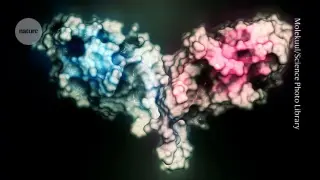
An open-access atlas called the ESM Atlas, generated with the ESMFold2 AI model, predicts about 1.1 billion protein structures and 6.8 billion sequences, outperforming AlphaFold in scale and openness and enabling new biology discoveries through a freely available resource.
UCLA researchers report MethylScan, a simple, affordable test that analyzes DNA methylation in circulating cell-free DNA to detect multiple cancers and liver diseases, and to indicate tissue of origin and organ health. In 1,061 samples, it achieved about 98% specificity, ~63% cancer detection across stages (~55% for early-stage) and ~80% detection of liver cancers in high‑risk groups, with a sequencing depth of ~300× costing under $20 per test as costs fall. By reducing background DNA, it functions as a system-wide health monitor, though larger prospective studies are needed to confirm real-world effectiveness.
The FDA has once more rejected Replimune’s engineered virus therapy for advanced melanoma, a decision that underscores the ongoing debate over tightening agency standards amid leadership changes; the treatment is designed to boost the immune system’s attack on skin cancer, but regulators say the data remain insufficient.