Cathy Tie, founder of Origin Genomics, argues that editing human embryos to prevent hereditary diseases is a moral imperative, despite current U.S. bans and safety concerns. While critics warn of eugenics and off-target risks, proponents cite new precise editing tools and patient demand for alternatives to IVF screening.
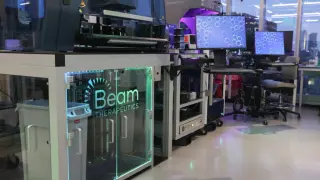
Beam Therapeutics has filed a lawsuit against YolTech Therapeutics and Serapha Bio, alleging that a former scientist stole trade secrets to develop a competing therapy for alpha-1 antitrypsin deficiency. The suit claims the former employee accessed confidential records off-hours while employed by Beam. Serapha Bio has denied the allegations, while YolTech has not responded.
Beam Therapeutics has filed a lawsuit in Massachusetts against YolTech Therapeutics and Serapha Bio, alleging that former employee Zi Jun 'Emma' Wang stole proprietary base editing data to develop a competing therapy for alpha-1 antitrypsin deficiency. The suit claims Wang accessed confidential records off-hours while employed by Beam, leading to the creation of a rival drug candidate that targets the same genetic mutation as Beam's lead program. Serapha Bio has denied the allegations, while YolTech has not responded.
Cambridge-based gene-editing firm Beam Therapeutics has filed a lawsuit alleging that former scientist Zi Jun 'Emma' Wang stole proprietary data to co-found a Shanghai-based company, YolTech Therapeutics. The suit claims Wang accessed electronic lab notebooks during off-hours to build the foundation for a new venture, Serapha Bio, which recently secured funding from venture capital firms RA Capital and RTW. This legal action highlights rising tensions between American biotech firms and Chinese counterparts, as Beam seeks to protect its intellectual property from alleged misappropriation.
A Phase 1 trial of CTX310, a CRISPR-based gene-editing therapy, demonstrated that a single infusion can reduce LDL cholesterol by 52.5% and triglycerides by 47.8% for at least one year. The treatment targets the ANGPTL3 gene in the liver, offering a potential permanent alternative to daily medications for patients with resistant lipid disorders. While early results are promising, larger trials are needed to confirm long-term safety and efficacy.
Cathy Tie, CEO of New York-based Origin Genomics, is testing AI-assisted gene editors on human embryos to prevent inherited diseases like familial adenomatous polyposis. While the company aims to prove safety to eventually lift U.S. legal bans on embryo editing, critics warn of 'designer babies' and unregulated overseas clinics. Tie argues that pursuing this technology is ethical given the suffering of affected families, despite current prohibitions and safety concerns.
A single infusion of the experimental CRISPR therapy CTX310 reduced LDL cholesterol by 52.5% and triglycerides by 47.8% in a 15-patient trial, with effects persisting for one year. The treatment targets the ANGPTL3 gene in the liver, offering a potential one-time alternative to daily medications for patients with resistant lipid disorders.
The UK Environment Secretary has approved a marketing notice for gene-edited bananas that resist browning, marking a significant step for precision breeding in Britain. Developed by Norfolk-based Tropic Biosciences using CRISPR-Cas9, these bananas have three genes tweaked to disable the polyphenol oxidase enzyme, which causes fruit to brown when damaged or aged. This modification extends shelf life by up to 24 hours after peeling and reduces bruising during transport. Defra estimates that browning accounts for 20% of banana yield losses, with 1.4 million edible bananas discarded annually by UK households. If the Food Standards Agency clears the product for safety, these bananas will be sold in England without special labeling, as gene editing is distinct from genetic modification under the Precision Breeding Act 2022. The approval follows similar green lights for other crops, including vitamin D-rich tomatoes and disease-resistant potatoes, reflecting post-Brexit regulatory shifts that prioritize bioscience innovation over stricter EU rules.
Colossal Biosciences has delayed its goal to revive the woolly mammoth to the early 2030s, citing the complexity of editing over 150 genes. The company is now relying on AI to manage the genetic data, having previously succeeded in creating woolly mice using mammoth DNA.
Anthropic announced that its AI model, Claude, autonomously discovered a new enzyme system in bacterial DNA that resembles the CRISPR gene-editing mechanism. The discovery, made over 21 hours by nearly 950 AI agents, is the first result from Anthropic’s new life sciences laboratory. While the system shares structural similarities with CRISPR, its function remains unproven, and experts are divided on its scientific significance.
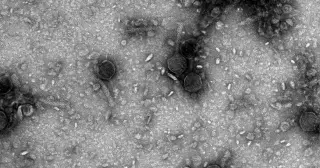
Scientists have identified VIPR, a virus-based gene-editing defense system thought to be over four billion years old, which may be the evolutionary ancestor of CRISPR and predates it by billions of years, according to two Science papers.
A four-person pilot study, published in The New England Journal of Medicine, found that a single liver-targeted CRISPR-Cas9 therapy reducing ANGPTL3 activity lowered LDL cholesterol by about 50% and triglycerides by about 55% in the highest-dose group, with these effects persisting for more than a year. Side effects were generally mild, though one participant with extensive cardiovascular disease died, and larger trials are needed to confirm long-term safety and efficacy.
A weekend reads roundup from Retraction Watch highlights a second death in a Chinese gene-therapy trial, the resignation of Cambridge professor Jason Arday amid plagiarism allegations, and Retraction Watch’s 16th birthday, alongside extensive coverage of data integrity, paper mills, AI-related misconduct, and global debates about trust in scholarly publishing.
Researchers used CRISPR to disable the gene that drives allergy-causing proteins in dog saliva and fur, creating two hypoallergenic beagles, Bailey and Alfie. Early tests showed no allergy protein in their saliva or hair, and a skin-prick test on a human volunteer suggested reduced reaction. While the method is a first for dogs, experts warn it will be years before any pet becomes available, and long-term safety, cost, and ethical implications—such as potentially dampening adoption of shelter animals—must be addressed before commercialization.
Kindred Companion Sciences used CRISPR to knock out the Can f 1 allergen gene in beagles, producing Bailey and Alfie. Edited dogs showed no detectable Can f 1 in saliva or dander, and a skin-prick test on a volunteer who lived with Bailey produced no reaction (non-edited dog samples did). The team used a cloning-like method (somatic cell nuclear transfer) to create the embryos and plans to expand to other breeds and service dogs, though a public timeline and broader safety checks remain ongoing.