Tag

Chirality

All articles tagged with #chirality

Mirror Life: The Emergence of a Second Tree of Life and Its Global Risks
technology11 days ago

Mirror Life: The Emergence of a Second Tree of Life and Its Global Risks

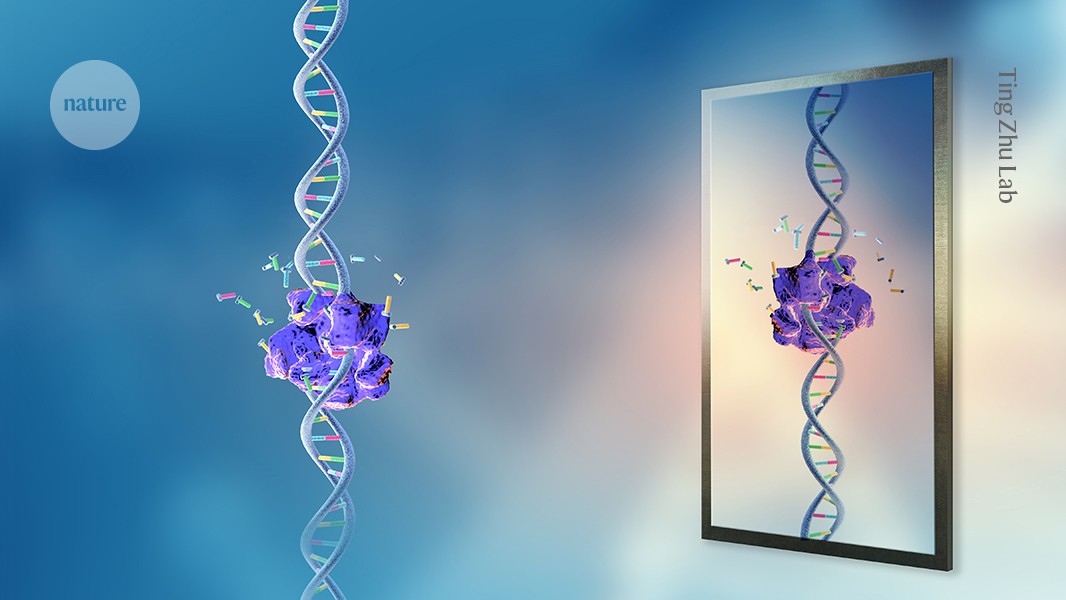
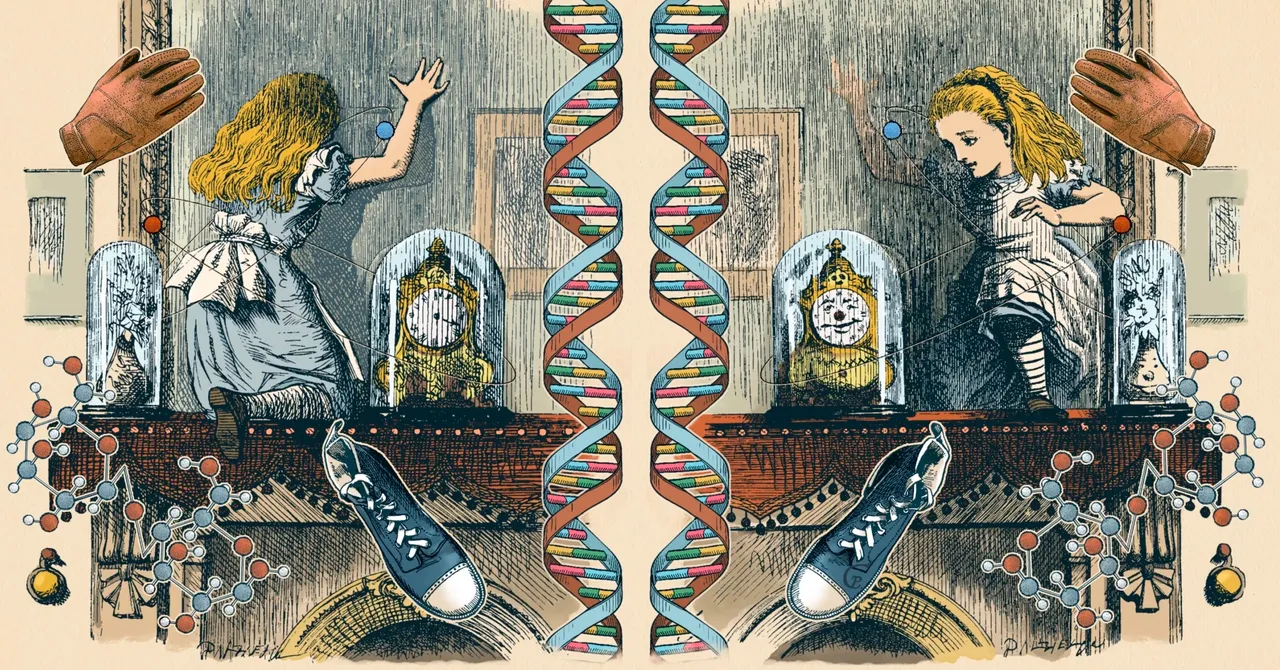
A Noema feature surveys the looming possibility of mirror life—an engineered, mirror‑image form of biology that could evade immune defenses and spread without containment. While experts say such life is years to decades away and not yet realized, a 299‑page report and high‑profile scientists are calling for governance, a precautionary moratorium, and changes in funding and publishing to prevent an existential biosafety crisis. The piece traces the science of chirality from Pasteur to DNA/RNA, explores potential therapeutic and material applications of mirror biomolecules, and examines the political and ethical debates about restricting research in the name of safety while not stifling innovation.

Hidden Handedness Emerges in Free-Space Light
science24 days ago

Hidden Handedness Emerges in Free-Space Light

Researchers show that light can naturally develop handedness (chirality) as it travels through empty space—even without mirrors or special materials—due to its internal topology when the beam is prepared in a balanced state. The emergent spin and twist of structured light could enable new ways to encode information, improve medical diagnostics and sensing, and boost data capacity in communications and future quantum networks.

Scientists Forge a Half-Möbius Molecule with a New Electronic Topology
chemistry2 months ago

Scientists Forge a Half-Möbius Molecule with a New Electronic Topology

Researchers built a 13‑carbon ring that hosts two isolated conjugated subsystems; by placing chlorine atoms to separate them, the ring spontaneously twists by 90 degrees and becomes a single, fully delocalized 24‑electron system with a unique electronic/magnetic profile distinct from classic Möbius structures. The molecule exists as two enantiomers, which can be interconverted using a small external voltage, a breakthrough reported in Science by Manchester and IBM Zurich teams and signaling a new topological approach to designing matter.

First Circularly Polarized LAES Breakthrough Reveals Handedness in Electron Scattering
science2 months ago

First Circularly Polarized LAES Breakthrough Reveals Handedness in Electron Scattering

Researchers in Tokyo observed laser-assisted electron scattering (LAES) with circularly polarized light for the first time, adding a handedness dimension to the technique. They used argon gas, synchronized femtosecond circularly polarized laser pulses and 1 keV electron pulses, measuring energy- and angle-resolved spectra that matched Kroll-Watson theory, with simulations based on Mittleman’s extension reproducing the polarization dependence. The circular signal was weaker than in linear polarization, and no helicity difference was detected as theory predicts. This proof-of-concept work opens the door to using circular polarization to probe molecular chirality, with next steps aimed at improving detection to extract phase information.

Amino Acids Formed in Freezing Space on Bennu, Hinting at Life's Beginnings Beyond Water
science3 months ago

Amino Acids Formed in Freezing Space on Bennu, Hinting at Life's Beginnings Beyond Water

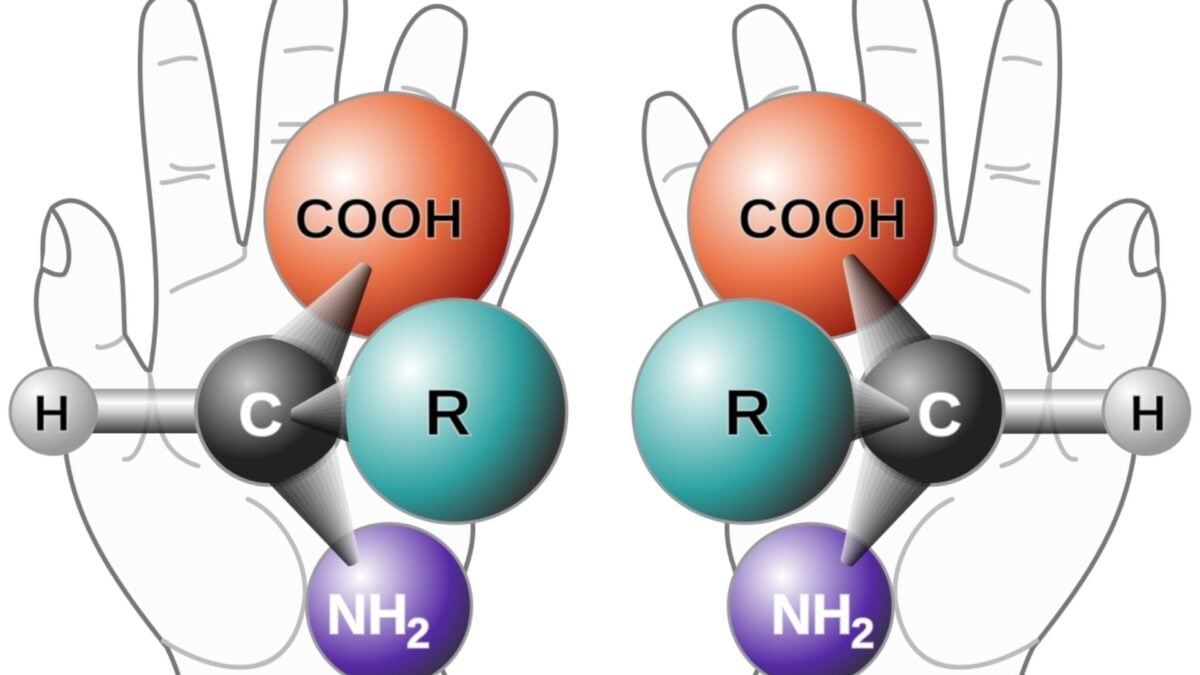
NASA’s analysis of asteroid Bennu’s samples shows amino acids formed in frigid conditions long before the asteroid’s current orbit, with 14 of Earth’s 20 standard amino acids detected and evidence that left‑ and right‑handed forms carry different nitrogen isotopes. This challenges the idea that liquid water is always needed for amino‑acid formation, suggesting prebiotic chemistry could occur in more environments and expanding potential habitats for life in the universe, while signaling new questions about chirality in biology.

Scientists Address Doomsday Threats of 'Mirror Life'
science8 months ago

Scientists Address Doomsday Threats of 'Mirror Life'

Scientists worldwide are discussing the potential risks and benefits of creating mirror life, synthetic cells made from molecules that are mirror images of natural ones, due to concerns about environmental and health dangers versus potential medical and scientific benefits. The conference in Manchester aims to establish guidelines for safe research in this emerging field.

Debate Over Mirror-Image Biology and Its Potential Risks
science8 months ago

Debate Over Mirror-Image Biology and Its Potential Risks

Experts are debating the risks and benefits of researching mirror-image molecular biology and the potential creation of mirror-image organisms, which could have significant scientific and medical applications but also pose unknown risks. Current scientific challenges make the creation of fully functional mirror-image life forms unlikely in the near future, but ongoing research offers promising benefits in drug development and biotechnology. Caution and responsible regulation are emphasized to balance innovation with safety.

Scientists Urge Halt on Risky 'Mirror Life' Research to Protect Humanity
science-and-technology1 year ago

Scientists Urge Halt on Risky 'Mirror Life' Research to Protect Humanity

Scientists are urging a global pause on creating 'mirror life'—synthetic organisms with reversed molecular handedness—due to potential catastrophic consequences. These mirror microbes could evade immune systems, leading to uncontrollable infections and ecological disruptions. The call for caution comes as advancements in synthetic biology and AI bring us closer to realizing such organisms, prompting demands for international guidelines to prevent reckless experimentation.

science1 year ago

NASA's Discovery Redefines Life's Origins and Molecular Mysteries

A study by UCLA and NASA's Goddard Space Flight Center challenges the traditional view of life's molecular origins, suggesting early RNA structures were more flexible in their chirality preferences than previously thought. This finding implies that life's building blocks on Earth may not have been strictly "left-handed" or "right-handed," as once believed, and could have evolved through environmental pressures rather than chemical determinism. The research has significant implications for understanding life's origins and the search for extraterrestrial life, suggesting that life elsewhere might not conform to Earth's chiral norms.

NASA's RNA Discovery Challenges Life's Origin Theories
science1 year ago

NASA's RNA Discovery Challenges Life's Origin Theories

Researchers from UCLA and NASA have discovered that the chirality of molecules, crucial to life's structure, may not have been as fixed in early Earth as previously thought. This suggests a more adaptable origin for life, challenging the notion that early life was predisposed to select left-handed amino acids. The study, published in Nature Communications, indicates that RNA might not have initially favored one chiral form of amino acids, offering new insights into the origins of biological homochirality and implications for the search for extraterrestrial life.

"Chiral Electron Paths: A Twist in Physics Revolutionizing Technology"
physics1 year ago

"Chiral Electron Paths: A Twist in Physics Revolutionizing Technology"

Researchers in Germany have successfully sent single electrons along structured chiral paths, achieving chirality in electron matter waves without angular momentum. This work, which parallels earlier research with photons, could have significant applications in electron microscopy and the study of magnetic materials. However, some scientists are skeptical about the claim of chirality without angular momentum and the lack of citation of previous related work.

"Revolutionary Laser Technique Could Transform Future Technology"
science-and-technology1 year ago

"Revolutionary Laser Technique Could Transform Future Technology"

Physicists at the University of Konstanz have discovered a method to imprint chirality onto electrons using laser light, creating chiral coils of mass and charge. This breakthrough has significant implications for quantum optics, particle physics, and electron microscopy, potentially leading to new scientific explorations and technological advancements.

"The 'Sphinx' Shape: Unraveling the Mystery of Handedness in Biology"
science2 years ago

"The 'Sphinx' Shape: Unraveling the Mystery of Handedness in Biology"

A recent study explores the role of a simple chiral shape called the sphinx in understanding the prevalence of left- and right-handedness in biology. Researchers used computer models to investigate how sphinx tiles, based on triangles, interact in different arrangements. The study revealed that even in symmetrical systems, sphinxes of the same chirality tend to cluster together, shedding light on the emergence of chiral patterns. Understanding these geometric patterns could have implications for various scientific fields, from virus structure to the origins of molecular asymmetry.