Tag

Chiral Molecules

All articles tagged with #chiral molecules

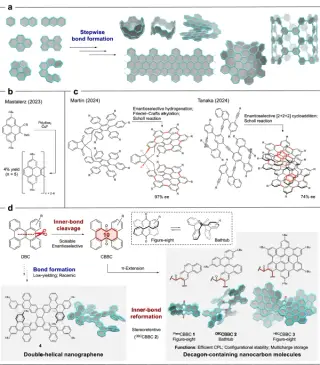
Nagoya University researchers use internal bond editing to create stable chiral nanocarbons
science3 months ago

Nagoya University researchers use internal bond editing to create stable chiral nanocarbons

Researchers at Nagoya University have successfully applied skeletal transformation techniques to synthesize complex, chiral nanocarbon molecules. By cleaving and reforming internal bonds within flat carbon precursors, the team created structures with 10-membered rings and double-helix geometries that were previously inaccessible via traditional edge-based assembly. These new materials exhibit high thermal stability, multi-charge redox capabilities, and chiral porous frameworks suitable for carbon dioxide capture.
"Chemistry's Workhorse Separates Mirror-Image Molecules"
chemistry2 years ago

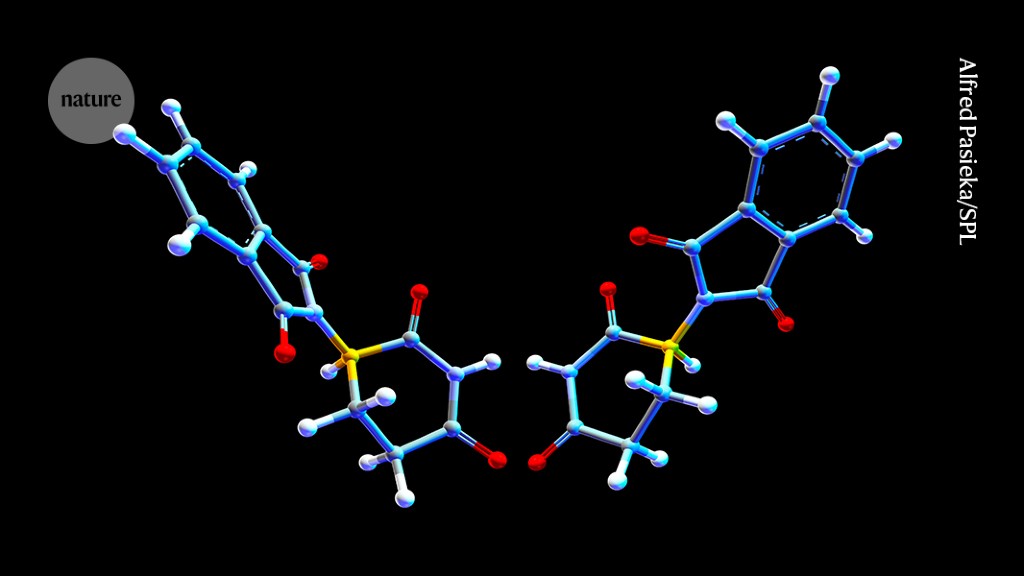
"Chemistry's Workhorse Separates Mirror-Image Molecules"

Chemists have demonstrated the use of mass spectrometry to separate chiral molecules, which exist as mirror-image structures with different properties. This breakthrough could streamline the laborious process of separating enantiomers, crucial in drug discovery, by allowing for quick determination of enantiomeric excess and confirmation of molecular structures. The technique, described in Science, has the potential to simplify and expedite the preparation of pure samples of enantiomers in larger quantities, with implications for drug design and discovery.

Revolutionary Light-Based Method Enhances Chiral Molecule Detection Efficiency
science-and-technology3 years ago

Revolutionary Light-Based Method Enhances Chiral Molecule Detection Efficiency

Researchers at Imperial College London, in collaboration with scientists from Germany and Spain, have developed a new method to detect and quantify the chirality of molecules using light. By using lasers with moderate intensities, they were able to make the light helix in time instead of space, resulting in chiral electronic currents inside the molecules. This approach allows for improved detection ability, with one version of the molecule emitting bright light while its counterpart remains dark. The team's simulations suggest that this technique could enable non-destructive imaging of molecular chirality, and they plan to further explore its practical applications using femtosecond laser facilities.