
US August Jobs Report Shows 162,000 Gain, Defying Weak Forecasts
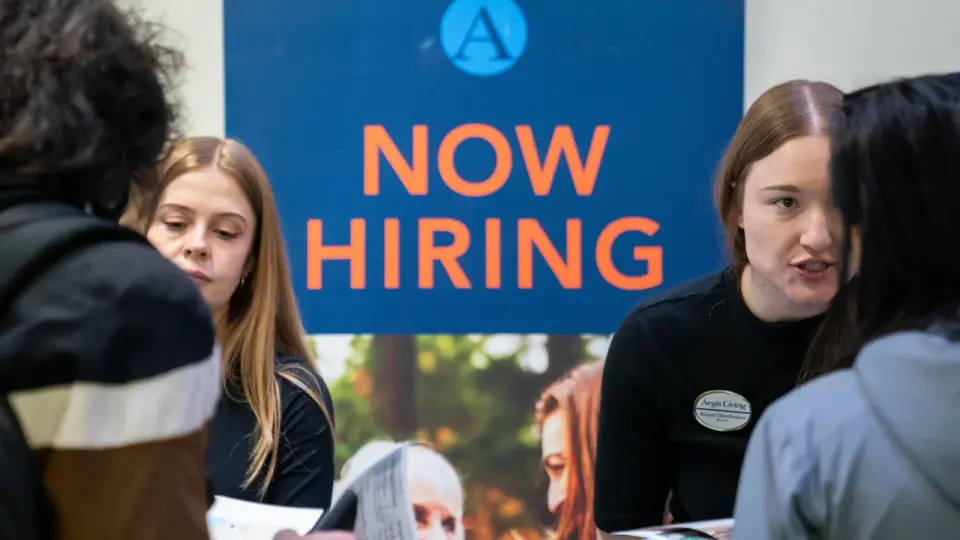
The US economy added 162,000 jobs in August, significantly exceeding the 53,000 to 65,000 range predicted by economists. While the unemployment rate held steady at 4.1%, the strong hiring data contrasts with recent months of net job losses and soft private sector growth. Federal Reserve officials remain focused on inflation rather than labor market weakness, viewing the current environment as stable despite underlying structural shifts.
Key points
- Actual August nonfarm payrolls rose by 162,000, far surpassing the Dow Jones consensus estimate of 53,000 and CNN’s projection of 65,000.
- The unemployment rate remained at 4.1%, consistent with expectations, despite the stronger-than-expected job growth.
- The report follows a period of net job losses in June and July, where the economy shed 3,000 jobs combined, and a July decline of 23,000 jobs.
- Federal Reserve Governors Michael Barr and Christopher Waller described the labor market as 'stable' and 'satisfactory,' allowing the Fed to prioritize inflation concerns over employment risks.
- Structural factors including AI adoption, geopolitical uncertainty, and the cancellation of Temporary Protected Status for 350,000 Haitians continue to influence hiring dynamics.
Background
Recent months have shown a 'low-hire, low-fire' labor market, with ADP reporting only 38,000 private payroll gains in August, the slowest pace in seven months. July saw a surprise drop of 23,000 jobs, attributed partly to seasonal adjustments in local government education. The broader trend reflects a labor market in balance due to shrinking labor force participation and slower immigration, even as job growth remains tepid compared to pre-pandemic averages.
How outlets are covering it
CNBC and CNN initially projected weak job growth, with CNBC citing a 53,000 estimate and CNN expecting 65,000, both anticipating a 'stable but unexciting' market. However, the actual 162,000 gain reported by Yahoo Finance contradicts these forecasts, suggesting a stronger rebound than expected. While CNBC and CNN emphasized structural headwinds like AI and geopolitical uncertainty, the strong data may shift Fed focus back to inflation, as noted by Barr and Waller. Citi’s Andrew Hollenhorst had predicted only 20,000 jobs, highlighting the wide divergence in expectations before the release.
Why it matters
The stronger-than-expected jobs report reduces pressure on the Federal Reserve to cut interest rates, as policymakers prioritize controlling inflation. A robust labor market can sustain consumer spending but may also keep inflationary pressures elevated, influencing future monetary policy decisions. The data also highlights the resilience of the economy despite structural challenges, though concerns about job quality and sectoral concentration remain.
What to watch
The Federal Reserve will assess the impact of the strong jobs report on its upcoming monetary policy decisions, potentially delaying rate cuts if inflation remains persistent. Further revisions to prior months’ job data and continued monitoring of private sector hiring trends will be crucial in understanding the sustainability of the August rebound.
- The big August jobs report is due out Friday. Here's what to expect for what has been a jobless summer CNBC
- Jobs report live updates: August jobs data expected to show labor market 'cooling, not cracking' Yahoo Finance
- What to expect from Friday’s jobs report – and AI in the future CNN
- August Jobs Report Seen Showing Modest Bounce in a Slow Hiring Market Morningstar
- What To Expect From the August Jobs Report on Friday Investopedia
Want the full story? Read the original reporting
Read on CNBC