
Fed Chair Warsh warns AI boom could boost growth or trigger economic disappointment
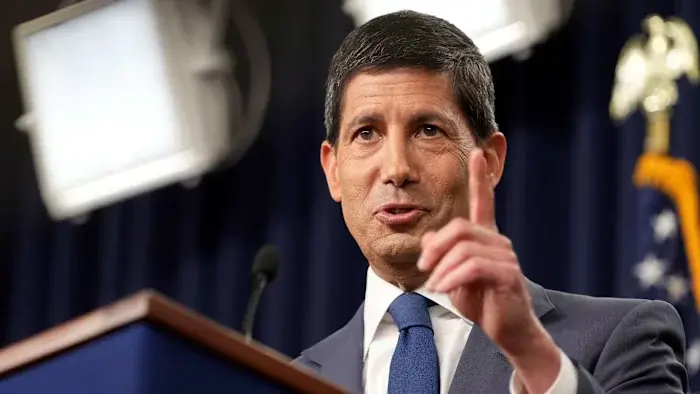
Federal Reserve Chair Kevin Warsh stated that artificial intelligence could sustain substantially higher US economic growth by boosting productivity, but warned that the technology might also lead to job displacement or fail to deliver expected returns, potentially causing an economic slowdown.
Key points
- Warsh described AI as a new economic force that could accelerate real growth while keeping employment near full capacity.
- He outlined a downside scenario where automation leads to job displacement and higher unemployment.
- A third scenario involves AI disappointing investors, causing stock valuations to fall and triggering an economic slowdown without productivity gains.
- Warsh emphasized that AI has significant implications for future monetary policy.
- The remarks were delivered in San Francisco before a productivity and employment task force.
Background
Warsh has previously emphasized AI's potential to improve productivity and act as a disinflationary force. He recently established multiple task forces to address Fed communication, data reliance, and inflation frameworks. This was his first visit to a regional bank since taking the chair position.
How outlets are covering it
The Financial Times headline suggests Warsh views the AI boom as a driver for sustained higher growth. CNBC reports that Warsh presented a more balanced view, highlighting potential benefits alongside risks of job losses or unmet expectations. CNBC notes Warsh used the term 'super intelligence' in his remarks, aligning with a recent directive from President Trump to use that terminology. The FT source was behind a paywall, limiting detailed comparison, but the core message of AI's dual potential for growth and disruption is consistent across available reporting.
Why it matters
The Federal Reserve's stance on AI's impact on productivity and employment will influence future interest rate decisions and monetary policy. If AI fails to deliver expected productivity gains, it could lead to economic slowdown and rising unemployment, affecting financial markets and consumer confidence.
What to watch
Warsh's task force will continue examining productivity and employment issues. The outcome of AI adoption will determine whether the US economy experiences sustained growth or faces a slowdown due to unmet expectations and potential job displacement.
- Fed chair Kevin Warsh says AI boom could help sustain ‘substantially higher’ US growth Financial Times
- Fed Chairman Kevin Warsh stresses importance of AI to economy, but says it could ‘disappoint’ CNBC
- Warsh Says Fed Is Gaming Out How AI Could Reshape Economy WSJ
- Fed's Warsh says emerging technologies will have 'significant impact,' but risks need to be watched Reuters
- Fed's Warsh sees risk of stock bust if AI boom disappoints Axios
Want the full story? Read the original reporting
Read on Financial Times