
Fed Chair Warsh Warns of AI-Driven Stock Bust if Productivity Gains Fail to Materialize
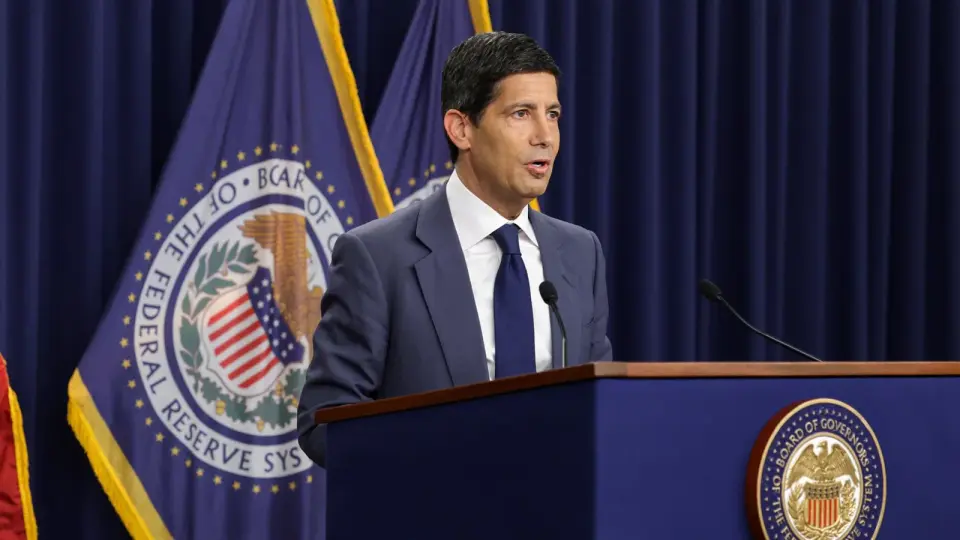
Federal Reserve Chair Kevin Warsh outlined three potential economic scenarios for artificial intelligence, including a 'disappointing' outcome that could trigger a stock market crash and rising unemployment. While he emphasized AI's potential to boost productivity and lower inflation, he warned that failed expectations could lead to an economic slowdown. Warsh noted that Fed staff are modeling these contingencies, contrasting his optimistic view with recent internal dissent over AI-driven inflation.
Key points
- Warsh described a scenario where AI fails to deliver expected returns, causing equity valuations to fall and unemployment to rise.
- He stated that Fed staff are actively modeling contingencies for how AI adoption impacts the economy.
- Warsh used the term 'super intelligence' in line with recent presidential directives, describing it as a new force in economic life.
- The Fed Chair acknowledged that automation could displace jobs rather than complement them, potentially pushing unemployment above full-employment levels.
- Warsh emphasized that while AI may boost productivity, human judgment and responsibility remain central to economic decision-making.
Background
This speech follows a period of internal Federal Reserve division regarding AI's impact on inflation. In early November 2026, Warsh faced dissent from colleagues who argued that AI data center investments were driving 'old-fashioned demand overheating' and broader price increases. Despite this, Warsh maintained that AI would ultimately be disinflationary. The Fed recently hiked rates to 4.00%, with markets expecting further increases in December due to persistent inflation, creating a backdrop of tension between AI-driven growth hopes and immediate price pressures.
How outlets are covering it
CNBC highlighted Warsh's focus on the potential for AI to disappoint, leading to an economic slowdown, while emphasizing his optimistic stance on productivity gains. Axios focused on the risk of a stock bust if the AI boom fails, noting Warsh's warning that equity valuations could fall if returns do not meet expectations. Bloomberg emphasized that Fed staff are actively modeling these contingencies, framing Warsh's remarks as part of a broader institutional effort to prepare for various AI outcomes. All three sources agreed on the core message but differed in emphasis: CNBC and Axios focused on the downside risks, while Bloomberg highlighted the internal modeling process.
Why it matters
Warsh's remarks signal that the Federal Reserve is taking AI's economic impact seriously, moving beyond theoretical discussions to active contingency planning. The warning of a potential stock bust and rising unemployment if AI disappoints could influence market sentiment and investor behavior, particularly given the current high valuations in AI-related sectors. Additionally, Warsh's stance on AI as a disinflationary force contrasts with growing internal dissent, potentially affecting future monetary policy decisions and rate hike expectations.
What to watch
The Fed is expected to continue modeling AI's economic impact, with Warsh's task force likely producing further insights. Market participants will watch for signs of AI-driven productivity gains or disappointments, which could influence stock valuations and unemployment trends. The Fed's December meeting will be critical, as markets expect a rate hike, and Warsh's AI-focused remarks may influence the pace and magnitude of future monetary policy adjustments.
- Fed Chairman Kevin Warsh stresses importance of AI to economy, but says it could ‘disappoint’ CNBC
- Warsh Says Fed Is Gaming Out How AI Could Reshape Economy WSJ
- Fed's Warsh says emerging technologies will have 'significant impact,' but risks need to be watched Reuters
- Fed's Warsh sees risk of stock bust if AI boom disappoints Axios
- Fed’s Warsh Says Staff Are Gaming Out Contingencies on AI Impact Bloomberg.com
Want the full story? Read the original reporting
Read on CNBC