
Fed Minutes Reveal Deep Concerns Over AI Debt and Systemic Risk
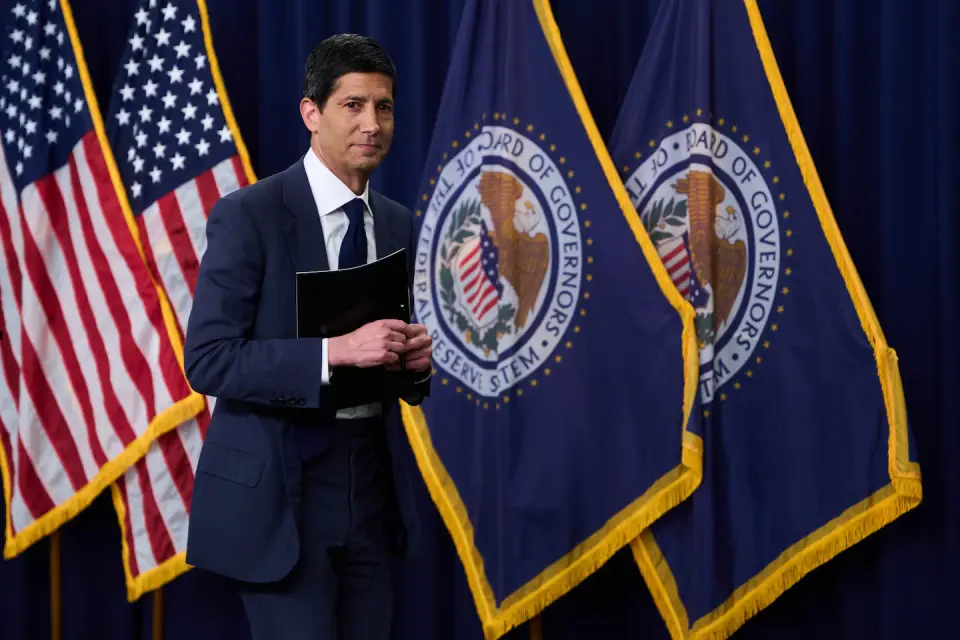
Minutes from the Federal Reserve’s October meeting reveal that policymakers are increasingly worried about the financial risks posed by the artificial intelligence boom. The document highlights concerns over AI-related debt and the potential for a market bust to destabilize the broader financial system, reflecting a shift in focus from traditional inflation metrics to technological leverage and interdependencies.
Key points
- The Federal Reserve’s October meeting minutes, released on November 18, 2026, open with an unusual and prominent warning regarding AI-related debt.
- Policymakers expressed concern that doubts about the AI boom spreading on Wall Street could trigger a bust that shakes the financial system.
- This warning aligns with earlier statements from Fed Chair Kevin Warsh and Governor Michael Barr, who have outlined scenarios where failed AI productivity gains could lead to stock market declines and economic slowdowns.
- The minutes indicate that the Fed is actively monitoring the complexity of AI financing, including opaque off-balance-sheet obligations and circular financing structures among major tech firms.
Background
This development follows a series of recent warnings from Federal Reserve leadership. In late October and early November 2026, Fed Chair Kevin Warsh outlined potential economic scenarios where a failure to deliver expected AI productivity gains could trigger a stock market crash and rising unemployment. Additionally, Fed Governor Michael Barr detailed specific risks in a financial stability report, noting that 87% of surveyed market participants now cite AI risks, a sharp increase from 50% in spring 2026. Barr highlighted concerns over $800 billion in on-balance-sheet debt and over $3 trillion in opaque off-balance-sheet obligations among major AI firms, warning that rapid deleveraging and the quick depreciation of GPU collateral could amplify losses if AI returns disappoint. The release of the October minutes provides further evidence that these concerns are central to the Fed’s current policy deliberations.
Why it matters
The Federal Reserve’s explicit focus on AI-related debt in its meeting minutes signals a significant shift in monetary policy priorities. As the AI sector has attracted multitrillion-dollar investments, the potential for a bust poses risks not only to technology stocks but to the broader financial system through complex interdependencies and leverage. If the Fed perceives these risks as systemic, it may influence future interest rate decisions and regulatory oversight, potentially impacting capital flows and investment strategies across the tech sector and the wider economy.
What to watch
Investors and policymakers will likely monitor upcoming Federal Reserve communications for further details on how AI-related risks are being incorporated into monetary policy and financial stability assessments. The market will watch for signs of stress in AI-related debt markets and any regulatory responses from the Fed to mitigate potential systemic vulnerabilities. Additionally, the performance of major AI firms and their ability to deliver on productivity promises will be closely scrutinized as a leading indicator for the stability of the broader financial system.
- Fed officials worry an AI bust could shake the financial system The Washington Post
- Fed policymakers concerned about financial system risks, minutes show Reuters
- Tech leaders tell Fed chairman Warsh how AI could transform the economy Axios
- Warsh Says Fed Is Gaming Out How AI Could Reshape Economy WSJ
- The Fed's AI Bank Run Nightmare Is Suddenly Coming True Forbes
Want the full story? Read the original reporting
Read on The Washington Post