Tag

Debt

All articles tagged with #debt

Lawmakers float debt-funded fund and payroll-tax tweaks to shore up Social Security
policy2 hours ago

Lawmakers float debt-funded fund and payroll-tax tweaks to shore up Social Security

Facing a long-term Social Security shortfall, lawmakers are weighing bold options: Sen. Cassidy and Sen. Kaine propose a $1.5 trillion 'Save Our Seniors Fund' funded by Treasury borrowing and invested over 75 years to cover roughly two-thirds of the projected $26.6 trillion gap, with the remainder likely needing tax hikes or benefit cuts; others push payroll-tax reforms—lifting the cap or applying it more broadly—to raise revenue and strengthen benefits; critics warn the fund is debt-funded and risky, AARP opposes fast-tracking changes, and the political viability of any plan will hinge on further negotiations and specifics.

Bond markets tilt to a higher-rate path for U.S. debt
economy21 hours ago

Bond markets tilt to a higher-rate path for U.S. debt

A Reuters explainer says U.S. Treasuries still look safe, but debt dynamics are shifting as global rates rise and deficits stay large. Public debt sits near 100% of GDP and interest payments run about 3% of GDP, while growth remains around 2%—not enough to sustainably shrink the debt burden. Deficits have lingered at recession‑era levels even as the economy expands, aided by tax cuts and spending in aging demographics. The combination raises the risk of a debt cliff further out, prompting talk of potential Fed/treasury interventions to cap long-term yields. AI and other growth catalysts could help, but their timing and fiscal impact remain uncertain, making higher borrowing costs and tighter financing conditions a growing backdrop for U.S. debt sustainability.

The Hard Math Behind a Paramount Settlement
business22 hours ago

The Hard Math Behind a Paramount Settlement

A THR guest column argues that despite broad calls for settlement in the Paramount–Warner Bros. Discovery deal, the financing and debt load make meaningful protections costly and likely unsustainable. The deal’s structure relies on about $6B in synergies and over $80B in debt with roughly $3B in annual free cash flow, leaving little room to fund guaranteed outputs, employment protections, and streaming investments. Proposed settlements risk eroding cash available for new films and pay down debt, unless they are backed by real, funded guarantees and independent verification. The piece urges readers to examine the underlying economics rather than surface promises to assess whether a settlement can actually work post-close.

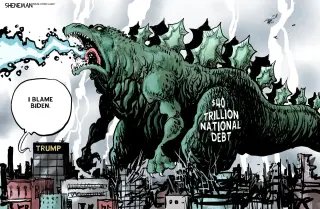
US debt hits $40T as JPMorgan calls bond-buyback plan a 'mortgage with a credit card'
economy22 hours ago

US debt hits $40T as JPMorgan calls bond-buyback plan a 'mortgage with a credit card'

JPMorgan’s James Sullivan compared the Treasury’s plan to buy back longer-dated bonds with new, shorter-term issues to “paying your mortgage with your credit card,” a short-term fix meant to stabilize markets as U.S. debt climbs toward $40 trillion. The move briefly moves long-bond yields lower but is not a cure for the underlying debt burden, which global institutions estimate at about $350 trillion. The Treasury plans to expand liquidity-support bond buybacks to roughly $4 billion per operation for 10- to 30-year notes through 2026, with details set to be announced on Nov. 4; analysts warn the strategy defers the problem and could backfire if rates rise further.

Growth Alone Won’t Fix a $40 Trillion Debt, Warns Top Economist
budget-tax-and-economy23 hours ago

Growth Alone Won’t Fix a $40 Trillion Debt, Warns Top Economist

With the U.S. debt reaching $40 trillion, Trump argues the economy can grow its way out of the problem, but Kent Smetters of the Wharton School calls the notion a “fantastic story” that isn’t realistically feasible. The debt-to-GDP ratio sits around 122%, and major entitlement costs (Social Security, Medicare, Medicaid) and political constraints limit any growth-driven fix. Bond-market signals and unscheduled Treasury buybacks highlight looming risks, while policymakers debate deficit reduction or commissions. Economists emphasize that a credible, broad-based plan—not growth alone—is needed to address the debt, even as AI-driven investment fuels near-term expansion and midterm politics heighten attention to fiscal policy.

Treasury's bond-market fix falls short — what's next?
budget-tax-and-economy2 days ago

Treasury's bond-market fix falls short — what's next?

Treasury officials have rolled out buybacks and other tools to calm a selloff in long-dated Treasurys, but long-term yields remain elevated and market skeptics say liquidity moves don’t tackle the underlying rise in the national debt. With deficits ballooning and the government needing to finance growing borrowing, more measures are likely, even as tensions between the Treasury and the Fed – including expectations set for Jackson Hole – shape how policy is priced into markets and influence borrowing costs across mortgages, cars, and other loans.

US Debt Tops $40 Trillion: Could That Fuel the Next Stock Rally?
finance2 days ago

US Debt Tops $40 Trillion: Could That Fuel the Next Stock Rally?

US debt has officially surpassed $40 trillion, about 124% of GDP, with deficits rising and interest payments growing; the piece argues that ongoing borrowing and monetary accommodation—such as lower rates or debt monetization—have been a major tailwind for equities, despite a lofty CAPE around 42, suggesting investors remain bullish but should pick stocks selectively.

Treasury's bond-market push stalls as yields stay high — what's next?
markets2 days ago

Treasury's bond-market push stalls as yields stay high — what's next?

Market turmoil over U.S. debt isn’t cured yet: Treasury’s plan to calm the long‑dated bond market with buybacks and new tools has cooled but not stopped the sell‑off. The 30‑year yield sits around 5.28% and the 10‑year around 4.74% as traders doubt fixes address financing a huge and growing national debt, funded by a multitrillion‑dollar year‑to‑date deficit. Analysts say more steps are coming before November, while tension between Treasury and the Fed at Jackson Hole keeps markets on edge.

Harry Potter Star Jessie Cave Credits OnlyFans With Saving Her From Debt
entertainment2 days ago

Harry Potter Star Jessie Cave Credits OnlyFans With Saving Her From Debt

Harry Potter alum Jessie Cave, who played Lavender Brown, said she started an OnlyFans to help pay debts and that, though embarrassing, the platform has since saved her financially and allowed her to continue making art; she uses it for non-sexual hair-focused content and noted a Potter fan convention barred her after it became known she was on OnlyFans.

Hidden AI Bills: The $3 Trillion Shadow Debt Behind Tech Giants’ AI Push
business3 days ago

Hidden AI Bills: The $3 Trillion Shadow Debt Behind Tech Giants’ AI Push

A Wall Street Journal analysis finds roughly $3 trillion in off-balance-sheet AI obligations across nine tech giants (Alphabet, Microsoft, Meta, Nvidia, Oracle, SpaceX and others), consisting mainly of future purchases and signed-but-unstarted leases. That shadow ledger is about three times the companies’ reported debt and growing faster than visible capex, with potential depreciation of over $520 billion in three years. It’s not fraud; it’s timing and disclosure risk—investors should focus on free cash flow relative to committed spending rather than balance-sheet debt to gauge risk to earnings.

US hits $40 trillion debt milestone as interest costs surge
economy4 days ago

US hits $40 trillion debt milestone as interest costs surge

The United States has reached a $40 trillion gross national debt for the first time, propelled by persistent deficits and rising interest costs, with most debt held domestically but a growing share owned by foreign investors. Analysts warn higher borrowing costs could fuel inflation and squeeze other priorities, while IMF and CBO projections indicate the debt burden will continue to rise in the coming years.

Dollar Debasement Fears Rise as Treasury Debt Buybacks Stir Devaluation Talk
economy4 days ago

Dollar Debasement Fears Rise as Treasury Debt Buybacks Stir Devaluation Talk

Fortune reports that economist Robin Brooks warns the Treasury’s plan to buy back more long‑term debt could put the dollar on a path toward debasement and a devaluation spiral similar to Japan’s, while other analysts argue the move is largely a symbolic fix that won’t address the underlying deficit; the debate centers on whether yields will stay elevated and what this means for the dollar’s near‑term trajectory.

US Debt Reaches $40 Trillion, Framed by Four Contextual Charts
economy4 days ago

US Debt Reaches $40 Trillion, Framed by Four Contextual Charts

The U.S. national debt has topped $40 trillion, up from about $5.8 trillion in 2000, equating to roughly $116,800 per American. The article uses four charts to illustrate overall growth, how debt has risen under different presidents, the history of deficits vs. surpluses (the last surplus was in 2001), and a visualization comparing $1 trillion to median household income to convey scale. It notes pandemic-related spending as a major driver, with the largest dollar increase occurring during Biden’s term, while the debt’s path reflects years of spending and revenue gaps across recent administrations.

Bond Market in Free Fall as Debt Burden, Policy Uncertainty Roil Markets
finance4 days ago

Bond Market in Free Fall as Debt Burden, Policy Uncertainty Roil Markets

A global bond‑market rout sends long‑dated yields to multi‑decade highs (30‑year near 5.3%), driven by concerns about the rising U.S. debt and deficits and uncertainty over Fed Chair Kevin Warsh’s inflation strategy; Washington’s quick fix of larger Treasury buybacks provides only temporary relief as the debt climbs above $40 trillion and July deficits hit $432 billion. Elevated energy prices and supply risks keep inflation risks elevated, while equities retreat ahead of Nvidia’s earnings and the Fed’s Jackson Hole symposium amid lingering policy ambiguity.