
Hot October CPI Data Triggers Bond Sell-Off and Fed Hike Bets
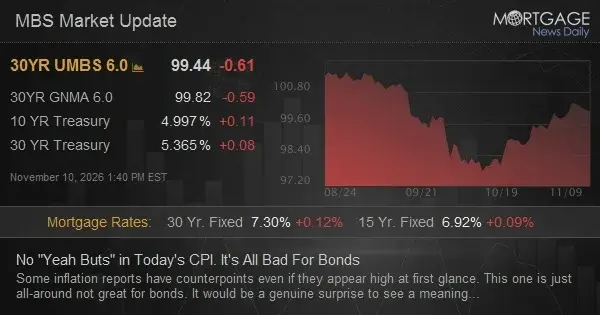
U.S. inflation data for October came in hotter than expected, causing Treasury yields to spike and increasing bets that the Federal Reserve will raise interest rates in December. Core consumer price index (CPI) rose 0.296% month-over-month, exceeding forecasts, while the year-over-year core CPI reached 2.8%, above the 2.7% estimate. The bond market reacted immediately, with shorter-term yields rising sharply as investors priced in more than one full rate hike. This follows strong employment data and precedes a producer price index report due Friday.
Key points
- Core CPI increased 0.296% month-over-month, surpassing the 0.22% forecast.
- Year-over-year core CPI reached 2.8%, higher than the 2.7% estimate and 2.6% previous reading.
- Supercore inflation, excluding food and energy, rose 0.399% month-over-month.
- Markets now price in more than one full 25-basis-point rate hike by the Federal Reserve in December.
- The 2-year Treasury note yield climbed over 3 basis points to 4.561%, while the 10-year yield rose over 1 basis point to 4.876%.
Background
Recent economic data has shown a strengthening labor market, with October non-farm payrolls growing by 165,000 jobs, far exceeding the 59,000 expected by economists. The unemployment rate dipped to 4.1%. This robust employment data, combined with elevated inflation, has led analysts to expect the Federal Reserve to prioritize controlling inflation over supporting job growth. Prior to the CPI release, Fed Governor Waller suggested the central bank should consider a 50-basis-point hike if core CPI reached 0.3% or higher, signaling a hawkish stance.
How outlets are covering it
Mortgage News Daily emphasized that the CPI report offered no silver linings, noting that month-over-month inflation in key categories only slightly decreased from previous high readings. They highlighted that the bond market reaction was immediate and severe, with December rate expectations rising in two phases: first due to Waller’s comments, and second due to the CPI data itself. CNBC focused on the broader economic context, noting that strong employment data and elevated inflation suggest the Fed will likely deliver another 0.25-percentage-point rate increase in December. They also pointed out that energy prices fell on Monday, with West Texas Intermediate futures dropping 4.38% to $86.85 per barrel, following President Trump’s comments on Iran. The Financial Times and The Telegraph did not provide accessible content for analysis.
Why it matters
The hot CPI data and subsequent bond market reaction indicate that inflation remains a significant concern for the Federal Reserve. This could lead to higher interest rates, which would increase borrowing costs for mortgages, auto loans, and credit cards. The 10-year Treasury yield, a benchmark for these loans, rose to 4.876%, reflecting market expectations of tighter monetary policy. Investors and consumers should anticipate potential increases in borrowing costs and monitor upcoming economic data, including the producer price index report due Friday, for further insights into inflation trends.
What to watch
The next key event is the release of the October U.S. producer price index report on Friday, which will provide further insight into wholesale inflation levels. Investors will also closely watch Federal Reserve communications for any signals regarding future rate decisions. The market’s current pricing of more than one full rate hike in December suggests that the Fed may need to act decisively to bring inflation under control. Any unexpected news or stock market sell-offs could potentially reverse the current bond market weakness, but such a reversal is considered unlikely without major developments.
- No Yeah Buts in Today's CPI. It's All Bad For Bonds Mortgage News Daily
- Treasuries slide as ‘hot’ inflation sparks bets on Fed rate rise Financial Times
- Treasury yields rise as investors await October CPI and producer prices CNBC
- US borrowing costs rise at fastest rate since Trump’s ‘liberation day’ tariffs The Telegraph
- Bonds Tumble as Hot Inflation Fuels Bets on More Fed Rate Hikes Bloomberg.com
Want the full story? Read the original reporting
Read on Mortgage News Daily