
US Jobless Claims Hit 194,000, Signaling Labor Stability Despite Sluggish Hiring
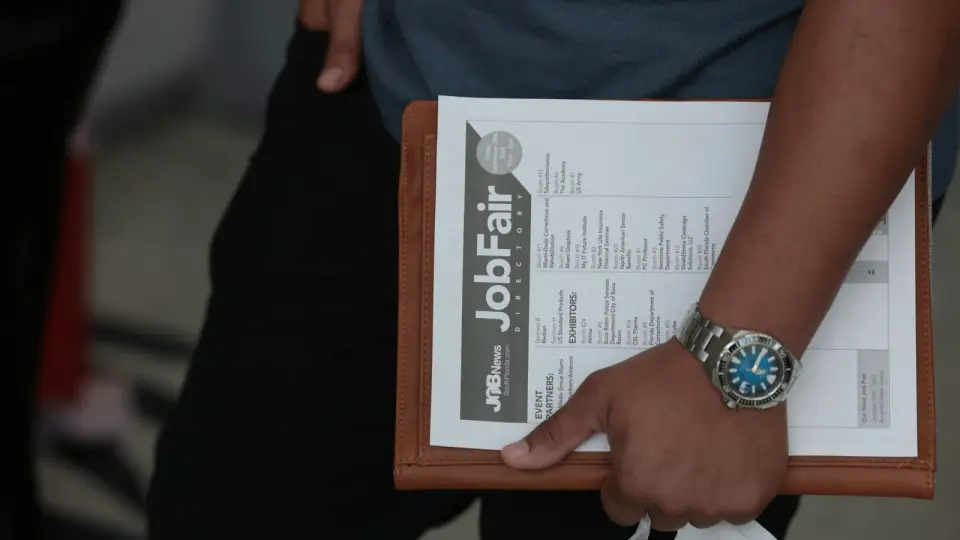
Initial US unemployment claims fell to 194,000 for the week ending October 17, marking a three-month low and approaching the lowest levels since the late 1960s. This decline reflects a 'low-hire, low-fire' environment where layoffs remain scarce despite weak job growth. While the data suggests labor stability, it complicates Federal Reserve policy by providing little justification for interest rate cuts amidst persistent inflation. Consequently, gold prices faced selling pressure, dropping below $4,100 per ounce as markets priced in a hawkish central bank stance.
Key points
- Initial jobless claims dropped to 194,000, below the 200,000 consensus estimate and near the lowest since the late 1960s.
- The four-week moving average for claims fell to 197,750, indicating a stable labor market despite weak hiring.
- September nonfarm payrolls rose by only 29,000, and the unemployment rate increased to 4.2% due to higher labor force participation.
- The Federal Reserve is expected to hold rates steady in October but may hike in December, as inflation remains above the 2% target.
- Gold prices declined to $4,076 per ounce, pressured by strong labor data and a hawkish Federal Reserve stance.
Background
This development follows a recent trend where US jobless claims remained below 200,000 for five consecutive weeks, signaling labor stability despite sluggish hiring and rising inflation fears. The current data reinforces the 'low-hire, low-fire' environment observed in previous months, where employers are reluctant to cut workers even as job growth slows.
How outlets are covering it
CNBC and AP News emphasize the historical significance of the 194,000 claims figure, highlighting it as a sign of labor stability and a 'low-fire' trend. CNBC notes that this stability contrasts with weak hiring and rising unemployment, while AP focuses on the scarcity of layoffs. Kitco, however, frames the data through the lens of its impact on gold prices, arguing that strong labor data and a hawkish Federal Reserve are pressuring gold despite geopolitical risks. Kitco also points out that continuing claims rose to 1.728 million, indicating that job seekers are taking longer to find new employment, a nuance less emphasized by the other outlets.
Why it matters
The low jobless claims data provides the Federal Reserve with little justification to cut interest rates, potentially prolonging a period of high borrowing costs. This stability in the labor market, despite weak hiring, complicates economic policy as the central bank balances the need to combat inflation with the risk of further slowing job growth. For investors, the data signals continued pressure on gold and other risk-sensitive assets, as markets price in a hawkish Federal Reserve stance and persistent inflation.
What to watch
The Federal Reserve is expected to hold interest rates steady in October, with markets anticipating a potential 25 basis point hike in December. The September jobs report, which will be released on November 5, will provide further insight into the labor market's trajectory. Investors will watch for signs of whether the 'low-hire, low-fire' environment persists or if layoffs begin to rise, which could shift the Federal Reserve's policy stance.
- Jobless claims near the lowest since the 1960s as low-fire trend continues CNBC
- US jobless claims fell to 194,000 last week, lowest since July AP News
- U.S. Jobless Claims Return to Downward Trend WSJ
- Gold prices struggling as U.S. weekly jobless claims fall to three-month low Kitco
- US weekly jobless claims near 57-year lows Reuters
Want the full story? Read the original reporting
Read on CNBC