
Warsh’s Jackson Hole Speech Faces Skepticism Amid Treasury Bond Market Intervention
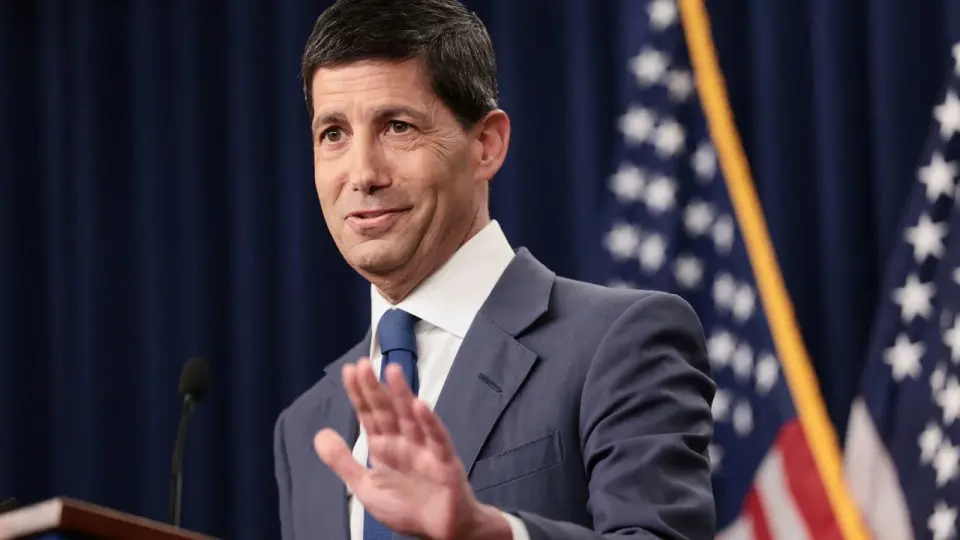
Federal Reserve Chair Kevin Warsh is expected to deliver a minimal-signal speech at Jackson Hole on Friday, as markets await clarity on rate policy. Prediction markets assign low odds to him addressing bond market interventions or yield curves. Meanwhile, Treasury Secretary Scott Bessent’s recent bond buyback program has complicated the Fed’s strategy by suppressing long-term yields, creating conflicting signals for investors.
Key points
- Kevin Warsh is scheduled to speak at the Jackson Hole symposium on Friday, with prediction markets showing only a 16% chance he will mention the bond market and an 8% chance he will reference the yield curve.
- A CNBC survey indicates 45% of respondents do not expect Warsh to expand on the rate outlook, reflecting his strategy of reducing forward guidance to let market data drive policy decisions.
- Treasury Secretary Scott Bessent recently announced a plan to at least double Treasury buybacks, a move analysts view as an attempt to suppress high bond yields, which conflicts with the Fed’s desire for unfiltered market signals.
- Cleveland Fed President Beth Hammack stated that 'now is the time to act' on raising rates, while Kansas City Fed chief Jeff Schmid described inflation as 'stubborn' and 'sticky,' highlighting internal tensions within the central bank.
- Stanley Druckenmiller criticized the Treasury’s intervention as 'artificial yield suppression,' arguing that it distorts market pricing and undermines the Fed’s ability to gauge economic fundamentals accurately.
Background
The Federal Reserve has historically increased transparency since the mid-2000s, providing detailed rate projections and press conferences to guide market expectations. Warsh’s current approach represents a significant departure from this norm, echoing the less communicative style of former Chair Alan Greenspan. This shift aims to reduce market speculation but has raised concerns about increased volatility and uncertainty among investors.
How outlets are covering it
CNN emphasizes the conflict between Warsh’s minimalist communication strategy and Bessent’s active intervention in the bond market, describing them as 'working at cross purposes.' CNBC focuses on the market’s skepticism regarding Warsh’s speech, noting low prediction market odds for him addressing key issues like bond market interventions. Both sources agree that the Treasury’s buyback program complicates the Fed’s ability to use market signals for policy decisions, but CNN highlights the broader implications for market volatility and the 'hall of mirrors' effect, while CNBC notes the immediate market reaction to Warsh’s anticipated silence.
Why it matters
The interplay between the Fed’s communication strategy and the Treasury’s market interventions could significantly impact interest rates, borrowing costs, and overall economic stability. If Warsh fails to provide clarity, and Bessent continues to suppress yields, it may lead to increased market volatility and mispricing of economic fundamentals, potentially affecting mortgage rates, business loans, and government borrowing costs.
What to watch
Investors will closely monitor Warsh’s Jackson Hole speech for any hints on the Fed’s rate path and its stance on Treasury interventions. The next Federal Reserve meeting is expected to provide further clarity on rate decisions, while the Treasury’s buyback program may continue to influence bond yields in the interim.
- CNBC Daily Open: Waiting for Warsh CNBC
- Fed Chairman Kevin Warsh delivers his key Jackson Hole speech Friday. Here's what to expect CNBC
- US Stock Futures Slip Before Warsh, Bonds Steady: Markets Wrap Bloomberg.com
- Shares turn cautious ahead of Warsh's Jackson Hole debut; FX, bonds hold breath Reuters
- Kevin Warsh has a plan for the Fed. Scott Bessent is getting in the way CNN
Want the full story? Read the original reporting
Read on CNBC