
Warsh’s Jackson Hole Address Signals Hawkish Stance on Inflation, Defying Political Pressure
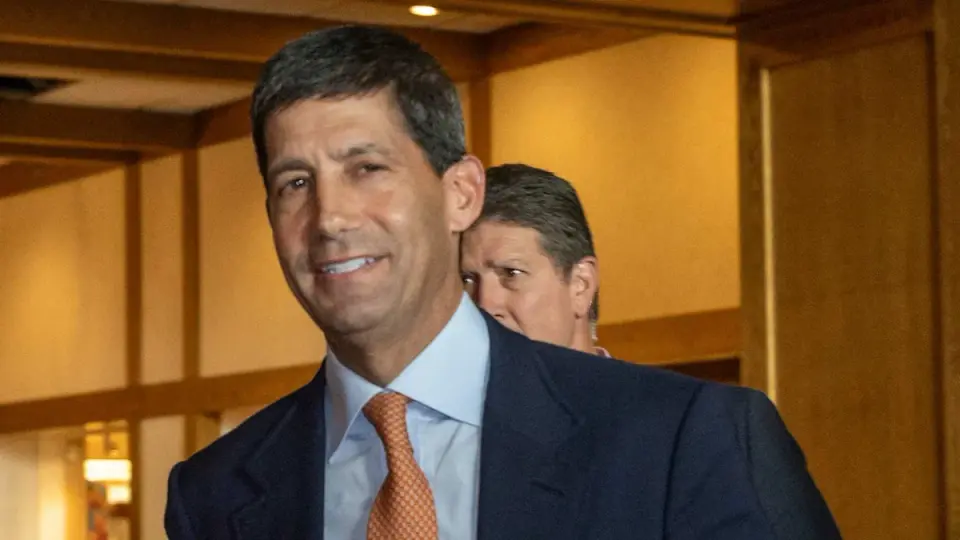
Federal Reserve Chair Kevin Warsh delivered his first Jackson Hole speech, reaffirming the 2% PCE inflation target and signaling a hawkish stance on rising prices. He rejected forward guidance, prioritized short-term interest rates as the primary policy tool, and dismissed AI as a near-term policy driver, positioning the Fed at odds with President Trump’s calls for rate cuts.
Key points
- Warsh reaffirmed the 2% PCE inflation target as a 'firm, fixed target' and cited multiple inflation measures, including CPI at 3.4% and PCE at 3.7%, as evidence that prices remain above the long-term trend.
- He stated that short-term interest rates are the 'predominant tool' for achieving the Fed’s dual mandate, rejecting the idea that AI advancements or balance sheet reductions should drive current policy decisions.
- Warsh criticized forward guidance as having 'outlived its role,' arguing it creates a 'hall of mirrors' dynamic where the Fed and markets send conflicting signals, referencing the 2021-22 inflation surge as a cautionary example.
- The speech marked a shift from Warsh’s July comments, where he described financial conditions as 'uneven,' to a more hawkish view that financial conditions are not broadly restrictive, raising the possibility of a rate hike if inflation persists.
- Market reaction included a rise in September rate-hike odds to approximately 57%, with stocks drifting lower and Treasuries selling off, reflecting concerns about a tighter monetary policy stance.
Background
Prior to the speech, markets were uncertain about Warsh’s 'reaction function' and rate path, with analysts expecting him to remain vague. Earlier coverage noted that Warsh had previously suggested AI might justify lower rates, aligning with Trump’s demands, but his Jackson Hole remarks signaled a pivot toward a more traditional, data-driven approach focused on inflation control.
How outlets are covering it
Financial Times analyst Mohamed El-Erian praised Warsh for navigating short-term market demands while emphasizing long-term structural issues like AI and innovation, calling the speech a 'masterclass' in central bank communication. CNBC analysis highlighted the hawkish tone, noting Warsh’s explicit rejection of forward guidance and his focus on inflation metrics as a clear signal of potential rate hikes, contrasting with Trump’s push for lower rates. Yahoo Finance cited Harvard’s Kenneth Rogoff, who commended Warsh for defying political pressure and demonstrating courage in his approach, though the source text was largely corrupted by market data.
Why it matters
Warsh’s speech sets the stage for a potential rate hike in September, challenging President Trump’s calls for lower rates and signaling a shift toward a more independent, data-driven Fed. The emphasis on inflation and rejection of forward guidance could reshape market expectations and influence the trajectory of monetary policy in the coming months.
What to watch
The Fed’s next meeting in mid-September will be critical, as Warsh’s hawkish stance may lead to a rate hike if inflation remains elevated. Markets will closely watch for further signals on the 'reaction function' and any concrete actions on balance sheet or AI-related policy adjustments.
- Fed Chairman Warsh shows courage with Jackson Hole speech, defying political pressure, says Harvard's Rogoff Yahoo Finance
- Markets Brace for Possible Rate Hike After Kevin Warsh’s Hawkish Turn WSJ
- Warsh charts a forward-looking path for the Fed at Jackson Hole Financial Times
- Analysis: Kevin Warsh sharpens inflation warning at Jackson Hole, signaling possible rate hike CNBC
- Kevin Warsh tries being a normal central banker The Economist
Want the full story? Read the original reporting
Read on Yahoo Finance