
Blue Origin commits $3B to Florida expansion for high-cadence New Glenn launches
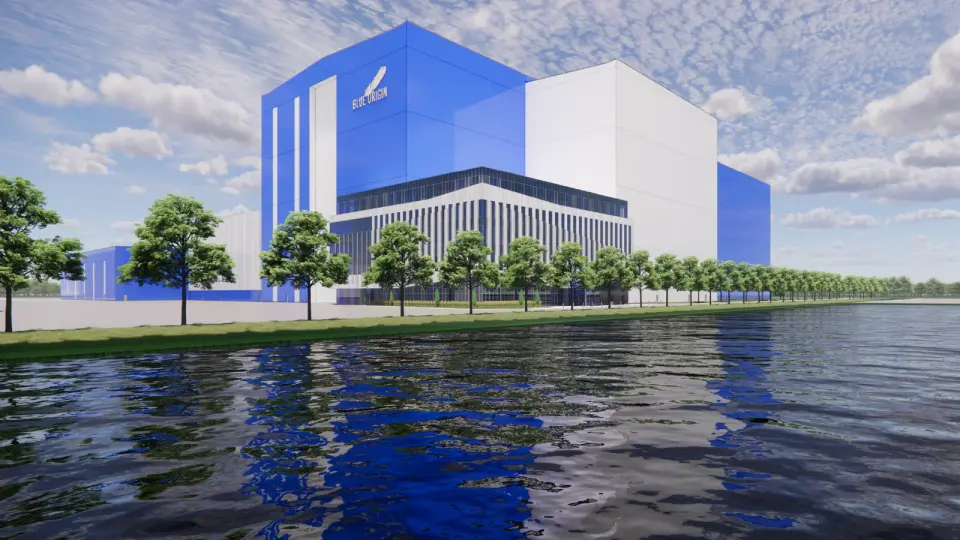
Blue Origin announced a major expansion of its Florida facilities, investing over $3 billion to support a launch cadence of multiple flights per week by 2030. The company is adding two new launch pads, a 1.37-million-square-foot upper stage manufacturing facility, and additional landing ships to recover New Glenn boosters. This aggressive scaling aims to capitalize on a shortage of commercial launch capacity as SpaceX reduces its Falcon 9 and Falcon Heavy availability. The expansion follows a catastrophic engine failure in May that destroyed a launch pad, which Blue Origin is currently rebuilding to resume flights in early 2027.
Key points
- Blue Origin plans to add two new launch pads at Cape Canaveral to support the larger 9x4 variant of the New Glenn rocket, which carries 70 metric tons to low-Earth orbit.
- The company is investing $330 million in a new upper stage manufacturing facility at Rocket Park, expected to produce up to 150 stages annually by summer 2027.
- Blue Origin is procuring two additional landing ships to recover and refurbish first-stage boosters, joining the existing vessel named Jacklyn.
- A new customer integration facility, built with the US Space Force, will feature four payload bays to process multiple missions simultaneously.
- The FAA is reviewing Blue Origin's request to increase the permitted launch rate at Launch Complex 36A from 12 to 50 flights per year.
- The expansion aims to fill a market gap created by SpaceX's withdrawal from the commercial launch market for its older rocket variants after 2028.
Background
Blue Origin previously secured a $700 million NASA contract for the Mars Telecommunications Network, a deal currently under legal challenge by Rocket Lab. The company has also been developing a human lander for NASA's Artemis program, which may require the larger 9x4 New Glenn variant. In May 2026, a BE-4 engine failure caused the loss of the New Glenn rocket and Launch Complex 36A, delaying the program's return to flight until early 2027.
How outlets are covering it
Ars Technica emphasizes the strategic opportunity for Blue Origin to capture market share as SpaceX reduces its commercial launch capacity, noting that the new infrastructure is designed to support multiple flights per week by the end of the decade. Spaceflight Now highlights the regulatory process, noting that the FAA is currently accepting public comments on Blue Origin's request to increase its launch cadence at LC-36A. WESH focuses on the economic impact, detailing the $330 million investment in the upper stage facility and the creation of jobs across Brevard and Orange counties. All sources agree that the expansion is a direct response to the May 2026 engine failure and the need to recover lost launch capacity.
Why it matters
The expansion signals a shift in the commercial launch market, where Blue Origin is positioning itself as a primary provider for medium and heavy-lift missions. The ability to launch multiple rockets per week could reduce costs for satellite operators and national security missions, while also challenging SpaceX's dominance in the launch market. The success of the New Glenn program will be critical for Blue Origin's future contracts, including the Mars Telecommunications Network and the Artemis program.
What to watch
Blue Origin expects to resume New Glenn launches in early 2027 after completing the rebuild of Launch Complex 36A. The new upper stage manufacturing facility is expected to be completed by summer 2027. The FAA is scheduled to hold a virtual public hearing on October 22, 2026, regarding the increased launch cadence at LC-36A, with public comments closing on October 30, 2026. Blue Origin is also in early-stage discussions with the US Space Force to develop a new launch site at Vandenberg Space Force Base.
- Blue Origin is going all in on the New Glenn rocket Ars Technica
- Blue Origin to add new Florida launch pads, seeks aggressive increase in New Glenn flight rate Spaceflight Now
- Blue Origin targets multiple New Glenn launches weekly by end of decade Reuters
- Building the Infrastructure for More Frequent Launches in Florida Blue Origin
- Blue Origin unveils $3 billion Florida expansion for New Glenn rocket program WESH
Want the full story? Read the original reporting
Read on Ars Technica