
DNA Study Shows Roman Empire's Fall Was a Slow Genetic Blend, Not a Barbarian Invasion
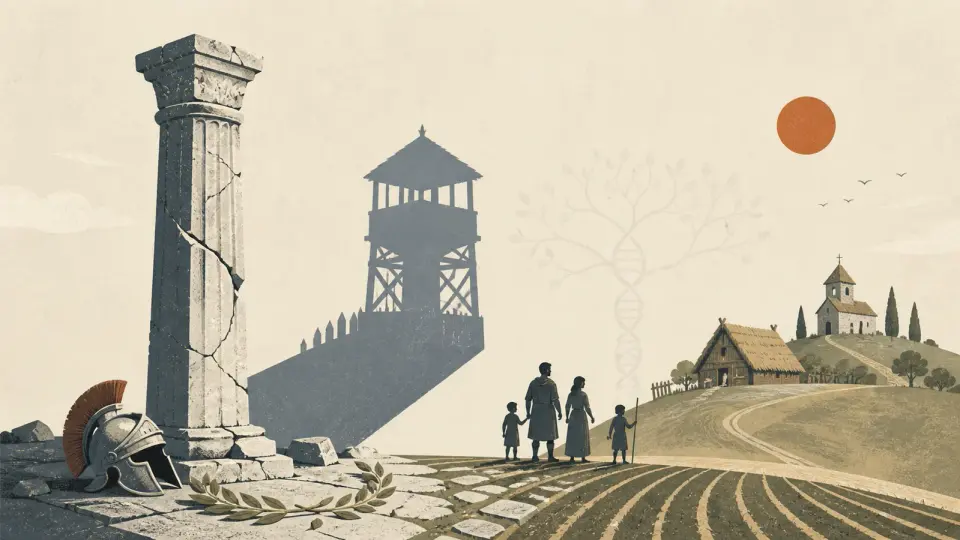
A study of 258 ancient genomes from southern Germany reveals that the fall of the Western Roman Empire did not result in a sudden barbarian conquest. Instead, genetic evidence shows a gradual integration of local and Roman populations through intermarriage, challenging the traditional narrative of a violent, rapid replacement of cultures.
Key points
- Analysis of 258 genomes from 400-700 AD in southern Germany shows a slow genetic shift, not a sudden invasion.
- The Roman frontier was a mixed zone with diverse populations, including northern Europeans and Roman provincials.
- After 470 AD, as Roman structures weakened, people from various backgrounds moved and intermarried, creating a new European genetic profile.
- Family structures and Christian customs persisted, showing continuity from late Roman society into the early medieval period.
- Life expectancy and child mortality data provide rare insights into ordinary lives in the early Middle Ages.
Background
Recent archaeological and genetic studies, such as the analysis of ancient parchments and shipwrecks, have increasingly used DNA to reconstruct historical narratives. This study builds on that trend by focusing on the demographic changes following the fall of the Roman Empire, providing a more nuanced view of the transition from antiquity to the medieval period.
Why it matters
This research reshapes our understanding of the fall of the Roman Empire, moving away from the dramatic narrative of a sudden barbarian takeover to a more complex story of gradual cultural and genetic integration. It highlights the resilience of social structures and the importance of local interactions in shaping historical populations.
What to watch
Further research may explore how these genetic and cultural shifts influenced language, law, and other aspects of medieval European society. The study's methods, such as Chronograph and filia, could be applied to other regions and time periods to uncover similar patterns of gradual change.
Want the full story? Read the original reporting
Read on ZME Science