
In Vivo CRISPR Screens Reveal GNAS and P2RY8 as Key Targets for Boosting T Cell Therapy in Solid Tumors
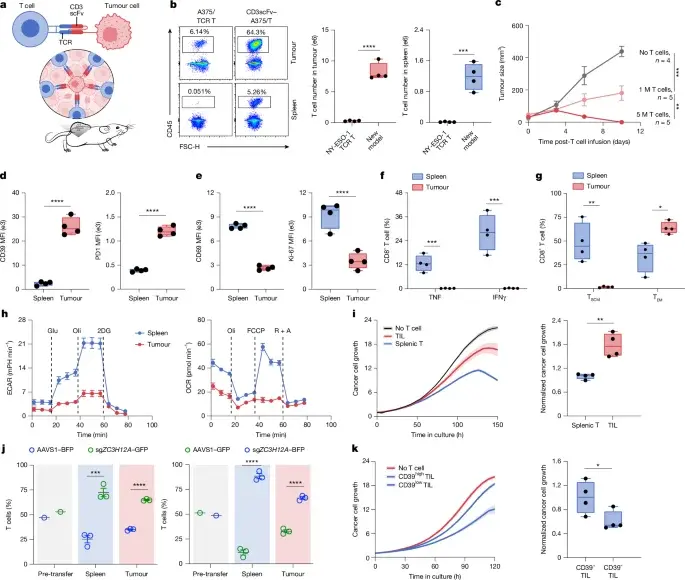
Researchers developed a new in vivo model to perform genome-wide CRISPR screens on human T cells within solid tumors, identifying two critical genetic targets, GNAS and P2RY8, that regulate T cell dysfunction and infiltration. Knocking out these genes significantly improved the efficacy of CAR and TCR therapies in preclinical models, offering a scalable platform for enhancing cellular immunotherapy.
Key points
- A new in vivo model allows efficient recovery of human T cells from solid tumors, overcoming previous limitations in low cell recovery rates.
- Genome-wide CRISPR knockout screens identified the P2RY8-Gα13 axis as a negative regulator of T cell infiltration into tumors.
- The screens identified GNAS as a key driver of T cell dysfunction, acting as a convergent node for multiple suppressive signals.
- Knockout of GNAS rendered T cells resistant to suppressive cues and improved therapeutic efficacy across diverse solid tumor models.
- Combinatorial knockout of both P2RY8 and GNAS further enhanced tumor control, demonstrating the value of orthogonal genetic targets.
Background
This study builds on previous CRISPR screening efforts in T cells, such as those identifying RASA2 and Mediator kinase module regulators, but focuses specifically on the in vivo tumor microenvironment. It addresses the challenge that many regulators of T cell performance in solid tumors are not revealed in vitro. The work follows recent advancements in CAR-T therapy for solid tumors and other CRISPR-based immunotherapy enhancements, aiming to systematically discover genetic strategies to improve T cell fitness in challenging tumor environments.
Why it matters
This research provides a scalable platform for identifying genetic modifications that enhance cellular immunotherapy in solid tumors, a major unmet need in cancer treatment. By identifying specific genes like GNAS and P2RY8 that can be knocked out to improve T cell function and infiltration, the study offers concrete targets for next-generation CAR-T and TCR therapies, potentially leading to more effective treatments for solid cancers.
What to watch
The development of this flexible, scalable platform suggests future systematic discovery of other genetic strategies to improve solid tumor T cell therapies. Researchers may explore the clinical translation of GNAS and P2RY8 knockouts in human trials, as well as further combinatorial editing strategies to enhance therapeutic potency.
Want the full story? Read the original reporting
Read on Nature