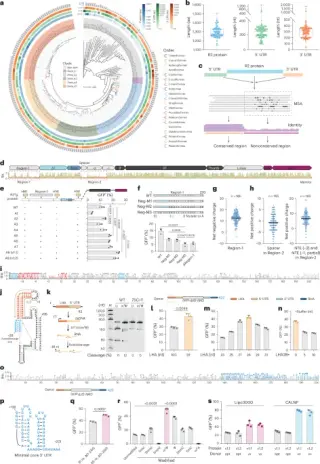
Researchers at the Beijing Institute of Genomics identified 159 new avian R2 retrotransposons by scanning 1,139 bird genomes. By engineering these elements, they created an all-RNA system that achieves up to 60% site-specific gene integration in human primary cells, offering a new tool for precise genome editing without double-strand DNA breaks.
New gene-editing technologies are emerging to overcome the limitations of CRISPR-Cas9, specifically its inability to efficiently insert large DNA segments. Techniques like PASTE, evoCAST, and recombineering allow researchers to replace entire faulty genes or engineer complex cellular circuits, addressing diseases with multiple genetic variants. While these methods offer broader therapeutic potential, they face significant challenges in delivery efficiency and complexity. The global CRISPR market is projected to grow at 16% annually, driven by these advancements and expanding clinical trials.
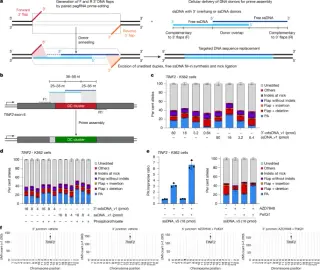
Nature reports a CRISPR-guided method called prime assembly (PA) that enables in-cell DNA assembly and site-specific integration of medium-to-large DNA fragments using RNA-programmed 3′ flap synthesis. PA works in dividing and non-dividing cells, including primary CD3+ T cells and CD34+ HSPCs, and supports exon recoding, multiple-locus transgene integration (e.g., at AAVS1, IL2RG, TRAC) and megabase-scale rearrangements, with high genome-wide specificity. It accommodates dsDNA and long or split ssDNA donors (up to 12 kb and beyond) and can perform multi-fragment assembly, megabase deletions, inversions, and translocations, sometimes enhanced by end-joining inhibitors. Compared with HDR and other nuclease-based approaches, PA often offers higher precision and broader applicability in non-dividing cells, suggesting a promising platform for therapeutic genome editing and functional genomics in human cells.
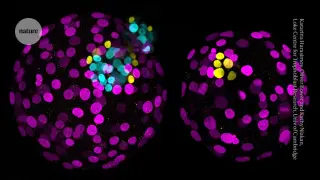
Researchers used base editing to disrupt NANOG in donated human embryos, revealing NANOG’s crucial role in forming the epiblast and early tissues, a finding not seen in mice and highlighting limits of animal models. While base editing appears more precise than CRISPR–Cas9 and may reduce some risks, mosaicism and other safety hurdles remain, and experts are calling for urgent ethical discussions about if, when, and how such germline edits could be used in humans.
Colossal Biosciences unveiled a plan to revive the extinct African bluebuck by editing roan antelope DNA and using a roan as a surrogate mother, aided by breakthroughs like roan ovum pickup and roan-derived induced pluripotent stem cells; the company hopes for a birth in coming years and a future reintroduction within the bluebuck’s historic Southern Africa range, though conservation scientists question the practical value and ecological viability of such de‑extinction efforts.
Colossal Biosciences says it has bluebuck DNA, has mapped it, and is in the final phase of genomic editing for a 2028-ish birth via a surrogate, part of a broader de-extinction portfolio aimed at re-wilding in native habitats with government and indigenous partners; critics warn of ecological risks and question practicality, while the company says the work focuses on ecosystem benefits rather than zoos.
Colossal Biosciences is assembling hundreds of mammoth genomes to guide edits in the Asian elephant genome, testing changes in mice before attempting embryonic cloning to produce mammoth-like calves (potentially by 2028). The project aims to restore ecological roles of mammoths and advance conservation tools, but it faces scientific and ethical debate about whether this constitutes true de-extinction and how it would be implemented in Arctic ecosystems.
The FDA issued a draft guidance outlining a Plausible Mechanism Framework to accelerate approvals of genome-editing and RNA-based, individualized therapies that target the root causes of ultra-rare diseases, allowing smaller, robust studies and the use of master protocols. Sponsors must demonstrate the therapy addresses the specific disease mechanism, rely on well-characterized natural history data, and show target engagement or editing; public comments are due within 60 days.
Scientists are close to potentially bringing back Neanderthals within 20 years using advanced genetic technologies like CRISPR, but this raises significant ethical, legal, and practical concerns, including the feasibility of the process, the well-being of any resurrected individuals, and the moral implications of creating a new human-like species. Most experts agree that such efforts are currently unwise and ethically problematic, emphasizing the importance of preserving existing human and animal species instead.
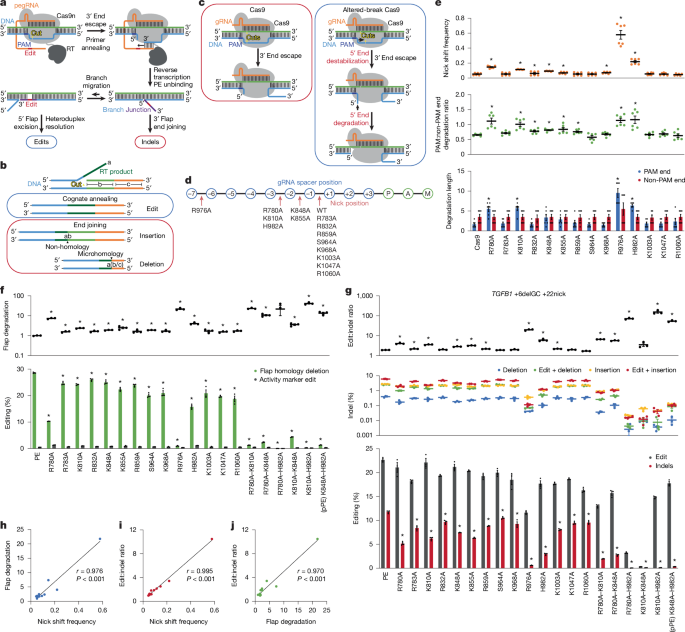
Researchers engineered prime editors by modifying Cas9 to relax nick positioning, which promotes degradation of competing DNA strands, significantly reducing insertion and deletion errors while maintaining high editing efficiency across various loci and cell types, including human and mouse cells. These advanced editors, such as the precise prime editor (pPE), extra-precise prime editor (xPE), and very-precise prime editor (vPE), demonstrate improved fidelity and potential for safer, more accurate genome editing applications.
Scientists are studying the freshwater apple snail's remarkable ability to fully regenerate its eyes after amputation, using genome editing techniques like CRISPR-Cas9, with the goal of applying this knowledge to help humans recover from eye injuries due to the structural and genetic similarities between snail and human eyes.
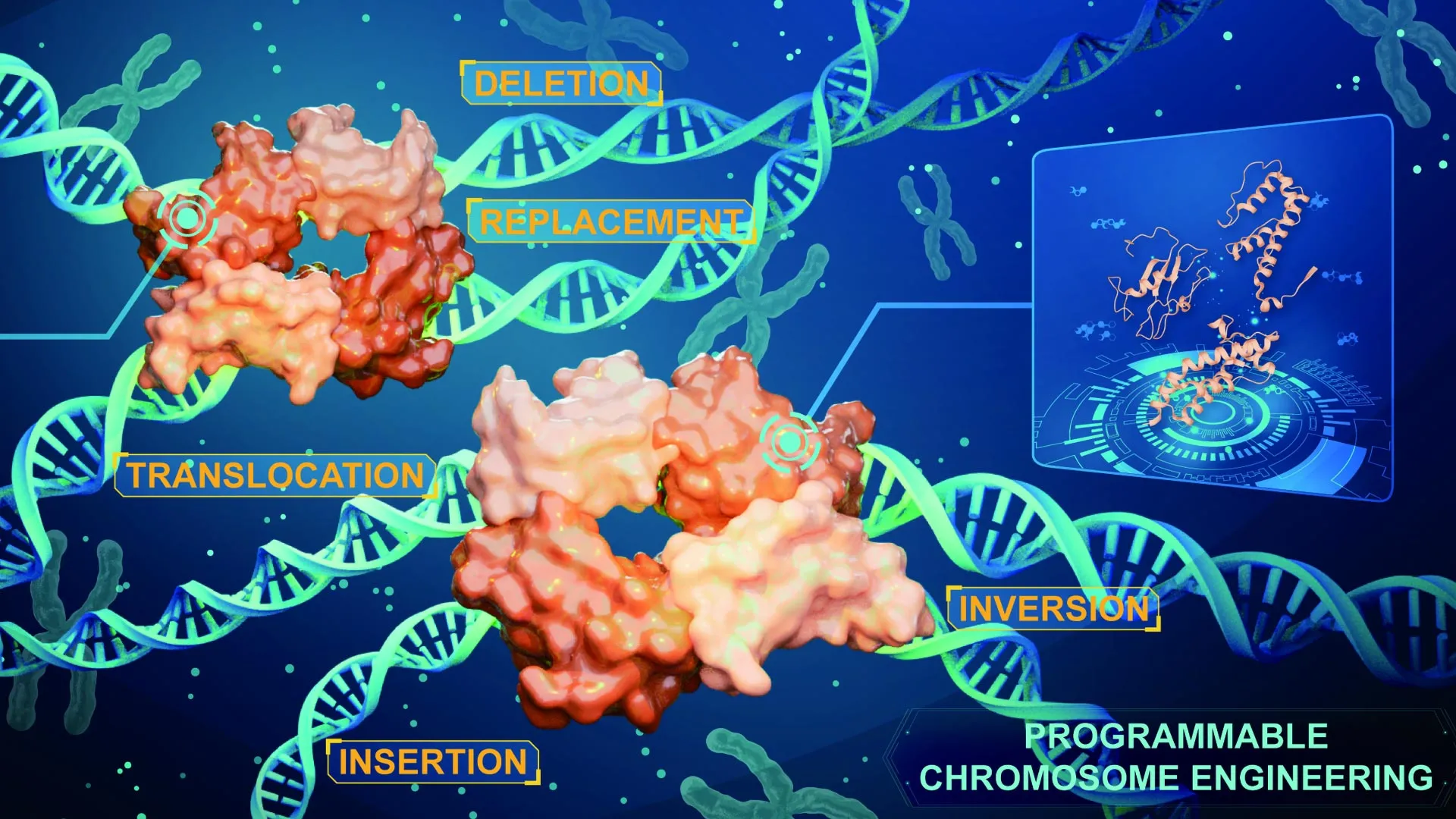
Chinese researchers have developed advanced genome editing technologies called Programmable Chromosome Engineering (PCE) systems, enabling precise, scarless manipulation of entire chromosomes in plants and animals, demonstrated by creating herbicide-resistant rice with a 315-kb inversion, overcoming previous limitations of the Cre-Lox system.
New research reveals that herpes simplex virus type 1 (HSV-1) can alter human DNA within an hour of infection by hijacking the host's cellular machinery, specifically taking control of RNA polymerase II to facilitate rapid viral replication. The study also identifies a potential enzyme, TOP1, that could be targeted to prevent these changes and combat the virus.
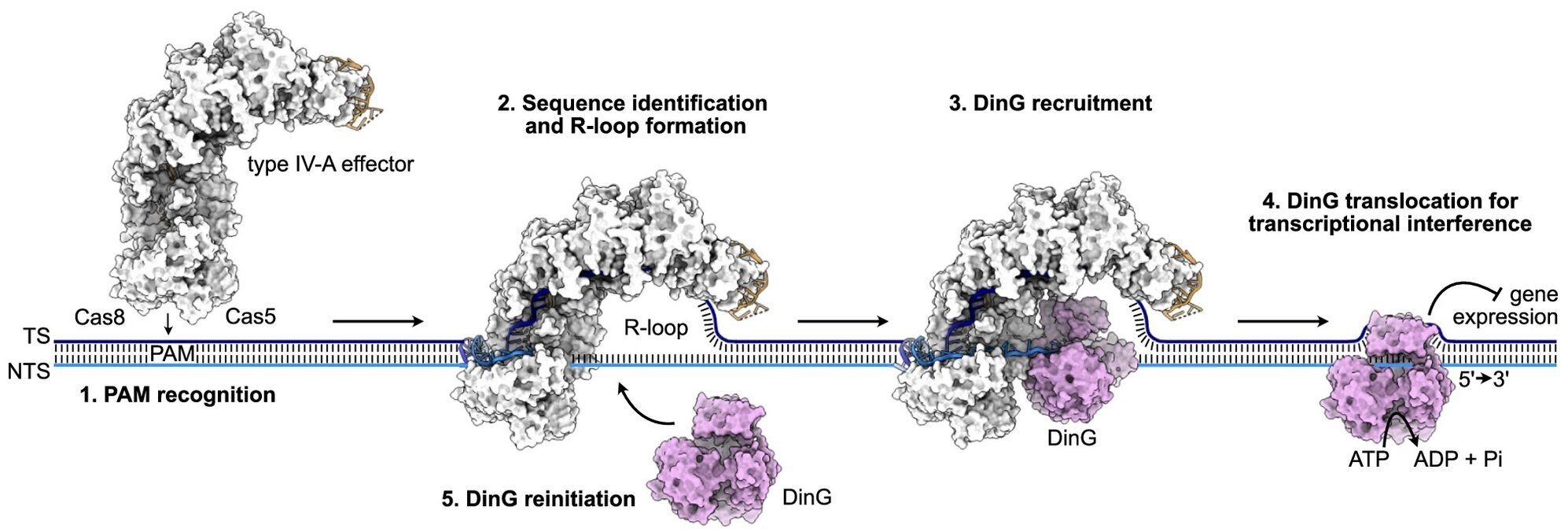
Researchers at Vilnius University's Life Sciences Center have developed a novel CRISPR system that silences genes without cutting DNA, using an RNA-guided complex to recruit the enzyme DinG for gene suppression. This method, which involves the formation of R-loops, offers a safer alternative for gene modification, potentially advancing genome editing and biotechnology applications.
Researchers at the University of Zurich have discovered that using CRISPR to correct genetic defects in chronic granulomatosis can inadvertently cause new genetic issues. While they successfully inserted missing DNA letters in immune cells, the process sometimes led to missing or rearranged chromosome sections, potentially causing severe medical consequences like blood cancer. Despite testing alternative methods, the team couldn't fully eliminate these side effects.