
Israeli team develops blood test to detect early breast cancer via epigenetic markers
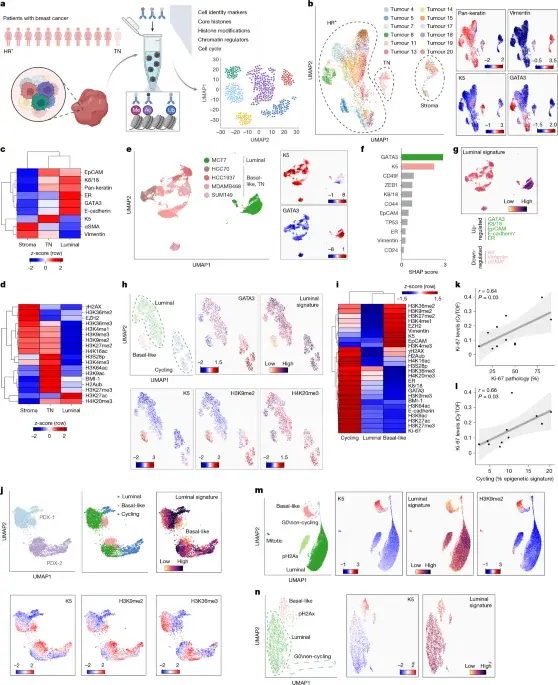
Researchers at the Weizmann Institute of Science and Hebrew University of Jerusalem have developed an experimental blood test capable of detecting early-stage breast cancer with 95% accuracy. Published in Nature, the study utilizes a single-molecule imaging platform called EPINUC to analyze epigenetic markers on cell-free nucleosomes in the blood. The test identifies a specific subpopulation of aggressive, basal-like cells within luminal tumors, which are associated with poor prognosis and treatment resistance. By tracking these epigenetic signatures, the method can predict the risk of cancer recurrence with 81% accuracy, outperforming conventional tissue biopsies in this regard. The approach is effective regardless of breast density, addressing a limitation of mammography, and may facilitate earlier screening and personalized treatment strategies.
Key points
- The test detects early-stage breast cancer (tumors under 2 cm) with 95% accuracy using blood samples.
- It identifies a rare subpopulation of aggressive, basal-like cells within otherwise benign luminal tumors.
- The method predicts cancer recurrence with 81% accuracy, surpassing traditional biopsy assessments.
- The test works effectively regardless of breast density, unlike mammography which struggles with dense tissue.
- The study involved 77 breast cancer patients and 30 healthy controls, with validation across multiple international cohorts.
Background
This development follows earlier research by the same teams, including a 2022 study that demonstrated the potential of similar epigenetic blood tests for detecting colorectal and pancreatic cancers. The current study builds on that foundation by focusing specifically on breast cancer, a disease where 20-40% of cases recur even after successful initial treatment. The findings address a critical gap in current screening methods, which often miss tumors in dense breast tissue or fail to predict recurrence accurately.
How outlets are covering it
The primary source, Nature, emphasizes the technical innovation of using cytometry by time-of-flight (CyTOF) and single-molecule imaging to map epigenetic heterogeneity within tumors. It highlights the discovery of a conserved basal-like epigenetic signature in luminal tumors, which is linked to aggressive oncogenic traits. Secondary sources, including The Times of Israel and Ynetnews, focus on the clinical implications, particularly the 95% detection accuracy and the 81% recurrence prediction rate. They stress the test's ability to function regardless of breast density, a significant advantage over mammography. Vietnam.vn provides a broader context, noting the potential for this technology to improve patient care and monitoring. All sources agree on the potential of the test but differ in emphasis: Nature focuses on the biological mechanism, while the media outlets highlight the practical benefits for early detection and prognosis.
Why it matters
This research offers a potential breakthrough in breast cancer screening and treatment. By detecting cancer earlier and predicting recurrence more accurately, the test could lead to earlier interventions and more effective treatment plans. It addresses the limitations of current screening methods, such as mammography, which can miss tumors in dense breast tissue. The ability to identify aggressive cell populations within tumors could help doctors tailor treatments to prevent recurrence, potentially improving survival rates and reducing the burden of the disease.
What to watch
The researchers are now looking for treatments that could deprive cancer cells of their epigenetic flexibility, potentially preventing recurrence or even reversing aggressive traits. Further clinical trials are likely to validate the test's effectiveness in larger, diverse populations. The development of this technology could lead to its integration into standard cancer screening protocols, providing a non-invasive, highly accurate method for early detection and prognosis.
- Epigenetic heterogeneity in breast tumours informs diagnosis and prognosis Nature
- Israeli blood test detects early breast cancer with 95% accuracy The Times of Israel
- Blood Nucleosome Epigenetic Signature May Improve Breast Cancer Diagnosis, Prognosis GenomeWeb
- Blood tests help detect breast cancer early and predict the risk of recurrence. Vietnam.vn
- New Israeli blood test detects early breast cancer, predicts risk of recurrence Ynetnews
Want the full story? Read the original reporting
Read on Nature