
Aging disrupts brain’s sleep-time fluid waves via neural and vascular decline
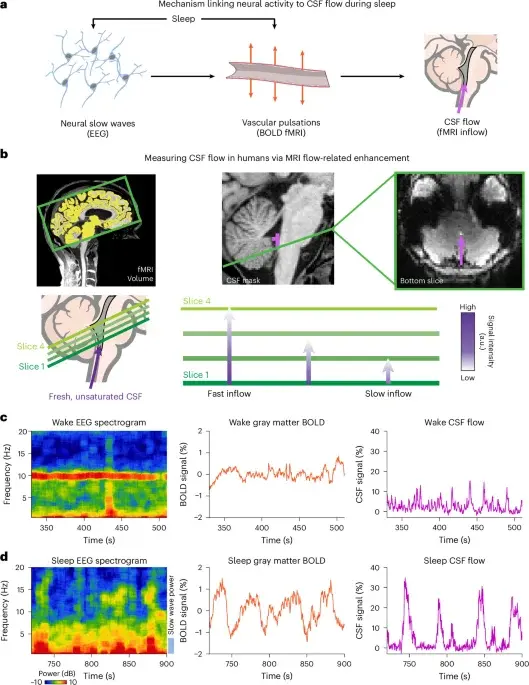
A new study in Nature Aging reveals that older adults experience significantly reduced cerebrospinal fluid (CSF) flow waves during non-REM sleep compared to younger adults. This decline is driven by two parallel mechanisms: diminished slow-wave brain activity and impaired cerebrovascular reactivity. The findings suggest that typical aging disrupts the brain's waste-clearing system before the onset of neurodegenerative disease, potentially increasing risk for conditions like Alzheimer's. Researchers note that some older adults maintain healthy fluid dynamics, highlighting individual variability in aging trajectories.
Key points
- Older adults (60-84) show significantly lower low-frequency CSF power during non-REM sleep than younger adults (18-39).
- The reduction in CSF flow is linked to decreased EEG slow-wave power and weaker hemodynamic oscillations in gray matter.
- Daytime experiments confirmed that impaired neurovascular coupling and reduced cerebrovascular reactivity contribute to the decline, independent of sleep state.
- Gray matter atrophy in older participants correlated with greater reductions in sleep-dependent CSF flow.
- Some older adults maintained CSF flow levels comparable to young adults, suggesting protective factors or resilience in aging.
Background
Previous studies using daytime MRI scans reported conflicting results on age-related changes in CSF flow, with some showing minimal or inconsistent changes. This study addresses that gap by measuring flow during sleep, when CSF dynamics are most active. It builds on earlier 2019 findings by lead author Laura Lewis that slow brain waves drive CSF movement. Recent related research (covered in our archive) has explored interventions like pink noise to boost these waves, though those methods have not yet been tested in older adults. The current findings clarify that the decline is a physiological change in typical aging, not just a symptom of disease.
How outlets are covering it
MIT News emphasizes the potential for predicting neurodegenerative risk and developing interventions, noting that some older adults maintain healthy CSF flow. Science Daily highlights the broader implication for Alzheimer's prevention, linking waste clearance to protein buildup. Bioengineer.org provides a detailed technical breakdown, stressing the dual mechanism of neural and vascular impairment and the robustness of the findings across two scanner sites. All sources agree on the core finding of reduced CSF flow in aging but differ in emphasis: MIT News focuses on future applications and individual variability, while Bioengineer.org details the methodological rigor and specific statistical correlations between neural, hemodynamic, and fluid signals.
Why it matters
Understanding the link between aging, sleep, and CSF flow could lead to new strategies for preventing cognitive decline. If CSF flow is a key mechanism for clearing waste like amyloid beta, interventions that restore fluid dynamics might reduce the risk of Alzheimer's and other dementias. The discovery that this decline occurs before disease onset suggests that early monitoring of sleep-related fluid dynamics could serve as a biomarker for brain health. Furthermore, identifying why some older adults maintain healthy fluid flow could reveal protective factors for successful aging.
What to watch
Researchers plan to follow participants to determine if reduced CSF flow predicts the development of neurodegenerative disorders. They also intend to test interventions, such as the pink noise method previously shown to boost CSF flow in young adults, to see if it can restore fluid dynamics in older adults. Future studies will investigate the specific factors that allow some older adults to maintain healthy sleep-related fluid patterns, potentially identifying targets for therapeutic intervention.
- The aging human brain exhibits reduced hemodynamic and cerebrospinal fluid flow waves during sleep Nature
- Waves that clear waste from the brain during sleep are impaired in older adults MIT News
- MIT scientists discover a surprising way to boost the brain’s nighttime cleaning system Science Daily
- Pink noise played during sleep shows promise for Alzheimer’s memory loss New Scientist
- Aging Brain Shows Reduced Cerebrospinal Fluid Waves During Nighttime Sleep Bioengineer.org
Want the full story? Read the original reporting
Read on Nature