Tag

Brain Aging

All articles tagged with #brain aging

MIND Diet May Slow Brain Aging—Cheese Appears to Lend a Hand
health2 days ago

MIND Diet May Slow Brain Aging—Cheese Appears to Lend a Hand

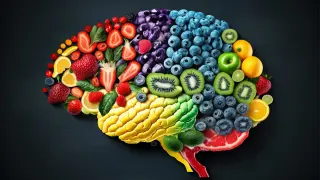
A study of 1,647 adults over about 12 years found that closer adherence to the MIND diet (Mediterranean–DASH Diet) is linked to slower brain aging: every 3-point increase in the diet score corresponded to 20% less gray-matter loss (roughly 2.5 years of delay) and 8% less ventricular enlargement (about 1 year). Berries and poultry were key contributors; sweets and fried foods worsened hippocampal health. Unexpectedly, higher whole-grain intake was linked to faster decline, while higher cheese intake was associated with slower gray-matter and hippocampal loss and less ventricular enlargement—a notable exception to the diet’s usual limits. Benefits were stronger among older individuals, those who were physically active, and those not overweight, suggesting diet works with other healthy habits to protect brain structure.

MIND Diet Linked to Slower Brain Aging, New Study Finds
science15 days ago

MIND Diet Linked to Slower Brain Aging, New Study Finds

A long-term study of over 1,600 middle-aged and older adults found that stronger adherence to the MIND diet slowed brain aging, with about 2.5 years of reduced aging and 8%–8.8% less ventricular expansion over roughly 12 years; specific foods like berries and poultry were associated with protective brain changes, while sweets and fried foods linked to worse outcomes. The study notes limitations such as demographic homogeneity and lack of APOE data, but suggests the MIND diet could be an accessible strategy to support brain health as populations age.

MIND Diet May Put Brakes on Brain Aging: Real-World Study Finds 2.5-Year Benefit
health17 days ago

MIND Diet May Put Brakes on Brain Aging: Real-World Study Finds 2.5-Year Benefit

A study of 1,647 middle-aged and older adults found that closer adherence to the MIND diet—a Mediterranean-DASH blend rich in antioxidants—was linked to less brain tissue loss, especially gray matter, and less ventricular enlargement over about 12 years, equating to roughly 2.5 years slower brain aging; results varied with some foods (whole grains linked to faster gray-matter decline; cheese linked to slower decline), and causality isn’t established.

MIND Diet May Slow Brain Aging, MRI Study Finds
health22 days ago

MIND Diet May Slow Brain Aging, MRI Study Finds

A 12-year Framingham Heart Study Offspring analysis found higher adherence to the MIND diet—rich in leafy greens, berries, nuts, whole grains, fish, poultry, olive oil, and moderate wine—was associated with slower brain aging on MRI, including reduced gray matter loss and less ventricular expansion. Each 3-point rise in MIND score correlated with about 0.279 cm³/year slower gray matter loss (roughly 20% less aging and ~2.5 years) and −0.071 cm³/year slower ventricular expansion (about 1 year). Benefits were strongest for berries and poultry; sweets and fried foods linked to worse changes. The study is observational, with recall bias and a predominantly White cohort limiting causal claims, but supports the brain-health potential of the MIND diet as part of a healthy lifestyle.

MIND Diet Linked to About 2.5-Year Slowing of Brain Aging
health23 days ago

MIND Diet Linked to About 2.5-Year Slowing of Brain Aging

A large observational study found that adherence to the MIND diet—an blend of Mediterranean and DASH principles focused on brain-healthy foods like berries, leafy greens, fish, poultry, whole grains, olive oil, and nuts—was associated with slower brain aging over about 12 years, including reduced gray-matter loss and slower enlargement of brain ventricles, equating to roughly a 2.5-year delay. The effect appears tied to overall dietary pattern rather than a single food, but causation can’t be proven.

A Year of Cardio May Make Your Brain Look Younger
health1 month ago

A Year of Cardio May Make Your Brain Look Younger

A 12-month randomized trial found that healthy adults who followed a structured aerobic program (about 150 minutes per week) had brains that appeared roughly 0.6 years younger on MRI than those who did not, with the difference approaching a full year. The change was modest and not explained by a single measured factor, suggesting multiple potential mechanisms. While larger studies are needed to link brain-age reductions to dementia risk, the findings support following current exercise guidelines to help keep the brain biologically younger into midlife.

Lifetime cannabis use linked to younger-looking brains in a 25k-participant study
science2 months ago

Lifetime cannabis use linked to younger-looking brains in a 25k-participant study

A large UK Biobank imaging study of over 25,000 participants aged 44–81 found that lifetime cannabis users have brain connectivity patterns that resemble younger brains and outperformed non-users on several cognitive tests, with aging-related networks showing opposite changes; however, being cross-sectional and based on lifetime use, the study cannot establish causation and the effects are modest.

DMTF1: A Molecular Switch to Rejuvenate Aging Brain Cells
science2 months ago

DMTF1: A Molecular Switch to Rejuvenate Aging Brain Cells

Researchers have identified the transcription factor DMTF1 as a key regulator that preserves neural stem cell activity in aging brains. In aging models with telomere damage, DMTF1 levels drop and neural stem cell regeneration declines; reactivating DMTF1 restores regenerative capacity and reveals its role in activating helper genes that open chromatin for growth-related genes. This suggests potential therapies to slow cognitive aging by boosting neural stem cell function, though most work so far is in vitro, with the long-term aim of developing small molecules to safely enhance DMTF1 without increasing brain tumor risk.

A Year of Exercise Could Make Your Brain Biologically Younger
health2 months ago

A Year of Exercise Could Make Your Brain Biologically Younger

A 12-month trial of 130 healthy adults (26–58) found that following WHO guidelines (about 150 minutes/week of moderate-to-vigorous exercise) led to brains that appeared roughly 0.6 years biologically younger on MRI than controls, while those who maintained usual routines looked about 0.35 years older. The difference approached statistical significance but was not itself definitive. The researchers couldn’t pinpoint the exact mechanism, with possibilities including subtle brain-structure changes, inflammation, or vascular factors, and long-term effects remain to be studied.

Lithium in the Brain Sparks a Ten-Year Alzheimer’s Breakthrough
science2 months ago

Lithium in the Brain Sparks a Ten-Year Alzheimer’s Breakthrough

Harvard researchers show lithium naturally exists in the brain and supports neuron function; lithium depletion is an early Alzheimer’s change and is reduced when amyloid plaques bind lithium. In mice, losing brain lithium accelerates disease, while a lithium orotate compound can prevent or reverse pathology, prompting planned clinical trials; researchers caution against self-medicating until trials establish safety and efficacy.

OTULIN Emerges as Master Regulator to Rewire Brain Aging
science2 months ago

OTULIN Emerges as Master Regulator to Rewire Brain Aging

A study identifies OTULIN as a high-level regulator in neurons that controls gene expression and RNA metabolism, shaping tau biology in brain aging and Alzheimer's disease. Partial inhibition of OTULIN reduced pathogenic tau, while CRISPR deletion nearly abolished tau by silencing MAPT mRNA, but also caused widespread transcriptome changes. The work suggests therapies could recalibrate neuronal regulatory networks to counter aging and neurodegeneration, though complete loss of OTULIN would be harmful and requires precise tuning.

Mind Diet Linked to Slower Biological Aging and Broad Brain-Health Benefits
dementia2 months ago

Mind Diet Linked to Slower Biological Aging and Broad Brain-Health Benefits

A UK Biobank study of about 170,000 adults over a median of ten years found that high adherence to the MIND diet—rich in leafy greens, berries, nuts, whole grains, and fish—was linked to lower risk of dementia and stroke and fewer depression and anxiety symptoms, along with slower biological aging and preserved brain volumes; in contrast, high intake of ultra-processed foods predicted higher risks for dementia, depression, anxiety, and Parkinson's disease. The findings were validated in American and Chinese cohorts, and potential pathways include improved metabolism and aging biomarkers (e.g., GDF-15). Mendelian randomization suggested possible causality, but the study remains observational and randomized trials are needed.

OTULIN Regulates Tau in Neurons, Opening Alzheimer’s Therapy Avenues
science2 months ago

OTULIN Regulates Tau in Neurons, Opening Alzheimer’s Therapy Avenues

Researchers at the University of New Mexico found that OTULIN, an enzyme known for immune regulation, also controls tau production in neurons. By inhibiting OTULIN with a small molecule or knocking out the OTULIN gene, they stopped new tau formation and cleared existing tau in human neuron models, suggesting a novel target for treating Alzheimer’s disease and related tauopathies. The findings also linked OTULIN to RNA metabolism and inflammatory pathways, and researchers note the need to study effects across different brain cell types before pursuing therapies.