Tag

Cerebrospinal Fluid

All articles tagged with #cerebrospinal fluid

Abdominal contractions trigger brain motion via a hydraulic-like mechanism, study finds
neuroscience16 days ago

Abdominal contractions trigger brain motion via a hydraulic-like mechanism, study finds

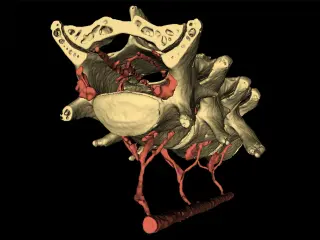
A Nature Neuroscience study in awake mice shows abdominal muscle contractions compress a network of veins called the vertebral venous plexus, pushing fluid and causing the brain to shift slightly within the skull. Using two-photon microscopy and computer simulations, researchers suggest this mechanical pumping could drive cerebrospinal fluid flow to clear waste, offering a potential mechanism for how exercise benefits brain health. The work used head-fixed mice on a spherical treadmill with abdominal pressure applied by a pneumatic belt, and notes limitations such as imaging only the top cortex and simplified anatomy, with human relevance still to be determined.

Abdominal muscle contractions may drive brain movement to flush waste, new study says
science-and-medicine18 days ago

Abdominal muscle contractions may drive brain movement to flush waste, new study says

Imaging and experiments suggest abdominal muscle contractions push blood into the spine, moving the brain inside the skull via the vertebral venous plexus and potentially aiding cerebrospinal fluid flow to clear brain waste; findings from mice and simulations point to a locomotion-linked hydraulic mechanism with future work on detection and obesity effects.

Movements May Help Your Brain Clean Itself Through a Buried Hydraulic Mechanism
science18 days ago

Movements May Help Your Brain Clean Itself Through a Buried Hydraulic Mechanism

Scientists at Penn State report in Nature Neuroscience that mild abdominal contractions during everyday movement can pressurize vessels linking the abdomen to the spinal cord and brain, nudging the brain within the skull and driving cerebrospinal fluid flow to wash away waste. Using mice, two-photon microscopy, and computer models, the team shows that abdominal pressure acts like a tiny hydraulic pump, with the brain moving and fluid circulating even with small motions. While demonstrated in mice, the study suggests ordinary movement could support brain health by clearing waste, though more research is needed to confirm relevance to humans.

Yawning May Help Clear the Brain, MRI Study Finds
science24 days ago

Yawning May Help Clear the Brain, MRI Study Finds

A UNSW-led study used MRI to watch 22 healthy participants yawning, deep-breathing, and resting. Yawns moved cerebrospinal fluid away from the brain (unlike deep breaths), while both yawns and deep breaths increased blood flow leaving the brain. The findings suggest yawning could play a role in brain cleaning or cooling, and that yawning patterns are highly individual, likely governed by a central pattern generator; the study was published in Respiratory Physiology & Neurobiology (2026).

Abdominal Pulses as a Brain-Cleaning Mechanism
science28 days ago

Abdominal Pulses as a Brain-Cleaning Mechanism

A Penn State study shows abdominal contractions create a hydraulic-like pump that pushes blood up the spine, nudging the brain inside the skull and driving cerebrospinal fluid flow to wash away neural waste. Observed in awake mice using two-photon microscopy and micro-CT, the brain moves with micro-contractions and returns to baseline when pressure is released, suggesting everyday movement—not just exercise—helps maintain brain health by enhancing waste clearance.

Yawning may cool and cleanse the brain by moving brain fluid, study finds
science3 months ago

Yawning may cool and cleanse the brain by moving brain fluid, study finds

A UNSW study using MRI on 22 volunteers shows yawning shifts cerebrospinal fluid flow in the brain in a way that deep breaths do not, and also increases brain blood flow. This pattern could help cool the brain and aid waste clearance, suggesting yawning has a physiological function beyond signaling boredom or empathy. The yawning motions appear tightly coordinated by brainstem circuitry and often accompany swallowing. The work is a preprint and not yet peer‑reviewed, and further research is needed to confirm these findings in everyday life.

Yawns Rewire Brain Fluids, Boost Blood Flow in Surprising Way
science3 months ago

Yawns Rewire Brain Fluids, Boost Blood Flow in Surprising Way

In a 22-volunteer MRI study, yawning moved cerebrospinal fluid outward toward the spinal column and carried venous blood with it, freeing space for a surge of arterial blood—over a third more than during deep breathing. The researchers also found a unique yawning signature tied to tongue movement. They suggest yawning may be a brain-maintenance process supporting temperature regulation and waste clearance.

Sleep Debt Triggers Wakeful Brain Cleanup at Attention's Expense
science3 months ago

Sleep Debt Triggers Wakeful Brain Cleanup at Attention's Expense

MIT researchers found that after sleep deprivation, brief attention lapses coincide with cerebrospinal fluid moving out of the brain—an event normally seen during sleep to clear waste. The brain appears to enter a sleep-like state during wakefulness to restore function, trading attention for fluid flow, with slowing breathing, lower heart rate, and pupil constriction; EEG/fMRI data from 26 volunteers point to the noradrenergic system, and findings were published in Nature Neuroscience.

Rhythmic CO2 Pulses May Boost Brain Waste Clearance in Parkinson's
science3 months ago

Rhythmic CO2 Pulses May Boost Brain Waste Clearance in Parkinson's

Researchers find that brief, rhythmic increases in CO2 (intermittent hypercapnia) can enhance glymphatic clearance and cerebrospinal fluid flow in both healthy individuals and people with Parkinson's, potentially aiding removal of brain toxins such as amyloid-beta; however, the durability of the effect and its impact on disease progression remain unclear.

Sleep loss triggers wakeful brain cleaning that trades attention for maintenance
science4 months ago

Sleep loss triggers wakeful brain cleaning that trades attention for maintenance

Short on sleep, the brain periodically triggers a sleep-like cleaning process during wakefulness, with cerebrospinal fluid moving out of the brain as attention lapses occur and then flowing back when focus returns. This compensatory mechanism temporarily reduces attention but may help restore cognitive function, suggesting a coordinated brain-body system—potentially involving the noradrenergic system—that links wakeful attention, fluid dynamics, and basic physiological signals.

Cerebrospinal Fluid: Key to Alzheimer's Treatment?
health1 year ago

Cerebrospinal Fluid: Key to Alzheimer's Treatment?

Researchers at Washington University have developed a proteomics-based model using cerebrospinal fluid (CSF) to better understand and predict Alzheimer's disease. By analyzing CSF proteins and their genetic links, they identified 38 proteins likely involved in Alzheimer's, with 15 being targetable by existing drugs. This approach could enhance treatment strategies for Alzheimer's and other neurological conditions, offering a more accurate prediction model than current genetics-based methods.