
Anesthesia's Universal Neural Signature Identified Across 700 Million Years of Evolution
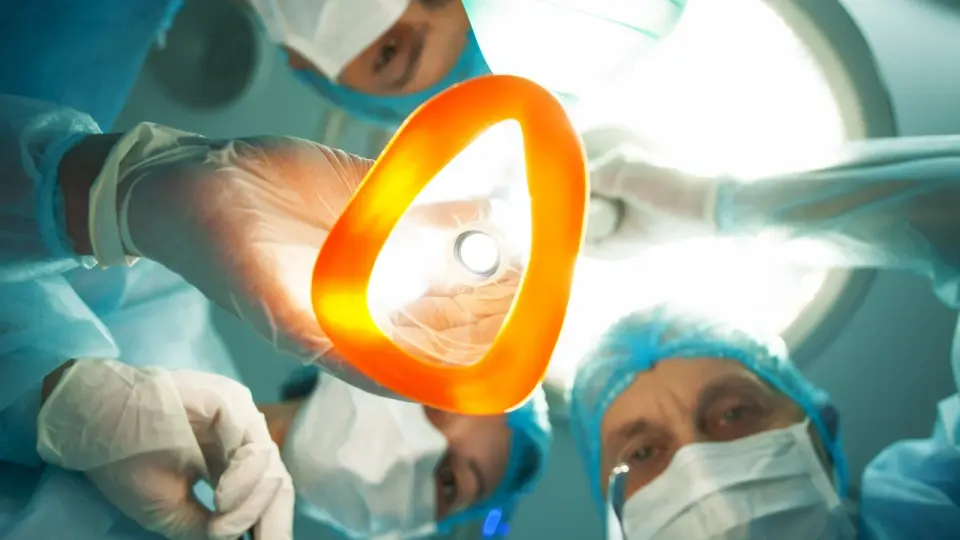
A new study in Nature Neuroscience reveals that general anesthesia induces a conserved neural dynamic across six species spanning 700 million years of evolution. Led by Andrea Luppi of the University of Oxford, the research shows that while brain regions remain active under anesthesia, their coordination and temporal predictability break down. This 'spatiotemporal isolation' suggests a universal mechanism for unconsciousness, distinct from simply shutting down the brain. Concurrently, UCLA researchers demonstrated that human stem cell-derived brain assembloids can replicate these slow-wave electrical patterns without a thalamus, confirming that minimal cortical circuits are sufficient to generate anesthetic signatures.
Key points
- Luppi’s team analyzed neural activity in humans, macaques, marmosets, mice, zebrafish, and nematodes, finding consistent patterns of reduced inter-regional coordination under anesthesia.
- The study concludes that anesthesia causes a breakdown in the relationship between past and future neural activity, leading to fragmented information processing rather than total brain shutdown.
- UCLA researchers published findings in the British Journal of Anaesthesia showing that lab-grown brain assembloids exposed to propofol produce characteristic slow waves while individual neurons quiet down.
- The UCLA study confirms that a minimal cortical circuit can generate anesthetic brain waves without input from the thalamus, resolving a longstanding debate about the necessity of deep brain structures.
- These findings provide a platform to study individual variations in anesthetic sensitivity and other conditions that disrupt brain networks, such as coma and epilepsy.
Background
General anesthesia has been used since 1846, yet its precise mechanism for suspending consciousness remains debated. Previous research, as noted in our October 1 archive, highlighted the evolutionary conservation of these neural dynamics. The current developments build on this by isolating the specific neural signatures in both diverse animal models and controlled human lab-grown systems.
How outlets are covering it
ScienceAlert and Nature emphasize the evolutionary breadth of Luppi’s study, highlighting that the probability of these neural changes occurring by chance across six species is 'vanishingly small.' In contrast, respiratory-therapy.com and UCLA Health focus on the practical application of the UCLA study, stressing how stem cell-derived assembloids bridge the gap between molecular receptor binding and whole-brain electrical changes. While ScienceAlert notes the universal nature of the effect, the UCLA sources highlight the counterintuitive finding that individual neurons quiet down while network synchrony increases, creating larger slow waves. Both perspectives agree that the brain does not simply 'turn off' but rather becomes fragmented or synchronized in specific ways, yet they differ in their primary focus: evolutionary biology versus clinical and laboratory modeling.
Why it matters
Understanding the common neural thread of anesthesia across species and in human models could lead to better monitoring of consciousness, improved drug development, and insights into disorders like coma and traumatic brain injury. It also resolves debates about whether deep brain structures like the thalamus are strictly necessary for anesthetic-induced unconsciousness, suggesting that cortical circuits alone may be sufficient.
What to watch
Researchers will likely use these human brain assembloids to screen candidate drugs and investigate why patients differ in anesthetic sensitivity, including cases of accidental awareness during surgery. Further studies may explore how these neural dynamics apply to other conditions that alter brain activity, such as epilepsy and traumatic brain injury.
- Your Brain Under Anesthesia Behaves Surprisingly Like a Worm's, Scientists Discover ScienceAlert
- Conserved neural dynamics of anesthesia and the oblivion of species Nature
- How Anesthesia Affects Neural Activity respiratory-therapy.com
- Stem cell-derived brain models offer a new window into how anesthesia works UCLA Health
Want the full story? Read the original reporting
Read on ScienceAlert