Tag

Nature Neuroscience

All articles tagged with #nature neuroscience

New Study Suggests Human Brain Formed from Two Distinct Nervous Systems
science1 month ago

New Study Suggests Human Brain Formed from Two Distinct Nervous Systems

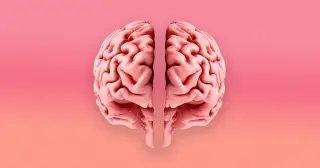
A new study suggests the human brain evolved from two separate nervous systems rather than a single origin. Researchers found that the forebrain and hindbrain arise from distinct cell populations that merge during development. This discovery challenges traditional models of brain formation and may explain why hindbrain neurons are difficult to grow in labs, potentially opening new avenues for studying brainstem-related diseases.

Anesthesia's Universal Neural Signature Identified Across 700 Million Years of Evolution
science1 month ago

Anesthesia's Universal Neural Signature Identified Across 700 Million Years of Evolution

A new study in Nature Neuroscience reveals that general anesthesia induces a conserved neural dynamic across six species spanning 700 million years of evolution. Led by Andrea Luppi of the University of Oxford, the research shows that while brain regions remain active under anesthesia, their coordination and temporal predictability break down. This 'spatiotemporal isolation' suggests a universal mechanism for unconsciousness, distinct from simply shutting down the brain. Concurrently, UCLA researchers demonstrated that human stem cell-derived brain assembloids can replicate these slow-wave electrical patterns without a thalamus, confirming that minimal cortical circuits are sufficient to generate anesthetic signatures.

Stanford Study Reveals Human Brain Evolved from Two Distinct Neural Systems
science1 month ago

Stanford Study Reveals Human Brain Evolved from Two Distinct Neural Systems

A new study led by Stanford University researchers, published in Nature Neuroscience on September 18, 2026, challenges the traditional view that the human brain develops from a single progenitor cell. Instead, the research demonstrates that the forebrain and hindbrain originate from two distinct, parallel neural progenitor cells during embryonic gastrulation. This finding explains why scientists previously failed to grow hindbrain neurons in labs and opens new avenues for studying neurodegenerative diseases like ALS and spinal muscular atrophy (SMA). The dual-origin structure appears evolutionarily conserved, tracing back at least 550 million years to ancestors like acorn worms.

Study Reveals Human Brain Develops From Two Independent Progenitor Cells
science1 month ago

Study Reveals Human Brain Develops From Two Independent Progenitor Cells

A Stanford-led study published in Nature Neuroscience on September 18, 2026, demonstrates that the human brain originates from two distinct progenitor cell lines rather than a single unified source. Researchers found that the forebrain and hindbrain develop independently during embryonic gastrulation, a finding that explains why hindbrain neurons have been difficult to cultivate in labs. This discovery enables the first successful generation of human hindbrain motor neurons, offering new avenues for studying spinal muscular atrophy and ALS.

Scripps Research Identifies Erucamide as a Key Retinal Defense Against Vision Loss
science2 months ago

Scripps Research Identifies Erucamide as a Key Retinal Defense Against Vision Loss

Researchers at Scripps Research, UC San Diego, and the Lowy Medical Research Institute have identified erucamide, a naturally occurring lipid molecule, as a critical signaling agent that helps coordinate the retina's response to injury. Published in Nature Neuroscience on June 19, 2026, the study shows that erucamide levels decline as photoreceptors die in diseases like diabetic retinopathy and age-related macular degeneration. When researchers restored erucamide using porous silicon nanoparticles, it activated immune cells known as CD11b+ myeloid cells, which in turn stabilized the neurovascular unit. This process did not reverse degeneration but slowed the loss of tissue structure and function, suggesting a new therapeutic avenue for preserving vision in progressive retinal diseases.

Brain ripples synchronize distant neurons to hold working memory
science3 months ago

Brain ripples synchronize distant neurons to hold working memory

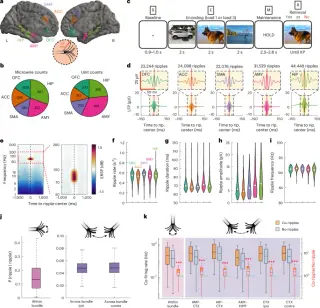
A new study in Nature Neuroscience reveals that high-frequency ripple oscillations coordinate neural activity across distant brain regions to support working memory. By analyzing intracranial recordings from 35 patients, researchers found that simultaneous ripples increase cross-region neuron co-firing by 30%, even across distances up to 220 mm. This coordination scales with memory load and helps reinstate stimulus-specific firing patterns during retrieval, suggesting ripples act as a timing mechanism for distributed cognitive representations rather than just local memory consolidation.

New Study Identifies Intracellular Mitochondrial Plaques as Early Alzheimer's Marker
science3 months ago

New Study Identifies Intracellular Mitochondrial Plaques as Early Alzheimer's Marker

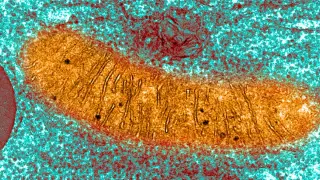
Researchers have identified a new pathological structure in Alzheimer's disease called mitochondrial plaques (MPs). Published in Nature Neuroscience, the study reveals that these intracellular aggregates form within neurons, distinct from traditional extracellular amyloid plaques. MPs consist of accumulated mitochondria that fail to be recycled due to impaired mitophagy and lysosomal dysfunction. Detected in both transgenic mice and postmortem human brains, MPs appear early in the disease process, potentially preceding classic amyloid-beta accumulation. This discovery suggests a new diagnostic marker and therapeutic target for slowing neurodegeneration.