
New Atlas Maps 1,067 Brain Microproteins Linked to Alzheimer’s
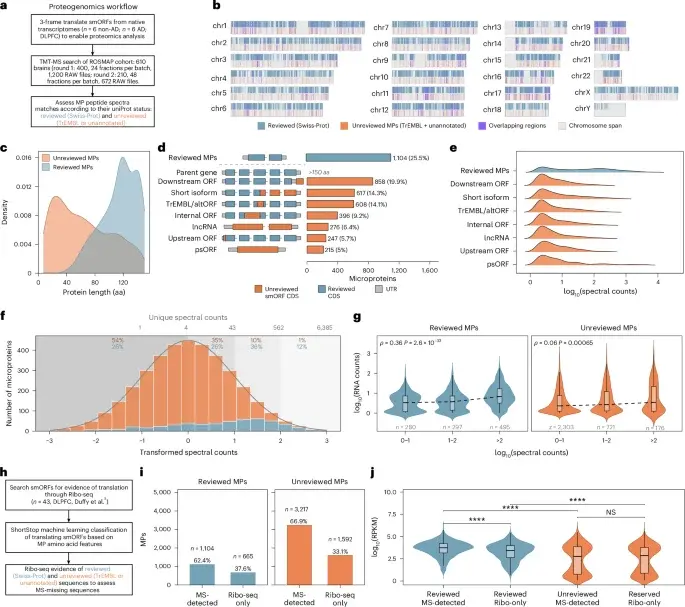
Researchers have created the first comprehensive atlas of microproteins in the human frontal cortex, identifying 1,067 previously unannotated proteins linked to Alzheimer’s disease. By analyzing over 600 postmortem brain samples, the study reveals that a specific 63-amino-acid microprotein is the primary translation product of the MKKS gene, not its canonical form. This microprotein is significantly downregulated in Alzheimer’s patients, and its loss impairs microglial mitochondrial respiration, suggesting a new mechanism for neurodegeneration. The findings expand the known brain proteome and provide a new resource for studying aging and neurodegenerative diseases.
Key points
- A new brain microprotein atlas integrates transcriptomics, mass spectrometry, and deep learning to identify 1,067 microproteins (≤150 amino acids) absent from reviewed UniProtKB entries.
- The study analyzed 610 dorsolateral prefrontal cortex samples from the Religious Orders Study and Memory and Aging Project, covering the Alzheimer’s disease neuropathological spectrum.
- A 63-amino-acid microprotein encoded by the MKKS locus is the predominant translation product in the brain, not the canonical 570-amino-acid protein.
- This MKKS microprotein is significantly downregulated in symptomatic Alzheimer’s disease, and its loss impairs microglial mitochondrial respiration, linking it to microglial bioenergetics.
- The atlas provides a browsable application for filtering microprotein sequences and is a resource for studying microproteins in aging and neurodegeneration.
Background
This research builds on recent advances in understanding the molecular basis of neurodegeneration. Previous studies, such as the development of 3D human brain tissue models, have shown that microglia play a critical role in Alzheimer’s disease hallmarks, including amyloid deposition and neuroinflammation. The current study adds a new layer by focusing on microproteins, which were historically excluded from genomic databases due to their short length and the difficulty of detecting them via mass spectrometry. The findings complement earlier work on cell-type-specific gene programs in the cortex, providing a more comprehensive map of the brain's protein-coding output.
Why it matters
The discovery of 1,067 new microproteins in the human brain expands the annotated proteome and provides a new resource for studying neurodegenerative diseases. The identification of a microprotein linked to microglial bioenergetics offers a potential new mechanism for Alzheimer’s disease, which could lead to new therapeutic targets. The atlas also addresses a significant gap in neurobiology research, where the role of microproteins had been largely unexplored due to historical detection challenges.
What to watch
The researchers have made the data and code for the atlas publicly available, allowing other scientists to explore the microproteins and their potential roles in aging and neurodegeneration. Future studies may focus on validating the functional roles of these microproteins and investigating their potential as therapeutic targets for Alzheimer’s disease and other neurodegenerative conditions.
Want the full story? Read the original reporting
Read on nature.com