Tag

Microproteins

All articles tagged with #microproteins

Atlas of brain microproteins offers new angles on Alzheimer’s
science24 days ago

Atlas of brain microproteins offers new angles on Alzheimer’s

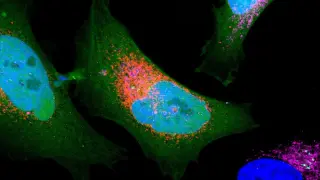
A Nature Aging study mapped more than 4,300 brain microproteins in post-mortem dorsolateral prefrontal cortex samples, validating 1,067 with high confidence through deep learning; 3,217 microproteins were previously uncharacterized. Several microproteins show altered expression in Alzheimer's, creating a comprehensive atlas that could reveal new aging and neurodegeneration mechanisms and guide future validation.

Atlas of brain microproteins links tiny MKKS peptide to microglial energy in Alzheimer's
science25 days ago

Atlas of brain microproteins links tiny MKKS peptide to microglial energy in Alzheimer's

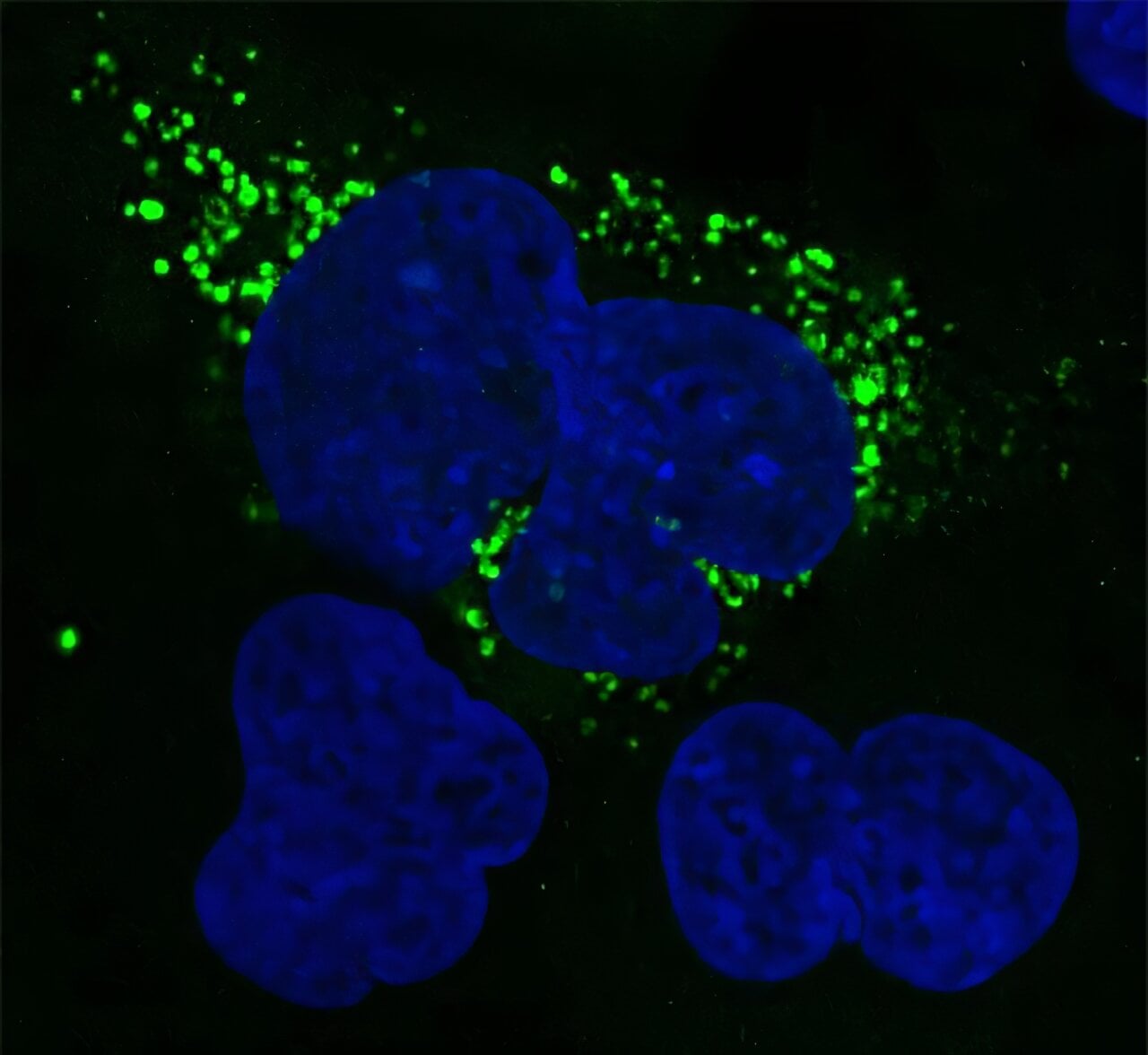
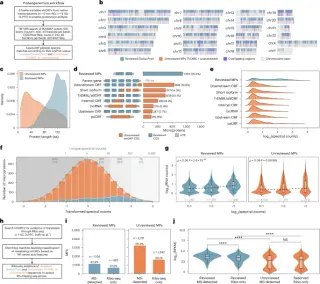
Researchers built a frontal cortex microprotein atlas by integrating transcriptomics, mass spectrometry, and deep-learning predicted spectra across 600+ postmortem brains with and without Alzheimer’s disease, identifying 1,067 MPs not present in UniProt and showing that several are differentially expressed in AD. A key finding is the MKKS-derived 63–aa micropeptide micro-MKKS63, which is the predominant translation product, downregulated in AD, and whose loss impairs microglial mitochondrial respiration, implicating MPs in microglial bioenergetics. The atlas expands the brain proteome, reveals decoupling of smORF/MORF expression at some loci, and provides an open-access resource (spectra, sequences, and a browsable app) for studying MPs in aging and neurodegeneration.

Mediterranean Diet Reveals Hidden Cellular Anti-Aging Messengers
science4 months ago

Mediterranean Diet Reveals Hidden Cellular Anti-Aging Messengers

A USC-led study suggests that closer adherence to a Mediterranean-style diet raises mitochondrial microproteins humanin and SHMOOSE, which are linked to protection against aging-related diseases. The research found higher diet adherence correlated with increased levels of these proteins and lower oxidative stress, with olive oil, fish, and legumes connected to higher humanin and olive oil plus lower refined carbs linked to higher SHMOOSE. The work points to mitochondria-centered biomarkers and a potential precision-nutrition pathway, but is observational, so causality remains to be established.

Dark Proteome Unveiled: 1,785 Tiny Proteins Emerge from Hidden Genome
science4 months ago

Dark Proteome Unveiled: 1,785 Tiny Proteins Emerge from Hidden Genome

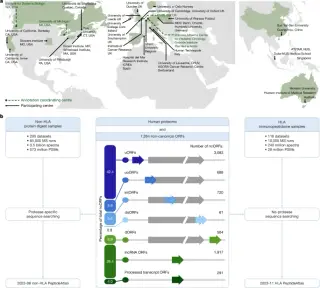
An international study reveals that the human genome produces a large set of previously hidden tiny proteins, called peptideins, derived from non-canonical open reading frames. The team identified 1,785 microproteins across 95,520 experiments, expanding the known proteome and suggesting some peptideins may function like real proteins. Early findings include a peptidein linked to cancer survival, hinting at future therapeutic opportunities, though much remains to understand their roles. The work underscores that the dark genome is more biochemically active than previously thought and was published in Nature.

Proteome expanded by microproteins and a new peptidein category
biology5 months ago

Proteome expanded by microproteins and a new peptidein category

An international study standardizes evidence for thousands of non-canonical ORFs (ncORFs) and introduces the term peptidein for ncORF-encoded microproteins. Analyzing 7,264 ncORFs across 95,520 proteomics experiments, researchers find roughly 25% yield detectable peptides, and they develop an annotation framework using proteomics, immunopeptidomics, and Ribo-seq to classify ncORFs into protein or peptidein status. They also introduce ORBL and ORBLq to measure evolutionary constraint on ORFness, showing detected ncORFs often have higher constraint. The work identifies pan-essential ncORFs that meet criteria for potential protein-coding genes or peptideins and outlines a path to elevate ncORFs toward reference annotation, thereby broadening the recognized human proteome with implications for cancer biology and immunotherapy.

Unveiling the Hidden World of Microproteins
science1 year ago

Unveiling the Hidden World of Microproteins

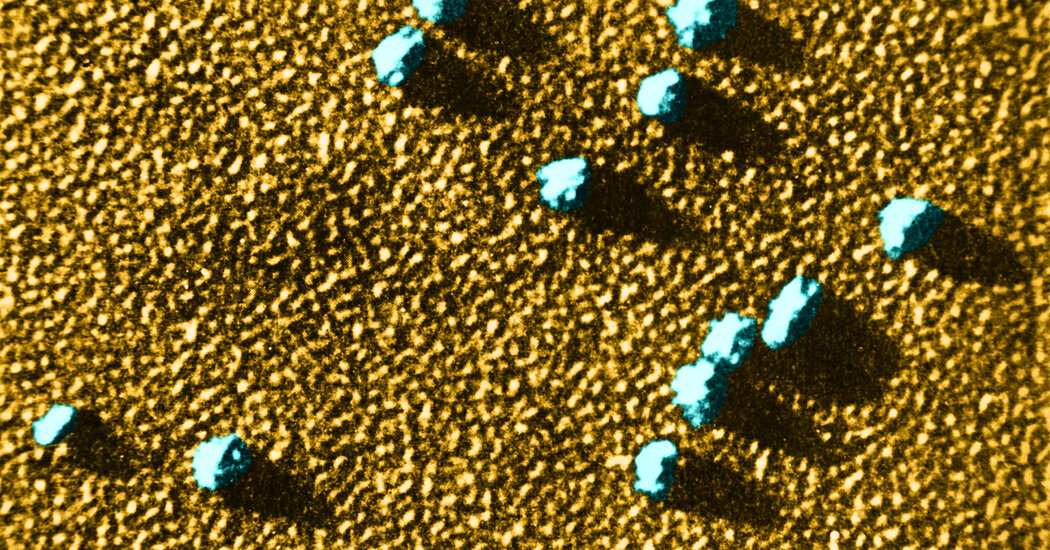
Scientists have discovered over 4,200 previously unknown microproteins across various organisms, including viruses and humans, revealing a vast, hidden universe of proteins that could be crucial for understanding biology and developing new treatments. Advances in ribosome profiling and a new method for testing viral genomes have accelerated this discovery, opening possibilities for rapid vaccine development and targeted therapies.

The Sudden Emergence of Powerful Miniproteins in Evolution.
science3 years ago

The Sudden Emergence of Powerful Miniproteins in Evolution.

A new study has shown that microproteins, previously deemed unimportant, play a key role in human cellular functions and evolutionary development. The research also unveiled the smallest human proteins known, with potential implications for diseases like cardiovascular disease and cancer. The young proteins might also be heavily involved in evolutionary development thanks to comparatively rapid “innovations and adaptations.” The researchers aim to expand the experiments to include many more of the 7,000 recently cataloged microproteins – in the hope that this will reveal many as-yet-undiscovered functions.