
Bronze Age Man in Russia Found with 5,000-Year-Old Kidney Stone
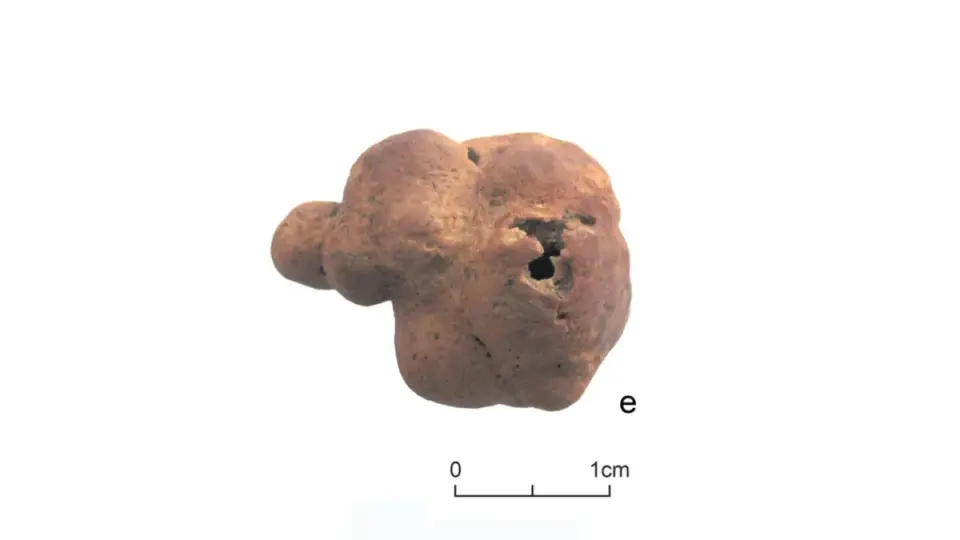
Researchers in Russia identified a 5,000-year-old urinary stone in the remains of a Bronze Age man, indicating he suffered from chronic pain and infection. The stone, found at the Ipatovo-5 cemetery, suggests poor urogenital health and a physically demanding lifestyle.
Key points
- A 5,000-year-old urinary stone was discovered in the remains of a man buried at the Ipatovo-5 cemetery in western Russia.
- The stone, measuring approximately 21 by 17 millimeters, is believed to have originated from the upper urinary tract, likely the kidneys or ureters.
- Analysis revealed the presence of whitlockite, a calcium salt linked to bacterial activity, suggesting the stone resulted from an infectious origin.
- The individual, estimated to be between 40 and 49 years old at death, also showed signs of gout, joint cysts, and various fractures, indicating a life of physical labor and chronic pain.
- The study, published in Archaeological and Anthropological Sciences, highlights the rarity of such findings due to the fragile nature of ancient urinary stones.
Background
This discovery adds to a limited but growing body of evidence regarding ancient urogenital health. While previous findings of calcified biological concretions in prehistoric remains are rare, they offer unique insights into ancient pathology and lifestyle. The specific case of this Bronze Age man, whose remains were excavated near the town of Ipatovo, provides a detailed look at the physical toll of life in the Russian steppes during that era.
Why it matters
The discovery of this ancient kidney stone provides rare, tangible evidence of infectious diseases and chronic pain in prehistoric populations. It helps researchers understand the physical realities of life in the Bronze Age, particularly the impact of urogenital infections on quality of life and longevity. Such findings, though rare, are crucial for reconstructing the health profiles of ancient communities.
What to watch
Researchers acknowledge that while the evidence points toward a kidney origin, the exact location and cause of the stone remain uncertain due to the non-organ-specific nature of the surviving mineral signatures. Future studies may rely on more precise excavation data or advanced imaging to better understand the origins of such ancient calculi.
Want the full story? Read the original reporting
Read on Gizmodo