
Ferroptosis Triggers PGE2 Release, Blocking T-Cell Immunity in Cancer
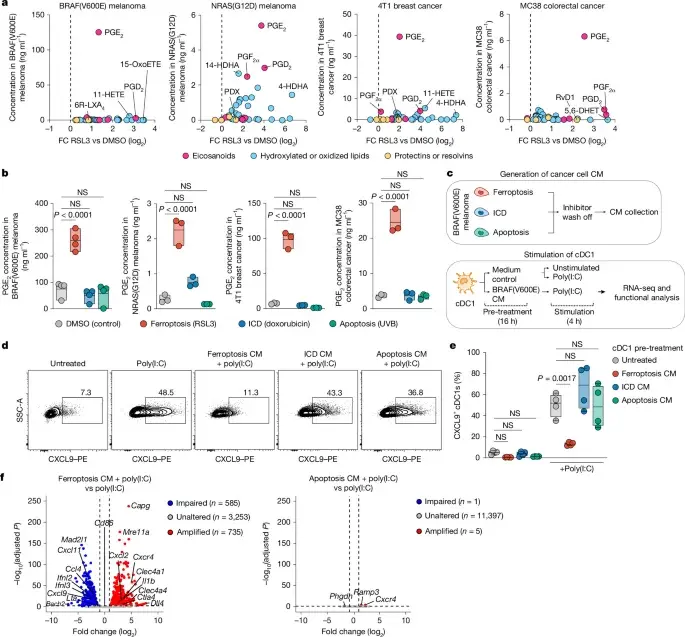
A study in Nature reveals that ferroptosis, a form of cell death used to treat resistant cancers, inadvertently triggers the production of prostaglandin E2 (PGE2). This chemical suppresses the immune system, allowing tumours to escape destruction.
Key points
- Ferroptosis, which kills cancer cells via lipid peroxidation, is a promising therapy for resistant tumours but often fails to eliminate them completely.
- The study identifies PGE2 as the key molecule produced by dying cancer cells that inhibits the immune response.
- PGE2 production is driven by calcium influx and p38 MAPK signalling, a process uncoupled from the actual cell death mechanism.
- Blocking PGE2 production or its receptors restores the ability of dendritic cells to activate CD8+ T cells, leading to effective tumour elimination in mouse models.
Background
Recent research has highlighted ferroptosis as a potential pathway for treating cancers resistant to standard therapies, including a traditional Chinese formula tested on esophageal cancer. However, this new study explains why previous attempts to use ferroptosis alone have failed to eradicate tumours, identifying a specific immune-evasion mechanism that counteracts the cell death.
Why it matters
This finding offers a new therapeutic strategy: combining ferroptosis-inducing drugs with inhibitors of PGE2 or its receptors could overcome immune escape and improve the efficacy of cancer treatments.
What to watch
Researchers will likely move toward testing these combined approaches in clinical trials to see if blocking PGE2 can make ferroptosis-based therapies effective in human patients.
Want the full story? Read the original reporting
Read on Nature