
Heart Uses Lactate Directly in Mitochondria to Prevent Failure
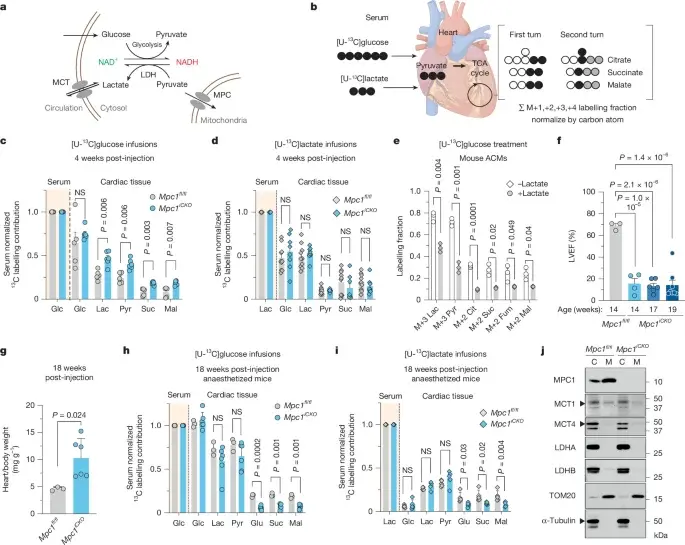
Researchers at the University of Utah have identified a parallel metabolic pathway in the heart that allows it to burn lactate directly within mitochondria, independent of the traditional pyruvate carrier. This mechanism, mediated by the transporter MCT1, acts as a critical backup system to sustain energy production during stress, preventing heart failure when standard glucose metabolism is compromised.
Key points
- The heart can simultaneously oxidize glucose and lactate by spatially separating their metabolism: glucose is processed in the cytosol, while lactate is imported into mitochondria.
- MCT1, traditionally known as a plasma membrane transporter, is also located on the inner mitochondrial membrane, allowing direct lactate entry into the organelle.
- Genetic ablation of MCT1 in mice abolishes mitochondrial lactate oxidation, disrupts metabolic flexibility, and accelerates the development of heart failure under stress conditions.
- This pathway provides metabolic redundancy, ensuring cardiac energetics are maintained even when the mitochondrial pyruvate carrier (MPC) is deficient or inhibited.
- The discovery suggests new therapeutic targets for enhancing lactate utilization to support heart muscle function during ischemia or neurohormonal stress.
Background
This finding expands on previous understanding of cardiac fuel flexibility, where the heart was known to switch between glucose, fatty acids, and lactate. While earlier research focused on the conversion of lactate to pyruvate in the cytosol before mitochondrial entry, this study reveals a direct mitochondrial import mechanism. This complements recent findings on mitochondrial stress responses, such as the cysteine-induced cell death mechanisms reported in September 2026, by highlighting how specific transporters and metabolic pathways protect cardiac cells from energetic collapse.
How outlets are covering it
University of Utah researchers emphasize the clinical potential of this discovery, with senior author Gregory Ducker describing the MCT1 pathway as a 'critical backup system' for heart function. Co-senior author Stavros Drakos highlights the therapeutic implications, suggesting that enhancing lactate utilization could help repair heart muscle in patients with heart failure or heart attacks. In contrast, the primary Nature article focuses on the mechanistic evidence, detailing how MCT1 and matrix-localized LDHB enable direct lactate conversion to pyruvate and NADH within the mitochondria, bypassing the need for cytosolic pyruvate generation. While secondary sources like Genetic Engineering and Biotechnology News frame the finding as a solution to energy deficits in stressed hearts, the primary source stresses the fundamental biochemical redundancy that maintains myocardial structure and function under diverse stressors, noting that loss of MCT1 leads to increased mortality after ischemia-reperfusion injury.
Why it matters
Understanding this parallel lactate pathway offers a new strategy for treating heart failure, a leading cause of death. By targeting MCT1 to improve lactate uptake, clinicians may be able to restore energy production in failing hearts, potentially reducing mortality and improving outcomes for patients suffering from ischemic or neurohormonal cardiac stress.
What to watch
Researchers plan to investigate whether enhancing MCT1 activity or lactate metabolism can serve as a therapeutic intervention for heart failure. Future studies will likely focus on translating these mouse model findings to human patients, exploring how optimizing this backup energy system can improve cardiac function and survival rates in clinical settings.
- MCT1-dependent mitochondrial lactate import sustains cardiac metabolism Nature
- How the heart's unusual carbohydrate metabolism helps it stay strong Medical Xpress
- University of Utah identifies a backup mechanism for powering the heart — News-Medical UA.NEWS
- How the Heart Stays Strong with MCT1-Dependent Mitochondrial Lactate Import Genetic Engineering and Biotechnology News
- University of Utah researchers discover backup energy system in the heart News-Medical
Want the full story? Read the original reporting
Read on Nature