King's College Study Links Pomegranate Metabolite to 80% Improvement in Heart Failure Models
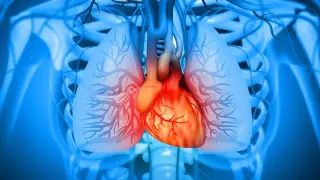
Researchers at King's College London have identified urolithin A, a compound produced in the body after consuming pomegranates, walnuts, and certain berries, as a potential treatment for heart failure with preserved ejection fraction (HFpEF). Published in Science Advances, the study shows that urolithin A activates the PKGIα protein, improving heart relaxation by up to 80% in animal models and engineered human heart tissue. This condition, which affects nearly half a million people in the UK, involves a stiff heart that cannot fill properly between beats, leading to fatigue and breathlessness. While current treatments are limited due to the complex nature of HFpEF, this new mechanism offers a promising therapeutic target. However, experts caution that these results are preliminary, as they are based on experimental models rather than human clinical trials. Although urolithin A has a favorable safety profile in previous human studies, further research is required to confirm its efficacy as a treatment for patients.