
Human Brain Purges Genetically Flawed Neurons During Birth
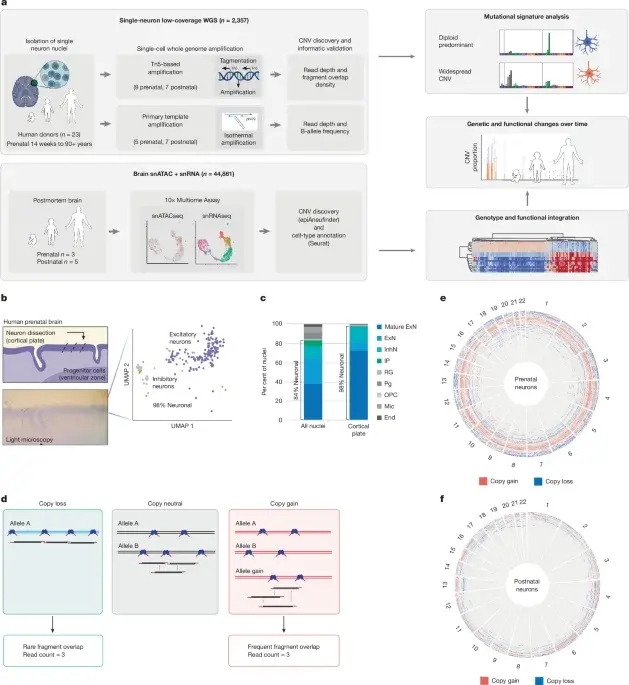
A study in Nature reveals that the human brain eliminates a significant portion of neurons with widespread genetic abnormalities around the time of birth. Researchers found that approximately 26% of prenatal cortical neurons had highly aberrant genomes, a figure that dropped by roughly 4.5-fold after birth. This natural quality-control process, timed with programmed cell death, helps ensure that surviving neurons lack critical genetic errors, potentially explaining how the brain selects healthy cells and offering insights into neurodevelopmental conditions.
Key points
- Researchers sequenced 2,357 single neurons from human postmortem brains, finding that an average of 25.9% of prenatal cortical neurons had widespread copy number variants (CNVs).
- The proportion of neurons with these aberrant genomes decreased by about 4.5-fold after birth, dropping to approximately 6.2% in postnatal life.
- The elimination of neurons with widespread CNVs occurred perinatally, roughly parallel to periods of programmed cell death, while neurons with smaller CNV burdens declined slowly with age.
- Surviving neurons were depleted for dosage-sensitive genes and genes involved in neurodevelopmental disorders, suggesting a selective survival mechanism.
- The CNV signatures in neurons closely resembled those found in cancers, indicating that these genetic errors likely arose in dividing neural progenitor cells during brain development.
Background
This study builds on previous research showing that somatic copy number variants are present in normal human brains but decline with age. Earlier studies, such as those by Rehen et al. and McConnell et al., identified mosaic copy number variation in neurons, while more recent work by Miller et al. and Turan et al. examined somatic genomic changes in Alzheimer's disease and healthy controls. The current findings provide a detailed timeline of how the brain purges genetically flawed neurons during development, linking this process to known mechanisms of programmed cell death and neurodevelopmental disorders.
Why it matters
Understanding how the brain eliminates genetically aberrant neurons during development could provide insights into the origins of neurodevelopmental and neuropsychiatric conditions, such as autism and epilepsy. By identifying the mechanisms that select for healthy neurons, researchers may uncover new therapeutic targets or preventive strategies for disorders linked to copy number variants. Additionally, the similarity between neuronal CNV signatures and those found in cancers suggests shared genomic instability mechanisms, potentially offering broader implications for understanding genetic regulation in long-lived cells.
What to watch
Future research may focus on identifying the specific molecular mechanisms that trigger the elimination of neurons with widespread CNVs during the perinatal period. Researchers may also investigate whether similar quality-control processes occur in other tissues or at different developmental stages. Additionally, studies could explore the long-term consequences of the small CNV burdens that persist in surviving neurons, potentially linking them to age-related neurodegenerative diseases or subtle cognitive differences.
Want the full story? Read the original reporting
Read on Nature