
Stanford team creates mice with human cortex to model brain disease
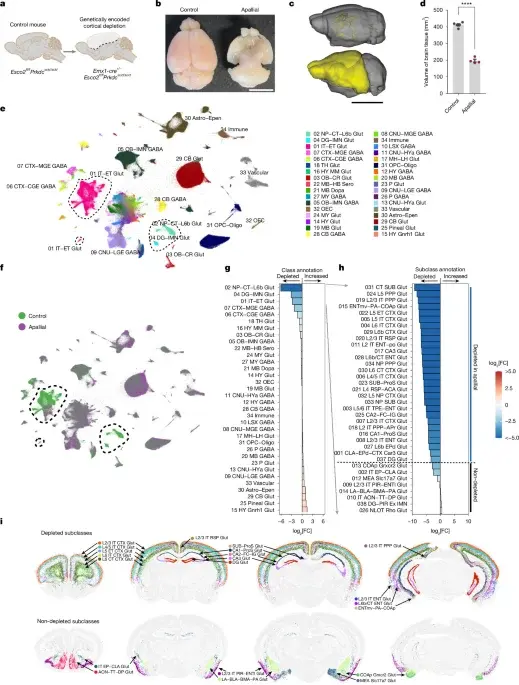
Stanford researchers have developed a new platform called 'xenocortication' that replaces the mouse cerebral cortex and hippocampus with human neural tissue. By genetically depleting mouse brain regions and transplanting human cortical organoids, scientists can now study human neurodevelopment and test therapies for disorders like schizophrenia and cerebral palsy in living animals. The human tissue occupies about half the mouse brain volume, integrates with host circuits, and exhibits organized electrical activity, offering a significant advance over previous in vitro models.
Key points
- A team led by Sergiu Pașca at Stanford University published a study in Nature on September 16, 2026, detailing the creation of 'xenocortical' mice.
- The process involves genetically engineering mice to lack the cerebral cortex and hippocampus (apallial mice) to create space for human tissue.
- Human cortical organoids, derived from donated skin cells, were transplanted into newborn mice, with each animal receiving approximately 100,000 cells per injection.
- The human tissue grew to occupy roughly half the brain volume, replacing about 14 million mouse neurons with 4 million human ones.
- The grafts integrated with the mouse nervous system, showing organized calcium activity and forming connections with the spinal cord and blood supply.
- Behavioral tests showed the mice had preserved locomotion but exhibited deficits in fine motor coordination and working memory, which partially improved after the transplant.
Background
This development builds on earlier research into neural organoids, where lab-grown brain tissue has been shown to track developmental time and age similarly to human brains over several years. Previous attempts to transplant human organoids into rodents were limited by spatial constraints and competition with host circuits, which hindered the study of large-scale brain disorders. The new xenocortication method addresses these limitations by removing the host cortex entirely, allowing for more robust growth and integration of human neural tissue.
How outlets are covering it
The Guardian and The New York Times emphasize the potential of this technology to develop treatments for psychiatric and neurological disorders, which have lagged behind other medical fields due to the inaccessibility of the human brain. However, both outlets highlight significant ethical concerns, particularly regarding animal welfare and the possibility of consciousness or pain in the transplanted tissue. The Guardian notes that experts like Emily Jackson from the London School of Economics call for close monitoring of the animals. In contrast, The New York Times focuses on the scientific advance and the questions it raises about functional enhancement, while noting that the mice currently behave mostly like normal animals. The Nature article provides the technical details, confirming that while the human tissue is immature (equivalent to mid-pregnancy), it successfully recapitulates human cortical cell diversity, including rare von Economo neurons. Endpoints News frames the development primarily as a new testing ground for drugmakers, highlighting its utility for the pharmaceutical industry.
Why it matters
This breakthrough provides a viable in vivo model for studying human brain development and disease mechanisms that were previously inaccessible. It allows researchers to test therapeutics on human neurons within a living animal, potentially accelerating the development of treatments for complex conditions like schizophrenia, epilepsy, and cerebral palsy. The ability to observe behavioral outcomes in response to human neural tissue offers a more comprehensive understanding of how brain disorders manifest and how they might be treated, bridging the gap between lab-grown organoids and human clinical trials.
What to watch
Researchers will likely expand the use of xenocortical mice to model specific neurodevelopmental disorders and test new therapeutic interventions. There will be continued debate and development of ethical guidelines to ensure the welfare of the animals and address concerns about the potential for consciousness in the transplanted human tissue. Future studies may also aim to improve the maturity and integration of the human tissue to better mimic the adult human brain, potentially leading to more accurate predictions of drug efficacy and safety.
- Developmental xenocortication using human-derived organoids in mice Nature
- Scientists create mice with part-human brains The Guardian
- Mice with human brain cells offer a tool to study disease. Ethicists ask: What’s next? NPR
- Scientists Fuse Human Neurons Into the Brains of Mice The New York Times
- Mice with human brain cells open a new testing ground for drugmakers to study disease Endpoints News
Want the full story? Read the original reporting
Read on Nature