
Medieval Parchment Reveals 3,700-Year History of Sheeppox Virus
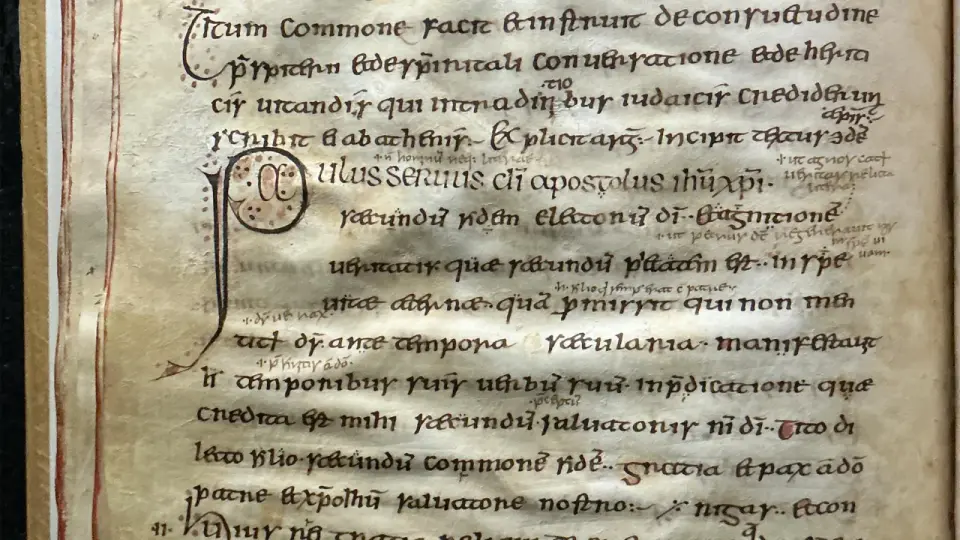
Researchers at University College Dublin discovered ancient sheeppox virus DNA preserved in medieval manuscripts, including the 1,000-year-old York Gospels. By analyzing parchment made from infected animal skins, the team reconstructed 3,500 years of viral evolution. Combined with DNA from Bronze Age sheep teeth, the findings show the virus has affected livestock for over 3,700 years. The study highlights how historical archives may hold genetic records of past disease outbreaks, offering insights into the virus's stability and its ongoing threat to global agriculture.
Key points
- University College Dublin led an international team that identified sheeppox virus DNA in medieval manuscripts, including the York Gospels and the Corpus Glossary.
- The study, published in Science Advances, reconstructs 3,500 years of sheeppox virus evolution using genetic material preserved in parchment.
- Analysis of Bronze Age sheep teeth from Eurasian steppe settlements pushed the known history of the virus back to at least 3,700 years ago.
- Researchers found viral DNA on calfskin and goatskin parchment, suggesting either cross-species infection or contamination during parchment production.
- The sheeppox virus genome has remained remarkably stable over millennia, unlike smallpox, which may help scientists understand its pathogenicity.
- The findings imply that libraries and archives worldwide may contain genetic traces of historical livestock disease outbreaks.
Background
This discovery builds on earlier findings that ancient DNA can be recovered from non-traditional sources. In October 2026, researchers confirmed the 3,700-year history of sheeppox through similar manuscript analysis. Additionally, in November 2026, scientists extracted human DNA from cave sediment, demonstrating that genetic material can be preserved in unexpected materials. These advancements in paleogenomics allow for the reconstruction of disease histories that were not recorded in written texts.
Why it matters
Understanding the long-term stability and evolution of sheeppox virus can inform modern strategies to combat livestock diseases. As sheeppox continues to cause economic damage in regions like Greece, insights from ancient genomes may reveal how the virus adapted to infect sheep. Furthermore, the discovery that parchment preserves viral DNA opens new avenues for investigating historical epidemics in animal populations, potentially uncovering outbreaks that left no other historical record. This interdisciplinary approach bridges virology, history, and conservation, enhancing our ability to predict and manage future disease threats.
What to watch
Researchers plan to expand the analysis to other medieval manuscripts and archives worldwide to identify additional traces of ancient pathogens. The stability of the sheeppox genome may guide future studies into the specific genetic changes that enabled the virus to become a persistent livestock pathogen. Continued collaboration between genetics, history, and virology experts is expected to yield more insights into the intersection of human history and animal disease.
Want the full story? Read the original reporting
Read on Science Daily