
MIT researchers use lipid nanoparticles to reprogram immune cells against cancer in mice
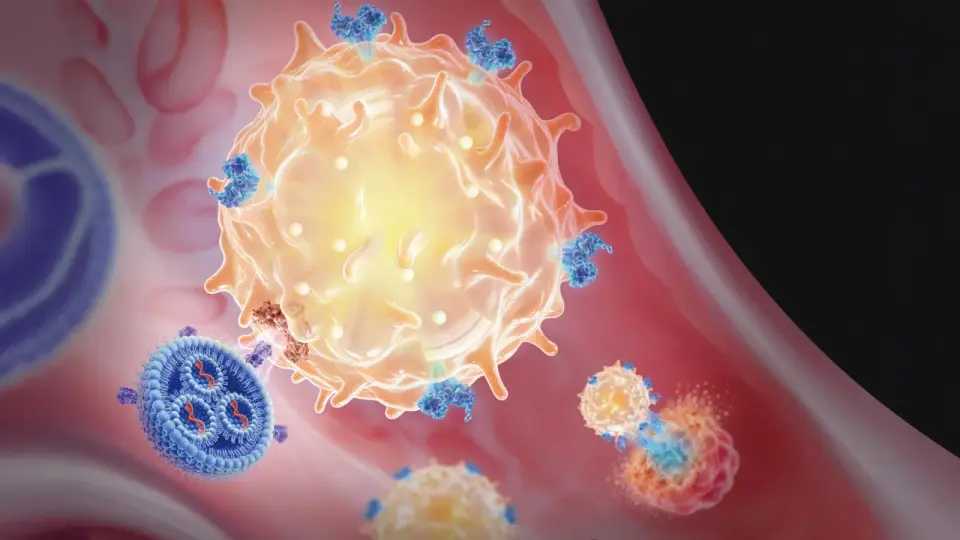
MIT scientists have developed a method to engineer natural killer (NK) cells directly inside the body using lipid nanoparticles carrying messenger RNA. In mouse trials, this approach successfully eliminated tumors in aggressive melanoma and T cell lymphoma models, as well as reversed autoimmune liver damage, potentially simplifying the production of cell therapies.
Key points
- The technique uses lipid nanoparticles coated with antibody fragments to deliver mRNA instructions to NK cells, turning them into CAR NK cells that target specific antigens like CD19 or CD3.
- In mice with aggressive melanoma, three out of five treated animals achieved complete remission after nanoparticle injection.
- In humanized mice with T cell lymphoma, five injections of the nanoparticles completely eliminated tumors, matching the efficacy of traditional ex vivo CAR NK cell manufacturing.
- The therapy also reversed autoimmune hepatitis in mice after a single injection, allowing damaged liver tissue to heal.
- The method aims to bypass the complex, expensive, and time-consuming process of extracting, modifying, and expanding patient cells in a laboratory.
Background
This development follows recent advances in immune cell engineering, such as USC researchers' work on renewable immune progenitors and NYU Langone's findings on immune evasion in pancreatic cancer. While CAR T cell therapies have been approved for certain blood cancers, CAR NK cell therapies remain in the research phase, with no FDA approvals yet.
How outlets are covering it
ScienceDaily and UA.NEWS focus on the in vivo engineering of NK cells via mRNA nanoparticles, highlighting the potential to simplify manufacturing and reduce costs. Futura, however, discusses a related but distinct MIT study published in Nature Communications, which focuses on engineering donor NK cells ex vivo to evade immune rejection and improve safety profiles. While both sources discuss MIT's work on CAR NK cells, they describe different experimental approaches: the primary source emphasizes direct in vivo modification, whereas Futura details a method for creating off-the-shelf donor cells that resist rejection by the host immune system.
Why it matters
If successful in humans, this technology could make advanced immunotherapies more accessible and affordable by eliminating the need for personalized cell manufacturing. It could also expand treatment options for autoimmune diseases like multiple sclerosis and rheumatoid arthritis, which are driven by dysfunctional T cells.
What to watch
The researchers must now determine if the technique is safe and effective in humans, as the current results are based on mouse models. Further clinical trials will be necessary to validate the efficacy and safety of in vivo CAR NK cell therapy.
- MIT scientists turn immune cells into cancer killers inside the body Science Daily
- Can In Vivo CAR T Generation Make Cell Therapy More Accessible? Technology Networks
- MIT researchers reprogrammed NK cells in mice — ScienceDaily UA.NEWS
- MIT engineered donor immune cells that nearly wiped out lymphoma in mice within three weeks, without being rejected Futura, le média qui explore le monde
Want the full story? Read the original reporting
Read on Science Daily