
New Study Identifies Slow Dopamine Pathway Linking Gut Nutrients to Food Preference
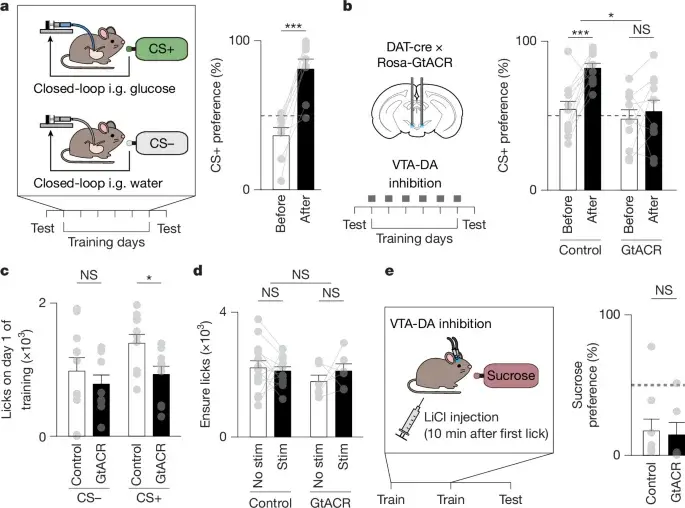
Researchers at UC San Francisco, Yale, and the Max Planck Institute have identified a specific dopamine pathway that explains how animals learn to associate flavors with nutritional value. Published in Nature on November 4, 2026, the study reveals that nutrients in the gut trigger a slow, sustained dopamine release in the left anterior basolateral amygdala (BLA), distinct from rapid dopamine spikes triggered by taste. This mechanism allows the brain to link initial tastes with later caloric rewards, potentially explaining how bitter foods like coffee become preferred. The findings suggest that future therapies, including GLP-1 drugs, might influence this learning process to alter dietary habits.
Key points
- A slow dopamine pathway connects gut nutrient sensors to the anterior basolateral amygdala (BLA), enabling flavor-nutrient learning.
- Post-ingestive nutrients trigger dopamine release specifically in the left BLA in both mice and humans, showing hemispheric asymmetry.
- Blocking this pathway prevents mice from learning new flavor-nutrient associations, while artificial stimulation creates preferences for calorie-free flavors.
- The study identifies cholecystokinin-expressing dopamine neurons in the ventral tegmental area as key mediators of this signal.
- The findings may offer insights into how GLP-1 receptor agonists could influence food reinforcement beyond appetite suppression.
Background
This research builds on prior understanding of dopamine’s role in reward and feeding behavior, which has traditionally focused on fast-acting signals in the striatum triggered by external cues. Earlier studies, such as those by Sclafani and colleagues, established that post-oral nutrient signals can condition flavor preferences, but the neural mechanisms were unclear. This study provides a detailed circuit-level explanation, identifying specific gut sensors and brain regions involved. It also connects to broader discussions on metabolic health and the potential of pharmacological interventions to modify learned food preferences.
How outlets are covering it
The primary source, Nature, emphasizes the precise neural circuitry, highlighting the role of cholecystokinin-expressing dopamine neurons and the integration of gustatory and post-ingestive cues in the left BLA. Secondary sources, such as Neuroscience News and Sci.News, frame the discovery in terms of everyday experiences, like learning to enjoy bitter coffee, and speculate on therapeutic applications for obesity and GLP-1 drugs. UA.NEWS provides a more concise summary, focusing on the experimental methods and the confirmation of left-hemisphere dominance in human neuroimaging. All sources agree on the core finding of a slow, gut-derived dopamine signal, but differ in emphasis: Nature focuses on mechanistic detail, while secondary outlets highlight practical implications and public interest. No source disputes the core findings, but some note that the link to GLP-1 drugs remains hypothetical and untested in this study.
Why it matters
Understanding how the brain learns to associate flavors with nutritional value could lead to new strategies for treating obesity and metabolic disorders. By targeting the slow dopamine pathway, future interventions might not just suppress appetite but also alter the learned preference for high-calorie foods. This could complement existing treatments like GLP-1 receptor agonists, potentially making them more effective by reducing the hedonic reinforcement of unhealthy foods. Additionally, the discovery of hemispheric asymmetry in this pathway offers a new dimension for understanding individual differences in food preferences and could inform personalized nutrition approaches.
What to watch
Researchers plan to investigate why the nutrient-evoked dopamine signal is lateralized to the left hemisphere, a finding that was unexpected. Future studies will also explore the direct interaction between GLP-1 receptor agonists and this newly identified dopamine pathway to determine if these drugs can modulate flavor-nutrient learning. Additionally, the team aims to identify the specific gut sensors that activate the cholecystokinin-expressing dopamine neurons, which could provide new targets for therapeutic interventions. Long-term, this research may contribute to developing methods for recalibrating dietary preferences toward healthier foods.
- The neural basis of flavour–nutrient learning Nature
- How your brain learned to love coffee, chocolate, fat and sugar Medical Xpress
- Why Bitter Coffee Starts to Taste So Good to Your Brain Neuroscience News
- UCSF describes dopamine pathway behind food preferences — News-Medical UA.NEWS
- Slow-Acting Dopamine Pathway May Explain How Bitter Tastes Become Cravings Sci.News
Want the full story? Read the original reporting
Read on Nature