Tag

Dopamine

All articles tagged with #dopamine

Robyn reimagines romance as chemistry on Sexistential
music18 days ago

Robyn reimagines romance as chemistry on Sexistential

Robyn’s Sexistential reframes love as chemistry, shifting from romance to a science-flavored philosophy. Featuring tracks like Dopamine and Really Real and collaborations with Klas Åhlund, Joe Mount and Max Martin, the album blends retro electro-pop textures with new themes of solo parenthood and IVF, reimagining her discography without romance while insisting that feelings can be chemical and still deeply real.

Timing Takes Center Stage: A New Rule for Pavlovian Learning
cognitive-science21 days ago

Timing Takes Center Stage: A New Rule for Pavlovian Learning

A Nature Neuroscience study in mice shows that learning rate scales with the time between rewards, not the number of cue–reward pairings, meaning total learning in a fixed period depends on timing. Dopamine signals tracked this time-based rule across appetitive and aversive conditioning, challenging traditional trial-based models and suggesting broader implications for biology and AI.

Dopamine in flux: rethinking the brain’s feel-good signal
science25 days ago

Dopamine in flux: rethinking the brain’s feel-good signal

Neuroscience is reevaluating dopamine beyond a simple reward signal as the once-dominant reward-prediction-error model faces challenges; new data show dopamine also encodes attention, threats, novelty, and action predictions, with some researchers proposing retrospective learning and broader theories, potentially reshaping understanding and treatment of ADHD and addiction.

Dopamine Clues in Autism May Signal Parkinson's Risk Later
science28 days ago

Dopamine Clues in Autism May Signal Parkinson's Risk Later

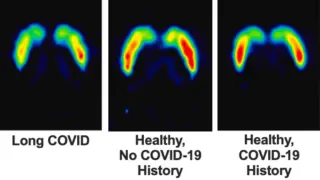
A small study using DaT SPECT scans in 12 young adults with autism found abnormal dopamine transporter behavior in a subset, suggesting disrupted dopamine processing could be linked to a higher Parkinson's risk decades later, though no current signs of disease or IQ differences were found. Researchers caution against drawing conclusions and aim to study larger groups to verify whether these transporter abnormalities could serve as an early biomarker for Parkinson's and inform preventative strategies.

neuroscience1 month ago

Parenting circuits double as prosocial engines in mice

New work in mice shows that the medial preoptic area (MPOA) circuits governing parenting also drive prosocial allogrooming toward stressed peers, via overlapping neuronal ensembles and an MPOA–to–VTA pathway that modulates dopamine release in the nucleus accumbens. Activity‑dependent labeling reveals MPOA ensembles active during parenting are required for allogrooming, while MPOA neurons activated during prosocial acts are needed for pup grooming, suggesting shared neural substrates and that offspring‑care circuits may scaffold broader adult prosocial behavior.

Genes and culture shape why music gives some people goosebumps
science1 month ago

Genes and culture shape why music gives some people goosebumps

New research finds that aesthetic chills—the goosebumps or shivers people feel when hearing music or viewing art—are partly heritable (about a third of the variance) but mostly shaped by culture and life experience (around 70%). Chills from music share genetic influences with chills from visual art and poetry, and brain dopamine-reward circuits light up during these moments, though there is no single 'goosebumps gene.' Openness to experience is a modest contributing factor.

Tirzepatide reduces alcohol reward in rodent study, hinting at AUD therapy
science1 month ago

Tirzepatide reduces alcohol reward in rodent study, hinting at AUD therapy

Rodents treated with tirzepatide (Mounjaro) drank more than half as much alcohol as controls, showed fewer relapse-like drinking episodes, and exhibited reduced alcohol-induced dopamine spikes in the brain’s reward center, the lateral septum. The drug also altered histone-related proteins, suggesting possible long-term neural changes. While promising, human trials are needed to confirm efficacy for alcohol use disorder, though tirzepatide’s established safety profile could speed future research.

Lab-grown dopamine cells aim to reboot movement in Parkinson’s patients
health-and-medicine1 month ago

Lab-grown dopamine cells aim to reboot movement in Parkinson’s patients

Researchers are testing implanted induced pluripotent stem cells engineered to become dopamine-producing neurons in the brains of Parkinson’s patients in a Phase 1 trial. Delivered via MRI-guided surgery into the basal ganglia, the goal is to restore dopamine production, improve motor function, and slow disease progression. The 12-person study (RNDP-001) is monitored for 12–15 months with long-term follow-up planned for up to five years to assess safety (e.g., dyskinesia, infection) and efficacy, and it has FDA fast-track designation.

Timing Trumps Repetition: The Brain Learns Faster with Sparse Rewards
science1 month ago

Timing Trumps Repetition: The Brain Learns Faster with Sparse Rewards

A UCSF study shows the brain learns more efficiently when rewards are rare and spaced apart, with dopamine responses driven by the time between cue and reward rather than the number of repetitions. This challenges Pavlovian practice-as-learning and explains why cramming is less effective, while suggesting educational strategies and potential faster, sparse-learning approaches for AI.

Sugar-Free Lent: What Cutting Sweets Does to Your Brain
health1 month ago

Sugar-Free Lent: What Cutting Sweets Does to Your Brain

Giving up sugar for Lent can reveal how sugar acts on the brain’s reward system—driving dopamine signaling in the mesolimbic pathway, altering D1/D2 receptor balance and dopamine transport—similar to drugs of abuse; rodent studies show bingeing, withdrawal, and impulsivity; in humans, about 40 days off sugar may reset some neural sensitivity and reduce cravings, though effects vary by person.

Moderate cannabis use may improve decision-making in bipolar disorder, study finds
mental-health1 month ago

Moderate cannabis use may improve decision-making in bipolar disorder, study finds

A cross-sectional study of 87 participants, including healthy controls and individuals with bipolar disorder, found that bipolar patients who used cannabis moderately (about 4–24 times per week) showed better decision-making and functional skills—comparable to healthy non-users—whereas bipolar non-users tended to have deficits. In healthy adults, cannabis use impaired decision-making. Heavy use (25+ times/week) was linked to worse performance. The authors caution that the study shows association, not causation, and call for larger randomized trials to explore potential mechanisms (dopamine-related) and the balance of risks and benefits before clinical recommendations.

Engineered Stem Cells Target Dopamine Rebuilding in Parkinson's Trial
health1 month ago

Engineered Stem Cells Target Dopamine Rebuilding in Parkinson's Trial

Keck Medicine of USC leads an early-stage trial testing induced pluripotent stem cells engineered to become dopamine-producing brain cells, implanted into the basal ganglia to restore dopamine and motor function in Parkinson’s disease; the 12-participant, multi-site study monitors safety and efficacy for 12–15 months after surgery, with up to five years of follow-up.

Effort amplifies dopamine through local acetylcholine signaling in the reward circuit
science2 months ago

Effort amplifies dopamine through local acetylcholine signaling in the reward circuit

New mouse study shows that high effort for a reward triggers rapid acetylcholine release in the nucleus accumbens, which acts on nicotinic receptors to boost dopamine release at the terminals. This cholinergic modulation specifically enhances dopamine during high-effort rewards and tracks exerted effort rather than reward size. Blocking nicotinic signaling (DHβE) or acetylcholine transmission blunts the enhanced dopamine response and impairs effortful behavior, while low-effort reward consumption remains intact. The findings suggest that local DA terminal modulation by acetylcholine, rather than ventral tegmental area cell-body activity, drives effort-based reward seeking.