
Seven-year lab-grown brain organoids reveal time-keeping in a dish
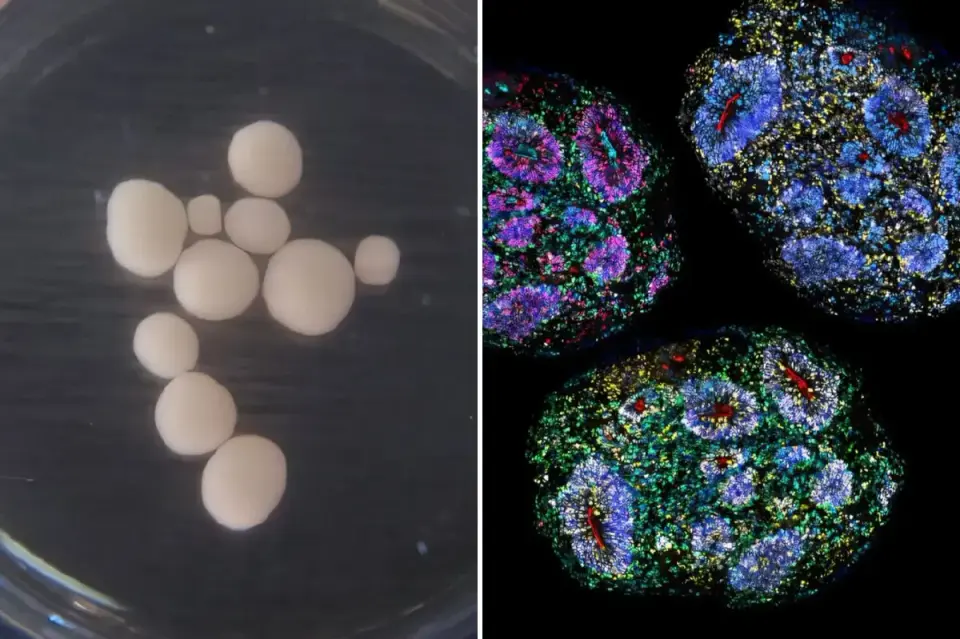
TL;DR
Harvard researchers grew brain organoids for up to seven years, using DNA methylation epigenetic clocks to show the artificial brains develop and effectively age like human brains; mixing older organoid tissue with younger tissue warped development, suggesting organoids can record developmental time, though most organoids die from oxygen limits and are destroyed after experiments. The work illuminates brain development and offers new angles for studying neurodegenerative diseases and other conditions.
Topics:healthscience#brain-organoids#developmental-biology#epigenetics#harvard#lab-grown-brain#science
- World’s oldest lab-grown human brains grow for seven years recording ‘passage of time’ New York Post
- Human brain organoids record the passage of time over multiple years Nature
- New milestone for stem cell research: Lab-grown brain ‘organoids’ set longevity record FAS Current
- Lab-grown brain models gain a sense of place Phys.org
- Mini human brains grown in labs could outperform AI, researchers say The Daily Star
Want the full story? Read the original reporting
Read on New York Post