
Record-Breaking El Niño Threatens Amazon While Easing NC Drought
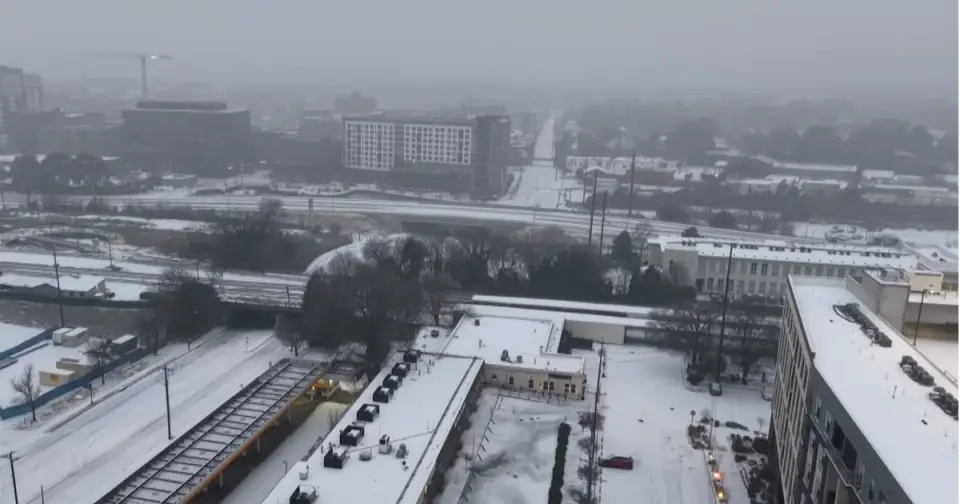
NOAA forecasts a 69% chance of a historic El Niño peaking this winter, potentially the strongest since 1950. This event is already suppressing Atlantic hurricanes and increasing winter rainfall odds for drought-stricken North Carolina, while simultaneously triggering severe droughts and wildfires in the Amazon and across Asia.
Key points
- NOAA’s Climate Prediction Center assigns a greater than 90% probability of a 'very strong' El Niño, with a 69% chance it will exceed the 1982-83 record intensity by winter.
- The event is expected to suppress Atlantic hurricane activity through increased wind shear, though it may increase winter precipitation and snowfall risks in the southern US.
- North Carolina, which suffered its second-driest first half of the year, faces higher odds of wetter winter conditions that could alleviate water supply stress.
- The New York Times reports that El Niño effects are already causing crop failures and dry spells in Panama, Ethiopia, and India.
- The Guardian warns that the El Niño peak coincides with the Amazon’s dry season, risking 'megafires' and severe drought in a forest already weakened by previous climate events.
Background
This development follows earlier forecasts in July and August 2026 that predicted a rapid intensification of El Niño conditions. Previous reports highlighted potential shifts in jet stream patterns and increased rainfall in the southern US, setting the stage for the current record-breaking potential. The current event is occurring amid a broader trend of rising global temperatures, with 2026 already ranked among the five warmest years on record.
How outlets are covering it
NOAA and WRAL emphasize the statistical probabilities and local impacts for North Carolina, focusing on the potential for wetter winters to counteract recent droughts. ABC News highlights the global temperature implications, noting that while 2026 is virtually certain to be among the warmest years, the probability of it being the absolute warmest is currently low. The New York Times focuses on immediate agricultural impacts in the Global South, such as crop failures in India and Panama. In contrast, The Guardian frames the event as a critical threat to the Amazon rainforest, arguing that the timing of the El Niño peak during the dry season creates a 'double whammy' with human-caused climate change, potentially pushing the forest past a tipping point.
Why it matters
A record-breaking El Niño will likely influence global food security, water availability, and extreme weather patterns for months to come. For North Carolina, it offers a potential reprieve from severe drought, while for the Amazon and other tropical regions, it poses an existential threat to biodiversity and local economies. The event also serves as a bellwether for future climate instability, as scientists debate how human-caused warming interacts with natural climate cycles.
What to watch
NOAA expects the El Niño to continue strengthening through the fall and peak during the winter of 2026-2027. Forecasters will monitor the Relative Oceanic Niño Index (RONI) to determine if the event surpasses the 2.5-degree Celsius threshold set by the 1982-83 event. In the Amazon, firefighting efforts and satellite monitoring will intensify as the dry season progresses, while North Carolina will track precipitation levels to assess the impact on water reserves.
- El Niño could become strongest on record. What it means for North Carolina WRAL
- Potentially historic El Nino takes shape, with far-reaching US and global impacts expected ABC News - Breaking News, Latest News and Videos
- Here's what the 'extraordinary' new El Niño forecast means for California SFGATE
- Effects of Record-Breaking El Niño Are Happening on 3 Continents The New York Times
- El Niño may peak at the worst time for the Amazon – and it should worry us all The Guardian
Want the full story? Read the original reporting
Read on WRAL