
Lead Ink Could Unveil Herculaneum Scrolls, Researchers Test with Fake Scrolls
TL;DR
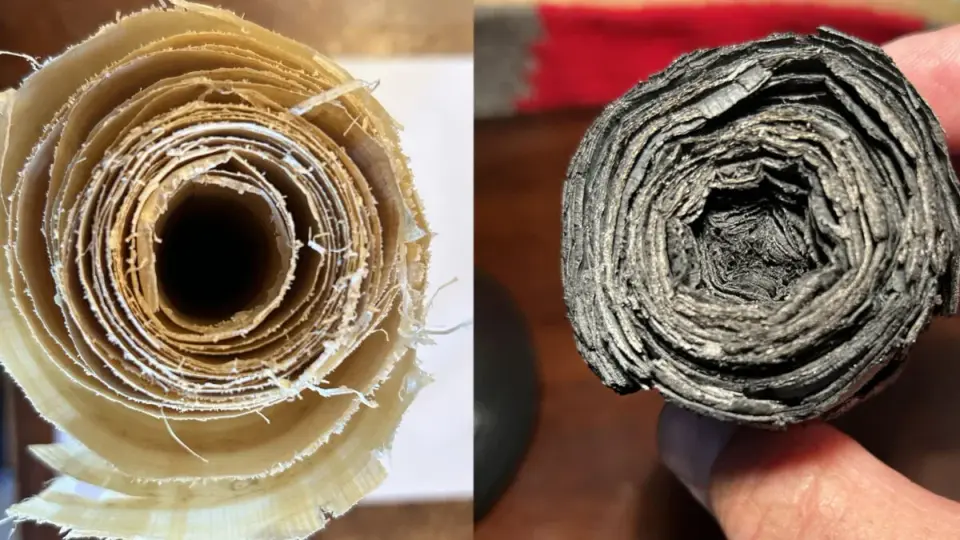
Researchers propose that lead in the ink of Herculaneum scrolls could make the writing detectable with X-ray CT, enabling virtual unrolling to reveal text; to test the idea, they created fake scrolls with varying lead concentrations, burned them, scanned with 3D CT, and used an algorithm to extract the text, demonstrating that lead enhances contrast and can be detected by handheld XRF—potentially guiding archaeologists to decipher carbonized scrolls.
- Scientists Say Lead in Ink Could Finally Crack Herculaneum's Burnt Scrolls—So They Baked a Fake One as a Test Gizmodo
- Scientists burn their own scrolls to help read 2,000-year-old Herculaneum papyri Archaeology News Online Magazine
- Lithium Batteries May Help Unravel Mystery of Ancient Papyrus Scrolls National Institute of Standards and Technology (.gov)
- Scientists develop new method for deciphering ancient scrolls Ars Technica
- We may soon be able to read long-lost ancient scrolls damaged by the eruption of Mount Vesuvius Phys.org
Want the full story? Read the original reporting
Read on Gizmodo