
UV Scans Reveal Invisible Calcite Varnish Protecting Chauvet Cave Art
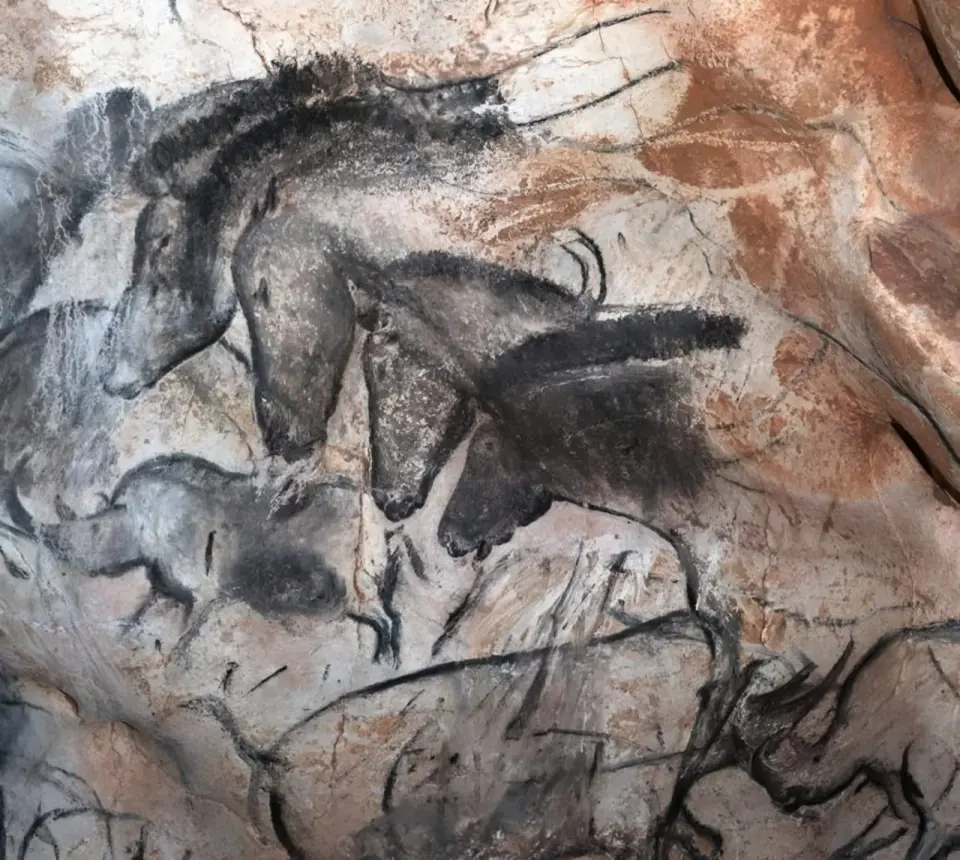
Researchers used ultraviolet spectroscopy to detect a thin, invisible calcite layer covering 37,000-year-old paintings in France’s Chauvet Cave, suggesting natural mineral deposits have acted as a protective varnish for millennia.
Key points
- A team led by Philippe Walter from Sorbonne University and CNRS employed UV fluorescence spectroscopy to analyze cave art without physical contact.
- The technique distinguishes between limestone and calcite based on organic impurities that glow differently under UV light, revealing a translucent calcite veil over charcoal drawings.
- Measurements were taken from 2.5 meters away using a custom fiber-optic instrument to avoid disturbing prehistoric footprints and soil on the cave floor.
- Findings indicate that calcite layers may protect art, though thick opaque crusts could eventually conceal it, as seen in other caves like Arcy-sur-Cure.
- Orange glows near some charcoal marks suggest artists may have used hot or burning embers, though this hypothesis requires further confirmation.
Background
Chauvet Cave, discovered in 1994 in southeastern France, contains some of the oldest known human art, dating to approximately 37,000 years ago. The site was sealed by rockfalls during the Upper Paleolithic and remains strictly protected, with public access limited to a replica opened in 2015. Previous studies have focused on the cave’s preservation due to its isolation, but this new research provides the first non-invasive analysis of surface coatings on the original paintings.
How outlets are covering it
Archaeology News Online and La Brújula Verde emphasize the protective role of the calcite layer, describing it as a 'natural varnish' that has preserved the art for tens of thousands of years. Sci.News highlights the technical innovation of the UV spectroscopy method, noting its potential applications in forensic science and space biofilm monitoring. While all sources agree on the presence of calcite, La Brújula Verde points out that the study does not definitively prove the layer has protected the art for millennia, only that it exists. The sources also differ in detail: Sci.News specifies the instrument’s 3-meter fiber-optic bundle and 365-nanometer LED, while Archaeology News Online focuses more on the broader implications for conservation and access limitations.
Why it matters
This non-invasive technique allows scientists to study fragile prehistoric art without risking damage, offering a new tool for conserving sensitive cultural heritage sites. Understanding how natural mineral layers interact with ancient pigments can inform preservation strategies for other caves and help determine the age of underlying artworks through the dating of overlying calcite crusts.
What to watch
Researchers plan to confirm the hypothesis that hot charcoal caused the orange glows by studying combustion stages and iron oxide changes. The team also intends to apply the UV fluorescence method to other fields, including forensic science and monitoring biofilms on the International Space Station, as part of an ongoing project.
- Natural varnish may protect 37,000-year-old Chauvet Cave art, UV scans show Archaeology News Online Magazine
- Some Of The World’s Oldest And Most Spectacular Cave Art Is Protected By An Invisible Shield IFLScience
- Fluorescent Glow Reveals Hidden Glaze on Chauvet Cave’s Ancient Art Sci.News
- UV scans uncover natural varnish that may have preserved ancient Chauvet Cave drawings Phys.org
- Scientists Discover How the Prehistoric Cave Paintings in the Chauvet Cave Survived for Thousands of Years La Brújula Verde
Want the full story? Read the original reporting
Read on Archaeology News Online Magazine