
Black hole X-ray emissions challenge particle acceleration theory.
TL;DR
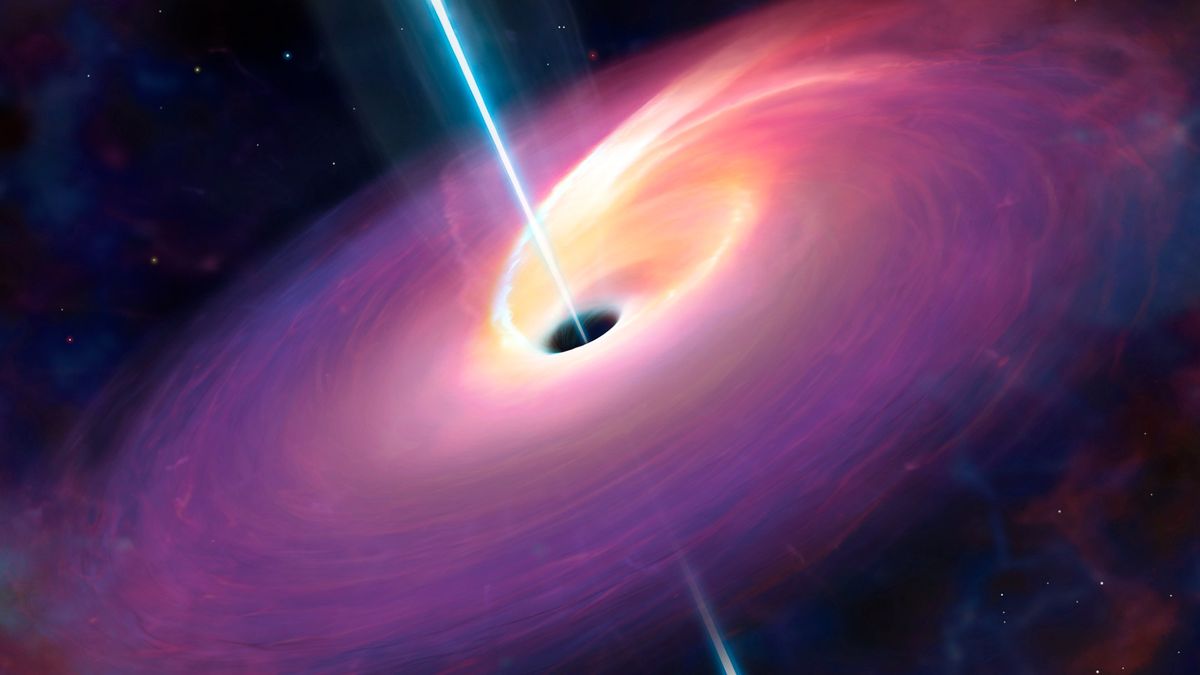
Astronomers have discovered a quasar, SMSS J114447.77–430859.3, with a jet of X-rays that is 60,000 times hotter than the sun. The quasar is located at the heart of a galaxy around 9.6 billion light-years away from Earth and is the most luminous example of such an object seen in the last 9 billion years of cosmic history. Quasars are black holes with bright, energetic jets of electromagnetic radiation beaming out of them from two sides as they feed on gases at the center of galaxies. Studying the quasar could offer astronomers a detailed insight into these powerful cosmic events and the effect they have on their galactic surroundings.
- Hungry black hole shoots out bright X-ray jet 60000 times hotter than the sun Space.com
- Black Hole Paradox: Unstable X-ray Emissions Shake Foundations of Particle Acceleration Theory SciTechDaily
- X-ray emissions from black hole jets vary unexpectedly, challenging leading model of particle acceleration Phys.org
Want the full story? Read the original reporting
Read on Space.com